Organized Violence II
A hit man looks to protect the daughter of one of his victims against CIA assassins.
A private eye becomes the bodyguard of a beautiful reporter being pursued by a Japanese mob.
Melvin Junko was a nerdy weakling until he fell into a vat of toxic waste, turning him into the first ever superhuman creature from New Jersey. This time, he takes on Tokyo.
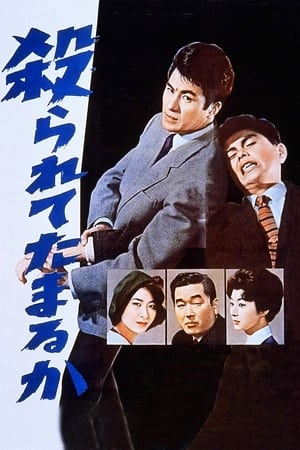
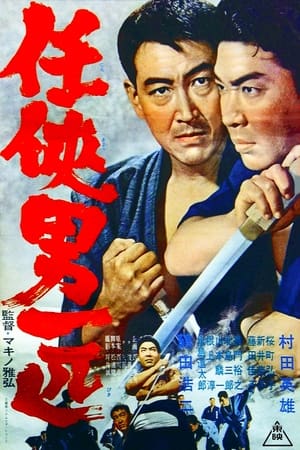
After the war, Kijima (Bunta Sugawara) returns to Tokyo where he meets Ôba (Noboru Andô), an Ex-Kamikaze pilot, and the two ruffians gather hooligans to join their group. In Ginza, the Togawa gang have taken over Sakurada's territory. After several fights Kijima and Ôba gain control of the territory by chasing out the notorious Togawa Group in the name of Sakurada. But Kijima is arrested for assaulting an American soldier. A few years pass. Kijima has served his prison term and the sears of war have been erased from Ginza. Ôba is now president of a company specializing in collection of bad debts, cheque frauds and everything that means money. People call their organization the “Private Police,” and Kijima begins to work for Ôba. Now the Takegami gang waits a chance to seize the Ginza territory.
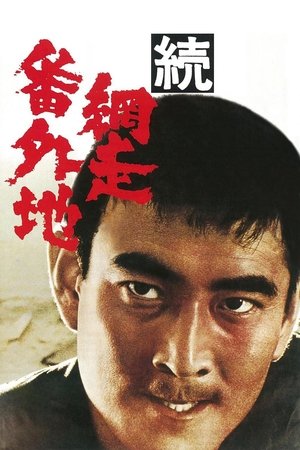
When Keiji Takama returns to Nagasaki, he finds many changes. The rights of the entertainment field that had been held by his family have been taken over by the Matsui Group, a new gangster setup. So he becomes head of the Takama Group to regain lost territory. With the cooperation of all the Bosses from Tokyo to Nagasaki, who had known his father, Keiji recovers the rights to put on shows at the City Hall. As he had feared, however, Matsui begins to interfere with his plans. Keiji's men are furious, but he knows better than to take up the cudgels with Matsui at this important time. Whatever Matsui does, Keiji goes one better. Frustrated and bitter, Matsui calls in the help of Koiwa, a killer. Now, having tried his best to oust Keiji but finding that he is made of sterner stuff than he had counted on, he decides to have Koiwa do away with him for good.
First Lieutenant Shun'ichi Maki of the Japan Air Self-Defense Force is a prestigious F-15 Eagle jet pilot (or "driver" as he is called in the film). A lifelong fan of flying since he was a child, being a pilot is his ultimate dream. Unfortunately, his duties distance himself from his wife, Yoko, who always ends up being neglected, and his son, Tsugumu, who has a congenital blood disease and has a high risk of dying at a young age.Maki decides to quit the Air Force to devote more time to his family and to spend whatever is left for his son. He takes a part-time job as a commercial tour guide run by a kindly group of people who allow him time to work and to also take care of his family.
An Iranian boy befriends an old Japanese woman at a graveyard in Tokyo.
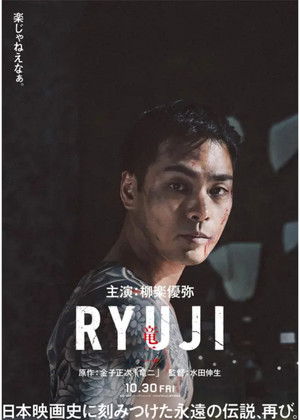
Tells the story of an up-and-coming Yakuza, who makes a name for himself alongside his two friends just before 1992, when the enforcement of the new gang law came in place.
Serial killer Shinju Shinagawa , called "Shinagawa Pierrot" for her clown makeup at arrest 3 years ago, remained silent during her first trial. Child consultation center worker Arata Natsume suddenly gets a request from Takuto Yamashita, the child of one of the serial killer's victims, who informs him that he's been corresponding with Shinagawa in his name in order to find out what she did with his father's missing head. Arata pretends to be an elite civil servant but finds that the Shinagawa he meets is different from the one he expected. When she realizes he isn't the sender of the letters, she goes to leave. In a panic, Arata, who never planned on getting married, blurts out "Let's get married!"
Two young brothers become the leaders of a gang of kids in their neighborhood.
A lighthearted take on director Yasujiro Ozu’s perennial theme of the challenges of intergenerational relationships, Good Morning tells the story of two young boys who stop speaking in protest after their parents refuse to buy a television set. Ozu weaves a wealth of subtle gags through a family portrait as rich as those of his dramatic films, mocking the foibles of the adult world through the eyes of his child protagonists. Shot in stunning color and set in a suburb of Tokyo where housewives gossip about the neighbors’ new washing machine and unemployed husbands look for work as door-to-door salesmen, this charming comedy refashions Ozu’s own silent classic I Was Born, But . . . to gently satirize consumerism in postwar Japan.
Former yakuza underling Kazuma Kiryū has recently been released from prison after a lengthy incarceration and is trying to piece his life together and distance himself from his yakuza past. Unfortunately, Kiryū's problems slowly escalate as he is pursued by a former associate, the baseball-bat-wielding psycho Gorō Majima, who has a grudge to settle with Kiryū.
When George Tanner does business with high-ranking Yakuza Tono, Tono kidnaps his daughter, and George summons his old friend, private eye Harry Kilmer, to Japan to investigate.
Two middle aged German brothers - one New Age and recently divorced, the other uptight and sceptical - travel to a Zen monastery in Japan in search of enlightenment, or perhaps just in search of themselves.
The name of the legendary fighter 'Toshi Toshi', Mr. Yoshino Masatoshi (Ozawa Hitoshi) in the Shinjuku business center, Shinjuku Kabuki-cho, legendary fighter, was roaring. Every day a tag litter of various places attacks a lone wolf Toshi. For such Toshi, only Toryokubai group manager Tanahashi group Tadashi Bashi (Shakuya) who used Shinjuku as a root founded his eyes. Toshi, who decided to live as a chorus, decides to live as a choreographer, making a fighting partner in the Gong Faction era as a brotherly son, and expanding its power as a fighter group.
Two teenage best pals attracted to the same boy end up scrambling his life after he walks into a door and is knocked unconscious.
Shinjiro, who runs a humble detective agency using a coffee shop in a certain town as his office, gets into trouble at a dark gambling den and is forced to take on a troublesome job by Kyoichi, an executive of the Kasahara clan, a yakuza gang he knows well. The task is to investigate an arson case that is suspected to involve the Chinese mafia Barretto, with whom the Kasahara-gumi has a rival gang. In addition, Shinjiro is asked by Michiko, whose Filipino parents were deported in the past, to search for her best friend, a Kurdish woman who mysteriously disappeared. However, as he pursues the two cases, he finds himself caught up in a war between two huge underworld organizations.
Two detectives are tasked to investigate the murder of an old man, found bludgeoned to death in a Tokyo rail yard.
Tokizо, the boss of the Tenmaru-gumi group, assists Kikujiro, a traveler on the run. At this time, a tender is being held to conclude a contract for the construction of the railway. Tokizo, who made the highest bid, was bought by the head of the Wakatsuki section of the Kansai Railroad, who was thinking about the country, and won by suppressing Takebe-gumi, who used bribes. However, not everything went as smoothly as planned...