Wolfgang Amadeus Mozart's Magic Flute is undoubtedly one of the most multi-layered, profound, complicated, and therefore also most difficult to stage works in the entire opera repertoire. In terms of genre, it can only be understood if it is seen as a mixture of four things: a philosophically profound drama of ideas with countless encryptions, a naïve fairy tale, a bawdy comedy, and a crude Punch and Judy show. It is based on the intersection of the traditions of Baroque magic opera, Italian buffa, and Viennese Singspiel, where all manner of wonders are conceivable and permissible. Peter Ustinov's production appeals to all those who love a primarily fairy-tale-like interpretation; the atmosphere is traditional and conventional. An outstanding ensemble of singers has been assembled.
Non-musical account of Puccini's opera: Tosca and Cavaradossi are in love, but the tyrant Scarpia desires Tosca and oppresses Cavaradossi who is fighting for freedom.
The grand scale and magnificent acoustics of the Roman arena in Verona are ideally suited to the pageantry of Verdi's Egyptian opera, presented here in a staging that is true to the original 1913 production, framed by obelisks and sphinxes and filled with chorus and dancers. Chinese soprano Hui He has won international acclaim for her portrayal of the eponymous slave girl whose forbidden love for the war hero Radamés (Marco Berti, the experienced Verdi tenor) brings death to them both.
A comic opera in two acts about the fickleness of women performed by HAMU students at the Disk... The alleged amorality of the story condemned Cosi fan tutte (They are all like that), Mozart's last opera to a libretto by Lorenzo da Ponte, to numerous contemporary adaptations and even to oblivion during the 19th century. What was the outrage? Following a bet, two bachelors in exotic disguises successfully exchange their fiancées, who have sworn eternal fidelity to them before parting. It's an old-fashioned plot based on a judgment on female constancy and male boastfulness arising from exaggerated vanity...
Beethoven’s only opera is a masterpiece, an uplifting story of risk and triumph. In this new production, conducted by Antonio Pappano, Jonas Kaufmann plays the political prisoner Florestan, and Lise Davidsen his wife Leonore (disguised as ‘Fidelio’) who daringly sets out to rescue him. Set in strong counterpoint are the ingredients of domestic intrigue, determined love and the cruelty of an oppressive regime. The music is transcendent throughout and includes the famous Act I Quartet, the Prisoners’ Chorus and Florestan’s impassioned Act II cry in the darkness and vision of hope. Tobias Kratzer’s new staging brings together the dark reality of the French Revolutionary ‘Terror’ and our own time to illuminate Fidelio’s inspiring message of shared humanity.
In his new production, Robert Carsen places the action at the end of the Habsburg Empire, underscoring the opera’s subtext of class and conflict against a rich backdrop of gilt and red damask
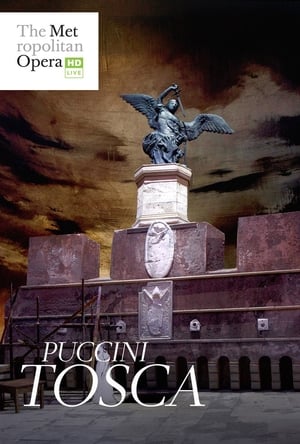
Sir David McVicar’s bold new staging of Tosca, Puccini’s operatic thriller of Napoleonic Rome, thrilled Met audiences when it rang in the New Year in 2018. Only weeks later, the production was seen by opera lovers worldwide as part of the Met’s Live in HD series of cinema presentations. In this performance, Bulgarian soprano Sonya Yoncheva is the passionate title diva, opposite charismatic tenor Vittorio Grigolo as her lover, the idealistic painter Mario Cavaradossi. Baritone Željko Lučić is the menacing Baron Scarpia, the evil chief of police who employs brutal tactics to ensnare both criminals and sexual conquests. On the podium, Emmanuel Villaume conducts the electrifying score, which features some of Puccini’s most memorable melodies.
Officers Ferrando and Guglielmo are certain that their lovers Dorabella and Fiordiligi are faithful to them, but the cynical Don Alfonso challenges them to a bet that the women will be unfaithful given the chance. The officers thus pretend to go off to war, and return in disguise as Albanian strangers, to woo Dorabella and Fiordiligi incognito. The ladies are initially frosty, but soon warm to their new suitors, spurred on by their maid Despina. Performed at the La Scala Theatre in Milan.
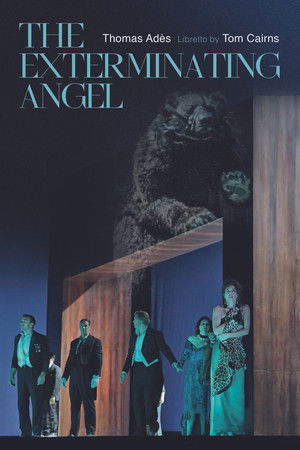
After the acclaimed Met premiere of Thomas Adès's "The Tempest" in 2012, the composer returned with another masterpiece, this time inspired by filmmaker Luis Buñuel's seminal surrealist classic "El Ángel Exterminador", during the 2017–18 season. As the opera opens, a group of elegant socialites gather for a lavish dinner party, but when it is time to leave for the night, no one is able to escape. Soon, their behavior becomes increasingly erratic and savage. The large ensemble cast tackles both the vocal and dramatic demands of Adès's opera with one riveting performance after another. Tom Cairns, who also penned the work's libretto, directs an engrossing and inventive production, using a towering wooden archway to trap the characters onstage. And Adès himself takes the podium to conduct the frenzied score, which features a host of unconventional instruments, including the eerie electronic ondes Martenot.
A version of Benjamin Britten's opera based on the Melville story. Will the virtuous young sailor Billy Budd be hanged for murder?
The operatic version of the famous story about a governess who fears her two charges are possessed.
Set in Paris, the story concentrates on the romantic triangle involving cabaret singer Liane, bon vivant Tony and petty crook Jean.
Director David McVicar’s new production brings opera’s favorite double bill to new life, setting the two operas in the same Sicilian setting, separated by two generations. Marcelo Álvarez takes on the rare feat of singing both leading tenor roles. In Cavalleria, he is Turiddu, the young man who abandons Santuzza (Eva-Maria Westbroek) in his pursuit of the married Lola (Ginger Costa-Jackson)—and ends up being killed in a duel with her husband, Alfio (George Gagnidze). In Pagliacci, Álvarez is Canio, the leader of a traveling vaudeville troupe. Patricia Racette sings Nedda, his unfaithful young wife, whose plans to run away with her lover are foiled by her spurned admirer Tonio (George Gagnidze)—with equally tragic consequences. Met Principal Conductor Fabio Luisi is on the podium.
Composer Thomas Adès conducts the Met premiere of his powerful opera based on Shakespeare’s last play, in Robert Lepage’s brilliantly inventive production. Simon Keenlyside is the magician Prospero, who conjures the storm that shipwrecks his enemies and sets in motion the course of events. Rising Met stars Isabel Leonard and Alek Shrader are the young lovers, Miranda and Ferdinand, Alan Oke sings the sinister Caliban, and Audrey Luna gives a memorable performance as the sprite Ariel.
37-year-old Italian-American widow Loretta Castorini believes she is unlucky in love, and so accepts a marriage proposal from her boyfriend Johnny, even though she doesn't love him. When she meets his estranged younger brother Ronny, an emotional and passionate man, she finds herself drawn to him. She tries to resist, but Ronny, who blames his brother for the loss of his hand, has no scruples about aggressively pursuing her while Johnny is out of the country. As Loretta falls for Ronny, she learns that she's not the only one in her family with a secret romance.
Visionary artist Matthew Barney returns to cinema with this 3-part epic, a radical reinvention of Norman Mailer’s novel Ancient Evenings. In collaboration with composer Jonathan Bepler, Barney combines traditional modes of narrative cinema with filmed elements of performance, sculpture, and opera, reconstructing Mailer’s hypersexual story of Egyptian gods and the seven stages of reincarnation, alongside the rise and fall of the American car industry.
La traviata (Italian: [la traˈviaːta], "The Fallen Woman"[1][2]) is an opera in three acts by Giuseppe Verdi set to an Italian libretto by Francesco Maria Piave. It is based on La dame aux Camélias (1852), a play adapted from the novel by Alexandre Dumas, fils. The opera was originally entitled Violetta, after the main character. It was first performed on 6 March 1853 at the La Fenice opera house in Venice. Piave and Verdi wanted to follow Dumas in giving the opera a contemporary setting, but the authorities at La Fenice insisted that it be set in the past, "c. 1700". It was not until the 1880s that the composer and librettist's original wishes were carried out and "realistic" productions were staged.[3]
Massenet’s tale of passion, excess, and their consequences stars rising soprano Lisette Oropesa in the effervescent title role. Tenor Michael Fabiano is her ardent admirer, Chevalier des Grieux, with Maurizio Benini conducting Laurent Pelly’s enchanting production.
Julie Taymor’s kaleidoscopic production returns to select cinemas this holiday season in an encore presentation of the company’s first-ever Live in HD transmission that includes tenor Matthew Polenzani, baritone Nathan Gunn, and bass René Pape in this abridged, English-language version of Mozart’s classic fable.
As the imperious title empress, mezzo-soprano Joyce DiDonato leads the Met premiere of Handel’s tale of deception and deceit. Harry Bicket conducts Sir David McVicar’s wry new production, which gives this Baroque black comedy a politically charged, modern updating.