‘Her’ features five strong, unrestrained female characters, in a hyperlink narrative that celebrates womanhood in all its myriad forms. The story represents today’s women from varied backgrounds coming out of their comfort zones to live life to the fullest.
The Boss from the West
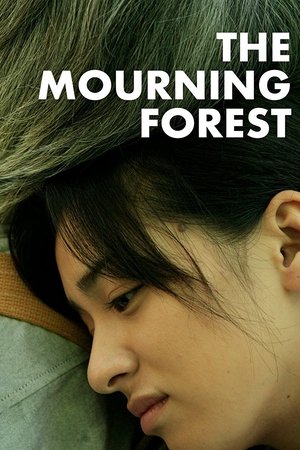
When Ruth's husband dies in New York, in 2000, she imposes strict Jewish mourning, which puzzles her children. A stranger comes to the house - Ruth's cousin - with a picture of Ruth, age 8, in Berlin, with a woman the cousin says helped Ruth escape. Hannah, Ruth's daughter engaged to a gentile, goes to Berlin to find the woman, Lena Fisher, now 90. Posing as a journalist investigating intermarriage, Hannah interviews Lena who tells the story of a week in 1943 when the Jewish husbands of Aryan women were detained in a building on Rosenstrasse. The women gather daily for word of their husbands. The film goes back and forth to tell Ruth and Lena's story. How will it affect Hannah?
Marcelline is an actress. Forty, single and childless, she begins rehearsals for Turgenev’s A Month in the Country. Denis, the director, admires her greatly and promises he’ll make her happy on stage — she will shine. But things don’t go to plan.
“Urban Motives 4.1” is an anthology film consists of 5 short movies by 5 Azerbaijani directors. The first, by Anar Abbasov, is about a relationship between a man and women who live next door; second, by Ru Hasanov, is about a life of a musician who is different from others with his mentality; third, by Teymur Ismayilov, tells a story of a young worker who has his own dreams; fourth, by Jafar Akhundzade, is about traumas caused by war; and the last one, by Vugar Islamzadeh, is a story about a criminal group and an officer who wants to take revenge.
Meduzot (the Hebrew word for Jellyfish) tells the story of three very different Israeli women living in Tel Aviv whose intersecting stories weave an unlikely portrait of modern Israeli life. Batya, a catering waitress, takes in a young child apparently abandoned at a local beach. Batya is one of the servers at the wedding reception of Keren, a young bride who breaks her leg in trying to escape from a locked toilet stall, which ruins her chance at a romantic honeymoon in the Caribbean. One of the guests is Joy, a Philippine chore woman attending the event with her employer, and who doesn't speak any Hebrew (she communicates mainly in English), and who is guilt-ridden after having left her young son behind in the Philippines.
For a lifetime, Hedi Ohlsen subordinated her needs to the family. She raised a child, took care of the house and learned the unloved profession of dental assistant for the sake of her husband Johannes. And although John has left her for a younger one, Hedi still cares for her elderly mother-in-law Agnes. As this now blesses the time and Hedi finally wants to start her own life, suddenly her pregnant daughter Leonie is attacking at the door. She has quit, no money and no father for the child Hedi is to raise for her. Is the dream of late freedom back?
The story of Washington D.C. radio personality Ralph "Petey" Greene, an ex-con who became a popular talk show host and community activist in the 1960s.
As an awkward idealistic high school teacher begins her first job in the city, things turn out to be much tougher than she had imagined.
After finding out that her husband, Rudi, has a fatal illness, Trudi Angermeier arranges a trip to Berlin so they can see their children. Of course, the kids don't know the real reason they're visiting -- and the catch is, neither does Rudi...
Noch einmal lieben
Ted Morgan has been treading water for most of his life. After his wife leaves him, Ted realizes he has nothing left to live for. Summoning the courage for one last act, Ted decides to go home and face the people he feels are responsible for creating the shell of a person he has become. But life is tricky. The more determined Ted is to confront his demons, to get closure, and to withdraw from his family, the more Ted is yanked into the chaos of their lives. So, when Ted Morgan decides to kill himself, he finds a reason to live.
A beautiful 14-year-old girl has just reached marriageable age in a village in Senegal. She has many suitors; however, she is in love a poor student who has returned to the village while the university is on strike. At birth, she had been promised in marriage to Diogoye, who went away to work in France. Diogoye, who supplied her parents with many things over the years, has now sent a dowry, and asked that she be married to him in the village in his absence; she would then be sent to France.
Cecilie and Joachim are about to get married when a freak car accident leaves Joachim disabled, throwing their lives into a spin. The driver of the other car, Marie, and her family don’t get off lightly, either. Her husband Niels works in the hospital where he meets Cecilie and falls madly in love with her.
Two lost souls visiting Tokyo -- the young, neglected wife of a photographer and a washed-up movie star shooting a TV commercial -- find an odd solace and pensive freedom to be real in each other's company, away from their lives in America.
Several lonely hearts in a semi-provincial suburb of a town in Denmark use a beginner's course in Italian as the platform to meet the romance of their lives. The film, which unspools the connections and family drama shared between the students, complies with several aesthetic principles of Dogme 95 movement.
Sergeant Nikhil Sharma suffers from severe depression after losing a limb while on duty. However, after meeting Monica, he gains confidence and vows to reclaim his previous life by solving a critical case. Will he be able to complete his mission?
A fatally ill mother with only two months to live creates a list of things she wants to do before she dies without telling her family of her illness.
A college student must win an inter college competition to save his college from being demolished by property builders.
Seven Women, Seven Sins (1986) represents a quintessential moment in film history. The women filmmakers invited to direct for the seven sins were amongst the world's most renown: Helke Sander (Gluttony), Bette Gordon (Greed), Maxi Cohen (Anger), Chantal Akerman (Sloth), Valie Export (Lust), Laurence Gavron (Envy), and Ulrike Ottinger (Pride). Each filmmaker had the liberty of choosing a sin to interpret as they wished. The final film reflected this diversity, including traditional narrative fiction, experimental video, a musical, a radical documentary, and was delivered in multiple formats from 16, super 16, video and 35mm.