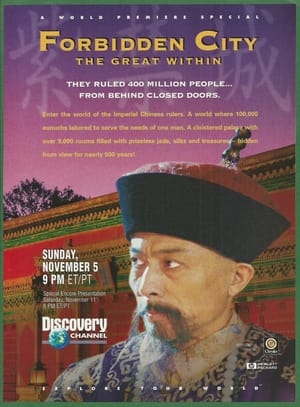
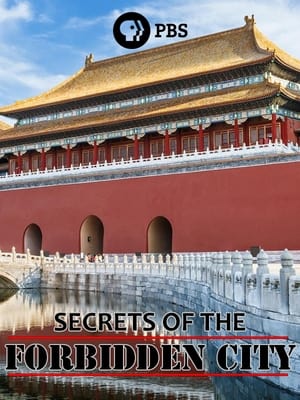
Amidst the grand walls of the Forbidden City, the film takes us on a deep journey through the ceremonial life of the Chinese emperor, unveiling the secrets and intrigues of concubines, eunuchs, and palace maids. As the West begins to influence China in the late 19th century, the dynamics within the city shift dramatically. The film highlights the preservation and restoration of invaluable treasures and paintings, culminating in the creation of the Palace Museum. With insights from renowned China scholar, Jonathan Spence, this is an intimate exploration of the rich cultural and historical tapestry that makes up the heart of ancient China.
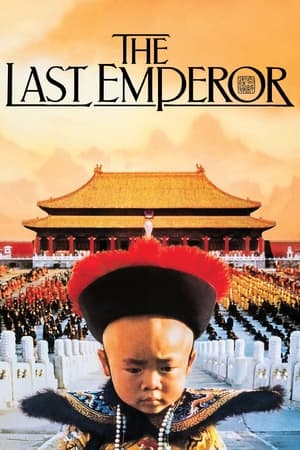
A dramatic history of Pu Yi, the last of the Emperors of China, from his lofty birth and brief reign in the Forbidden City, the object of worship by half a billion people; through his abdication, his decline and dissolute lifestyle; his exploitation by the invading Japanese, and finally to his obscure existence as just another peasant worker in the People's Republic.
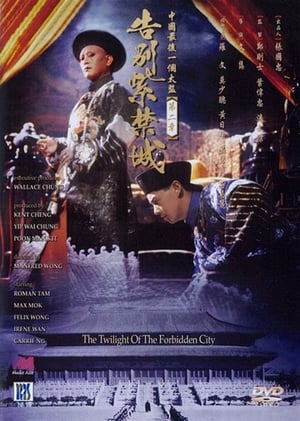
Hong Kong action star Max Mok stars in this period drama as Lau, a eunuch living at the end of the Ching Dynasty. Lau finds himself absorbed in the past along with another eunuch named Siu, and the two fall in love as they share their passion for Peking Opera. Unfortunately, they're unaware that their relationship serves as the catalyst for a series of events that end in disaster. Twilight indeed!
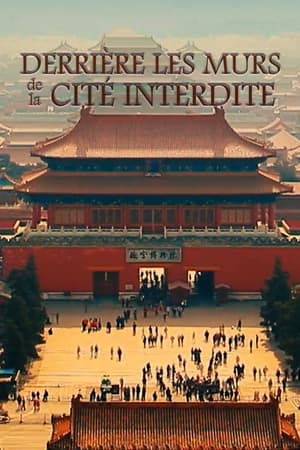
Secluded from view by nine-meter-high walls and composed of 980 buildings, the Forbidden City in Beijing is the largest imperial palace ever built in the world. Three majestic structures form its center and host the city's ceremonies, each of which is considered an architectural masterpiece. In 1406, construction of the Forbidden City was launched at the initiative of one of China's most powerful sovereigns and founder of the Ming dynasty: Yongle. Endowed with divine power, the construction has already resisted more than 200 earthquakes.
The Forbidden City is the world’s biggest and most extravagant palace complex ever built. For five centuries, it was the power center of imperial China and survived wars, revolution, fires, and earthquakes. How did the Ming Emperor’s workforce construct its sprawling array of nearly 1,000 buildings and dozens of temples in a little over a decade?
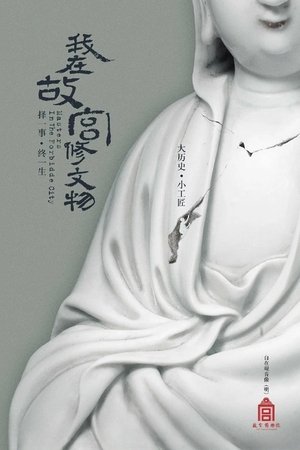
This documentary shines a light on the unsung life stories of restorers of cultural relics working inside the Forbidden City, together with the history of the antiques and the palace, the procedures of restoration and the development of cultural protection.
Panoramic view of the Forbidden City (Imperial Palace), Peking, China.
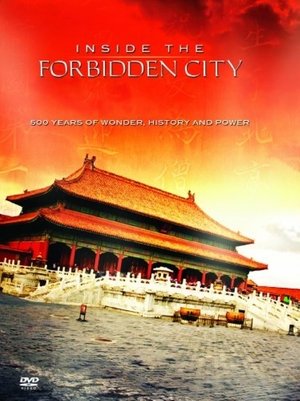
Inside the Forbidden City: 500 Years Of Marvel, History And Power
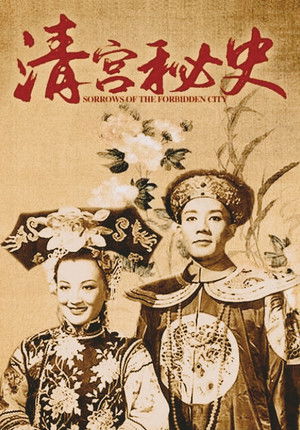
The film focused on a conflict between Empress Dowager Cixi, her son Guangxi (the nominal emperor) and his wife, Zhen Fei.
In 1997, Oscar-winning documentarian Allan Miller embarked on a film project with renowned conductor Zubin Mehta and celebrated Chinese film director Zhang Yimou as they joined forces in a production of Puccini's opera Turandot in Florence. Before the year was out, an extraordinary opportunity arose: to stage Turandot in its original setting in the Forbidden City of Beijing. The outdoor production was an undertaking on an epic scale. A fascinating chronicle of an unprecedented cross-cultural collaboration, THE TURANDOT PROJECT combines the pageantry of this opulent opera production with a spectacular cinematic portrait of the struggles and triumphs of Zubin Mehta and Zhang Yimou to mount their production in this most historic venue of China. (Source: Amazon.com)
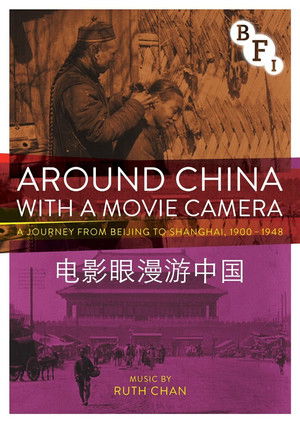
A new film compiled from the BFI National Archive's unparalleled holdings of early films of China, features films from 1900-48 filmed across China. The cinematic journey of Around China with a Movie Camera contains many films which may never have been seen in China, or at the very least not for over 70 years. These travelogues, newsreels and home movies were made by a diverse group of British and French filmmakers, some professionals, but mainly enthusiastic amateurs, including intrepid tourists, colonial-era expatriates and Christian missionaries.
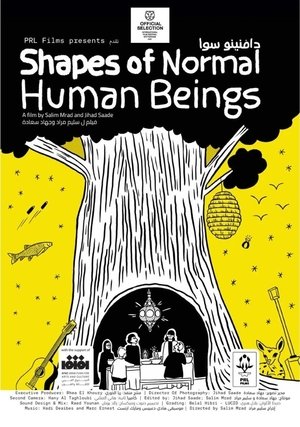
Three friends take an 8-day road journey to make sense of Lebanon at this moment in time. Each detour in their journey makes for a spectacular experience of co-narration and listening in the face of uncertainty.
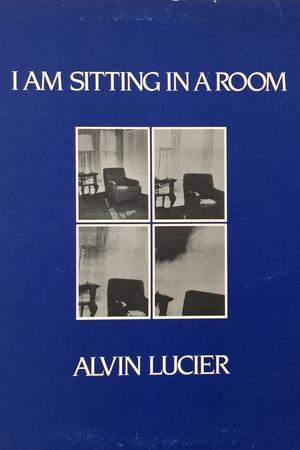
I am sitting in a room is a sound art piece by American composer and sound artist Alvin Lucier composed in 1969. The first performance of the work was in 1970 at the Guggenheim Museum in New York. In collaboration with his partner Mary Lucier. The piece features Lucier recording himself narrating a text, and then playing the tape recording back into the room while re-recording it. The new recording is then played back and re-recorded, and this process is repeated. Due to the room's particular size and geometry, certain resonant frequencies are emphasized while others are attenuated. Eventually the words become unintelligible, replaced by the characteristic resonance of the room.
The incredible story of the Yatza Affair an affair in which Brigadier General Res Yitzhak Yaacov was charged with severe espionage against the State of Israel For the first time in a feature film the long arm of the Secret Kingdom of the Israeli defense system which is unleashed on anyone it considers an enemy is revealed. This is a journey into the most primeval fears of the Israelis
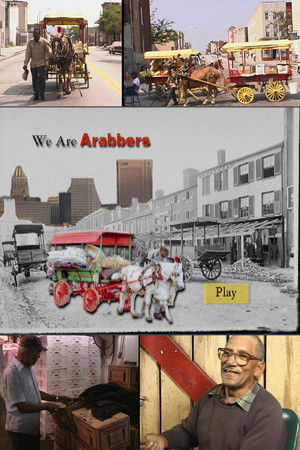
We Are Arabbers follows the last of the horse-and-wagon produce vendors along the streets of Baltimore as they struggle to make a living and maintain their unique culture.
Rural Oregon families have taken up the fight against aerial herbicide spraying by the forestry industry for more than 50 years — but has public safety around these substances since improved? Weaving historic archival footage with modern-day stories, the film is a powerful portrait of families grappling with the realities of herbicide exposure in their own backyards.
A documentary produced in 1979 to celebrate the centenary of the birth of Albert Einstein. Narrated and hosted by Peter Ustinov and written by Nigel Calder.
Nous, ouvriers : « Nos rêves ont façonné la société » (1963-1983)
Set in modern upper-crust Manhattan, an exploration of love and commitment as seen through the eyes of a charming perpetual bachelor questioning his single state and his enthusiastically married, slightly envious friends.