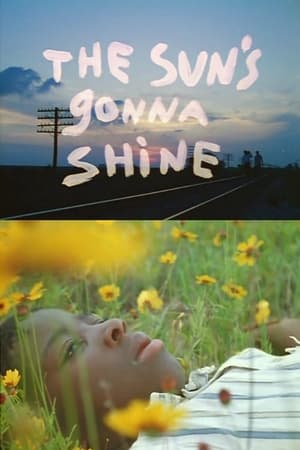
A look at what it's like to be gay and black in America.
In 1926, Buster Keaton was at the peak of his glory and wealth. By 1933, he had reached rock bottom. How, in the space of a few years, did this uncontested genius of silent films, go from the status of being a widely-worshipped star to an alcoholic and solitary fallen idol? With a spotlight on the 7 years during which his life changed, using extracts of Keaton’s films as magnifying mirrors, the documentary recounts the dramatic life of this creative genius and the Hollywood studios.
Filmed to praise the work of the Spanish Ministry of Housing in solving the problem of shanty towns in Bilbao, it was made to be viewed by General Franco and not for public screening or distribution through the NO-DO newsreel. Although the short film was commissioned by the Ministry of Housing, director Jorge Grau produced a subtly critical work.
In November 1936, a few months since the beginning of the Spanish Civil War, the government of the Second Republic moves to Valencia. In this situation, several Valencian artists and intellectuals decide to build four fallas — satirical plasterboard sculptures created to be burnt — to mock fascism.
A day in the life of Mr. Istvan and Ms. Magdi, neighbors for many years, is narrated by the building of Budapest where both live. The walls surrounding them reveal their small passions, stories and routines.
Presents life in 18th century Spain as the painter Francisco de Goya showed it to us.
Everyday Portabella
Filmed during the production of the Columbia Pictures western "Mackenna’s Gold," this short work presents a non-narrative visual study of the Arizona desert. Rather than documenting the film set itself, "6-18-67" assembles landscape images, time-lapse photography, and ambient sound into an abstract record of place and duration.
Battered Warsaw is getting back to life after the WW2 destruction. The ruins of the Old Town become homes once again.
Tío Jess
Documentary featuring interviews with several of legendary Spanish director Luis Buñuel’s close friends and collaborators.
Dialogue-free short detailing the daily tasks of a man and his wife.
Stylized with dramatic interiors and a distorted frame rate, this early documentary miniature from Szulkin depicts six sequences of solitary, repetitious labor.
"Shotplayer" is an impressionistic journey into the mind of Wilfred Rose, one of New York City's most notorious pickpockets. As he returns to the subway for the first time in many years he reflects on a life of crime in a society that has left many of its citizens behind. "Shotplayer" asks, when is it ok to push back against that society? What does it mean to live as a criminal? What does it mean to live one’s life on an invisible plane? To live at all?
Documentary about a boy living with his family in extreme poverty in Rio de Janeiro.
A medium-length documentary commissioned by the Cuenca City Council. The documentary shows an honest, sincere, although sometimes mere tourist portrait, of the lands of Cuenca and its people, without artifice or imposture, with feeling and authenticity and at the same time with marked coldness.
An "Ock-umentary" exploring the character of Doc Ock and the way he as well as his tentacles were brought to life on the silver screen.
This film joins a hunting-party of inhabitants of the Frobisher Bay Correctional Centre. The stalking, killing and skinning of seal and caribou are featured prominently, with explanations as to the importance of these animals to the Inuit way of life.
A brief visualisation of NASA’s historic spacecrafts Mariner, Pioneer, Voyager, and Dawn, exploring the solar system, culminating in the New Horizons mission.
Adolfo Kaminsky started saving lives when chance and necessity made him a master forger. As a teenager, he became a member of the French Resistance and used his talent to save the lives of thousands of Jews. The Forger is a well-crafted origin story of a real-life superhero.