Bob Woodruff’s daring 880-mile journey along the China-North Korea border examines the delicate relationship between the two countries and the United States.
Hans Goetze is not just the mayor of the picturesque coast village Ahrenshoop, he is also a famous painter. His portraits of people and landscapes sell to tourists all over the world. But the most common object of his paintings are cranes, who have a protected living place on the island of Darss. Every fall, tens of thousands of these large and majestic birds gather in the shallow waters of the baltic sea to prepare for their migration to the south. The film covers a full year of living on the island of Darss with the cranes coming and going.
Following the death of her brother, filmmaker Robie Flores returns to her hometown Eagle Pass on the Texas/Mexico border, wanting to turn back time. She collides with unruly experiences of adolescence – quinceañeras, Rio Grande river excursions, teen makeovers and beyond – that invite her to soak up the details of the home her brother adored and she ignored. What emerges is a playful dance between a personal and collective coming-of-age portrait of kids on the border and Robie herself as she rediscovers the possibilities of joy in the aftermath of grief.
On the border between Morocco and Spain, a group of travelers is eagerly waiting to cross over to Europe.
Ici ou Ici
Based on NBC News Political and National Correspondent Jacob Soboroff’s book, Oscar winner Errol Morris merges bombshell interviews with government officials and artful narrative vignettes tracing one migrant family’s plight. Together, they show that the cruelty at the heart of this policy was its very purpose. Against this backdrop, audiences can begin to absorb the US government’s role in developing and implementing policies that have kept over 1,300 children without confirmed reunifications years later, according to the Department of Homeland Security.
Drawing inspiration from his personal encounter with the Italian refugee child Giovanna during World War II, Markus Imhoof tells how refugees and migrants are treated today: on the Mediterranean Sea, in Lebanon, in Italy, in Germany and in Switzerland.
The white chalk cliffs of Rügen are among the most impressive natural monuments on earth, which the painter Casper David Friedrich immortalized for posterity as early as the 19th century. Germany's largest island with its seaside resorts from the Gründerzeit, its smaller side islands and peninsulas that give it its shape, its lagoon-like Bodden waters, the dense beech forests, the yellow rapeseed fields and the meadows, the shady tree avenues and the white sandy beaches is not only a magnet for tourists, but also a unique natural paradise in the middle of the Baltic Sea, a habitat for the rare white-tailed eagle, fallow deer, raccoon dogs and badgers as well as a resting place for huge swarms of migratory birds such as geese and cranes that can be heard trumpeting from afar. In this nature documentary, the unique landscapes and the diversity of the animal world of Rügen are captured with beautiful pictures during the changing of the seasons.
An absurd game of “finding happiness” is being played by local Latvian coyotes* and illegal immigrants on the Russian and the European Union border. It is a game with no winner – all participants are driven to play by the sense of despair. While one side leaves home and undertakes a perilous journey to the other side of the globe, hoping to spend the rest of their lives in a free country, the other side risks their freedom to earn a chance to stay right where they are, in their homeland. *coyote – someone who smuggles illegal immigrants
Lyon-Turin : Le Dernier Tunnel XXL
16 young people are doing their two-week lifeguard service on the Baltic Sea island of Fehmarn. They navigate between responsibility, belonging to a group and personal self-discovery, while more and more non-swimmers go swimming.
Blaha und Blüten
Jellyfish blooms are making headlines around the world. This is due to the damage they cause to tourism, fishing and our health. How can these creatures, which are over 98% water and have no shell, skeleton or brain, expand so rapidly? Although this is a normal stage in the life cycle of these gelatinous animals, we have to admit that blooms have become much more frequent and massive in recent decades. We're even witnessing jellyfish populations appearing in more and more regions where fish have been replaced by them, such as off the coast of Namibia, in the Black Sea, in the Sea of Japan and in certain areas of the Baltic Sea. What causes this? Why has the role of jellyfish in the ocean been underestimated, even though they outlived the dinosaurs? Are jellyfish on their way to dominating the oceans as they once did? What if they were to be the only ones left?
24 October 2015, a nice day in autumn in a nice landscape. A crowd of refugees and migrants accompanied by soldiers and police officers make their way from the Schengen border between Slovenia and Croatia towards the refugee camp in Brežice. Suddenly, the landscape starts to appear less nice than it was.
As daylight breaks between the border cities of El Paso, Texas, and Juarez, Mexico, undocumented migrants and their relatives, divided by a wall, prepare to participate in an activist event. For three minutes, they’ll embrace in no man’s land for the briefest and sweetest of reunions.
Bird watchers on both sides of the U.S.-Mexico border share their enthusiasm for protecting and preserving some of the world's most beautiful species.
Near the Oder River, where Poland and Germany meet, the two friends Szymon and Franek spend every free moment at the skatepark. A place where everyone comes together, regardless of where they come from. But as they look across to the other side of the river, their perception begins to shift. The river becomes a border, fences cut through the space, appearing and disappearing again. Shot on 16mm, this short combines documentary observation and animation and follows two children growing up at a borderland who begin to question what borders really are: something tangible, like the river they are looking at, or something that exists only in their imagination?
As thousands of migrants attempt to cross the French-Italian border on foot through treacherous mountain routes, the state cracks down on the local communities that come to their aid in this revealing look at an unfolding human rights crisis.
A winter ascent of Piz Bernina by Swiss mountain soldiers under the command of Major Charles Golay. The film also shows images of avalanche research, the use of avalanches as a weapon, avalanche rescue by dogs, and other military maneuvers. An early color Swiss military film by Major Charles Golay and Egon Sommer.
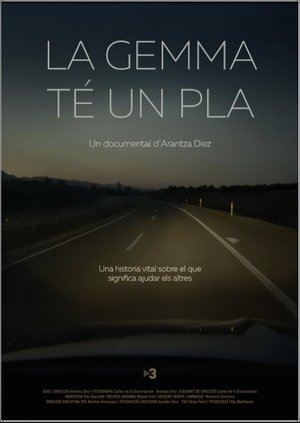
La Gemma té un pla