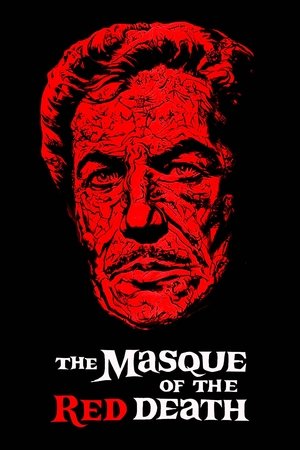
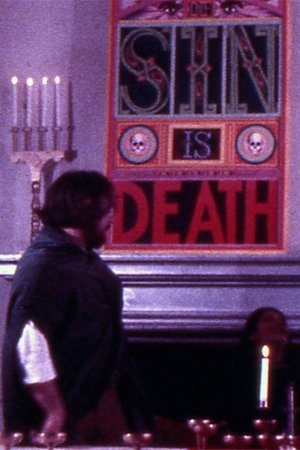
A European prince terrorizes the local peasantry while using his castle as a refuge against the "Red Death" plague that stalks the land.
A man of humble beginnings and honest intentions rises to power by nefarious means. Along for the wild ride are an earnest reporter, a heretofore classy society girl, and a too-clever-for-her-own-good political flack.
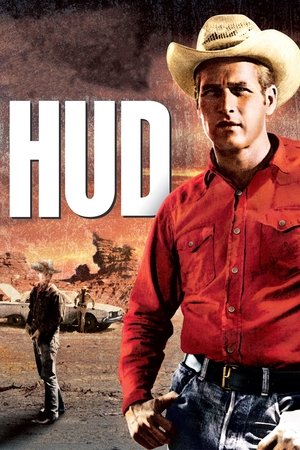
Hud Bannon is a ruthless young man who tarnishes everything and everyone he touches. Hud represents the perfect embodiment of alienated youth, out for kicks with no regard for the consequences. There is bitter conflict between the callous Hud and his stern and highly principled father, Homer. Hud's nephew Lon admires Hud's cheating ways, though he soon becomes too aware of Hud's reckless amorality to bear him anymore. In the world of the takers and the taken, Hud is a winner. He's a cheat, but, he explains, "I always say the law was meant to be interpreted in a lenient manner."
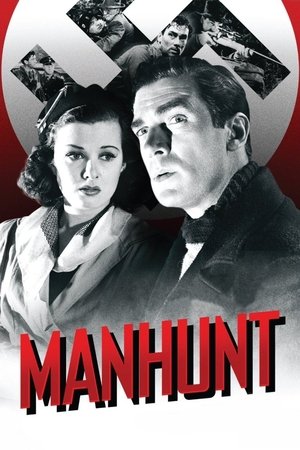
Shortly before the start of WW2, renowned British big-game hunter Alan Thorndike, vacationing in Bavaria, has Hitler in his gun sight. He is captured, beaten, left for dead, and escapes back to London where he is hounded by Nazi agents and aided by a young woman.
A Korean War vet returns to his job as a railroad engineer and becomes involved in a sordid affair with a co-worker's wife following a murder on a train.
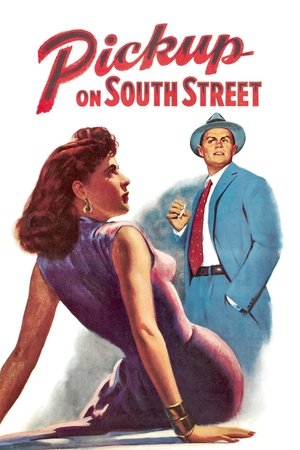
In New York City, an insolent pickpocket, Skip McCoy, inadvertently sets off a chain of events when he targets ex-prostitute Candy and steals her wallet. Unaware that she has been making deliveries of highly classified information to the communists, Candy, who has been trailed by FBI agents for months in hopes of nabbing the spy ringleader, is sent by her ex-boyfriend, Joey, to find Skip and retrieve the valuable microfilm he now holds.
Gracias Amigos was a 1944 propaganda short produced by the Office of the Coordinator of Inter-American Affairs to educate the American public about the contributions of Latin America during World War II. Preserved by the Academy Film Archive, Academy War Film Collection, in 2012.
A tabloid editor assigns a young reporter to solve a murder the editor committed himself.
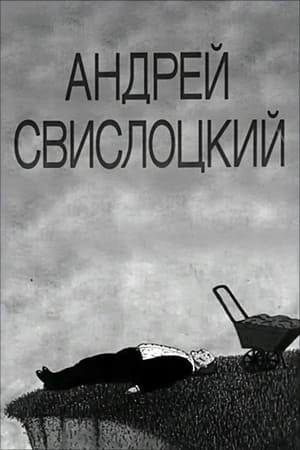
This animated short focuses on the lives of three eccentric people living on a farm in the Ukrainian countryside. Told in a non-linear, stream of consciousness style, the film depicts the deceitful relationship between a master and his two servants.
Whether at the stage of conceptualization or "editing", the blending and multiple impression of the images were done in-camera. In this sense, I think I have found ways to strengthen the evolution of the camera as a creative instrument. The whole film is one scene without any dark moments. In AUTUMN SPECTRUM, movement is the dominant element, while nostalgia is the real theme of the film.
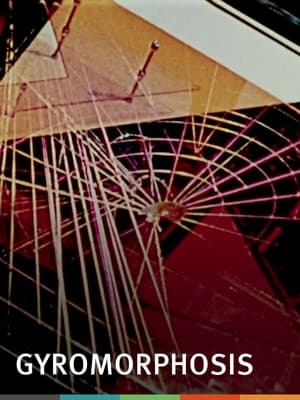
According to the director, "Gyromorphosis strives to bring into actuality the inherent kinetic qualities seen in the construction-sculpture of Constant Nieuwenhuys of Amsterdam. To realize this aim I have put into motion, one by one, pieces of this sculpture and, with colored lighting, filmed them in various detail, overlaying the images on the film as they appear and disappear. In this way, I have hoped to produce sensations of acceleration and suspension which are suggested to me by the sculpture itself."
A historical film contrasting the two Germanies – the good and the evil – which struggled for power between the two world wars.
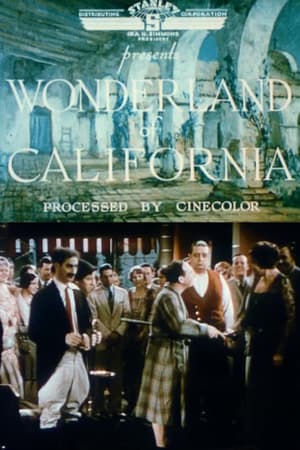
Short film made up of various clips showcasing the Cinecolor process, including a visit to a Marx Brothers film set. Preserved by the Academy Film Archive in partnership with The Film Foundation.
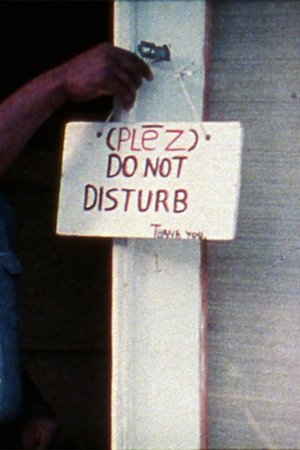
A singular cinematic figure, San Francisco’s Mike Henderson became one of the first independent African-American artists to make inroads into experimental filmmaking in the 1960s. Henderson’s work throughout the 1970s and 1980s, from which this program of 16mm films is culled, thrums with a sociopolitical, humorous sensibility that lends his small-scale, often musically kissed portraits (which he later dubbed “blues cinema”) a personal, artisanal quality. - Film Society of Lincoln Center. Preserved by the Academy Film Archive in 2014.
A singular cinematic figure, San Francisco’s Mike Henderson became one of the first independent African-American artists to make inroads into experimental filmmaking in the 1960s. Henderson’s work throughout the 1970s and 1980s, from which this program of 16mm films is culled, thrums with a sociopolitical, humorous sensibility that lends his small-scale, often musically kissed portraits (which he later dubbed “blues cinema”) a personal, artisanal quality. - Film Society of Lincoln Center. Preserved by the Academy Film Archive in 2016.
A singular cinematic figure, San Francisco’s Mike Henderson became one of the first independent African-American artists to make inroads into experimental filmmaking in the 1960s. Henderson’s work throughout the 1970s and 1980s, from which this program of 16mm films is culled, thrums with a sociopolitical, humorous sensibility that lends his small-scale, often musically kissed portraits (which he later dubbed “blues cinema”) a personal, artisanal quality. - Film Society of Lincoln Center. Preserved by the Academy Film Archive.
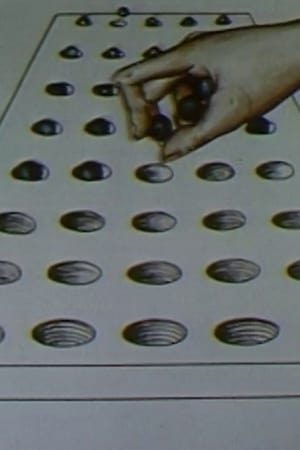
An animated short consisting of 4 segments: bowl, garden, theatre, marble game. Preserved by the Academy Film Archive in partnership with Harvard Film Archive in 2015.