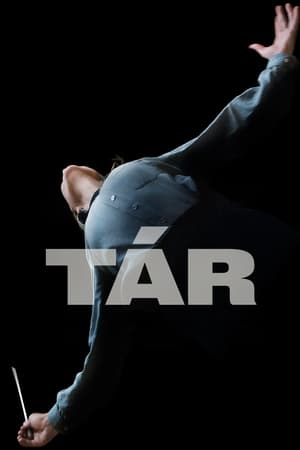
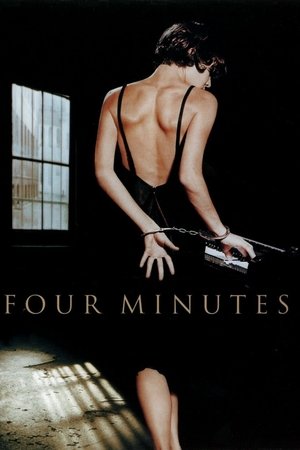
Jenny is young. Her life is over. She killed someone. And she would do it again. When an 80-year-old piano teacher discovers the girl’s secret, her brutality and her dreams, she decides to transform her pupil into the musical wunderkind she once was.
The Montreal Symphonic Orchestra (MSO) and Kent Nagano share the stage with Fred Pellerin, a colorful character whose imagination seduces as much as it surprises. He tells Christmas in his own way, through his stories featuring the protagonists of the small village of Saint-Élie-de-Caxton. An unprecedented encounter of the symphonic world and the universe of this artist of words. Concert recorded on December 16 and 17, 2011 at the Maison symphonique de Montréal.
Changing colors according to the music.
Robots live alongside mankind in a not too distant future, but are they really living?
Witness an epic, heart-rending journey of the soul, as Opera North, Phoenix Dance Theatre, Jazzart Dance Theatre and Cape Town Opera combine for a powerful performance. Filmed at Leeds Grand Theatre, this unforgettable contemporary dance staging of Mozart’s great choral lament is choreographed by Dane Hurst and conducted by Garry Walker. Featuring soloists Ellie Laugharne, Ann Taylor, Mongezi Mosoaka and Simon Shibambu alongside the Chorus and Orchestra of Opera North.
The film covers a hundred years in the lives of the Ricordi family, the Milan publishing house of the title, and the various composers and other historic personalities, whose careers intersected with the growth of the Ricordi house. It beautifully draws the parallel between the great music of the composers, the historic and social upheavals of their times, as well as the "smaller stories" of the successive generations of Ricordi.
Millions around the world were touched by his music... Cincinnati was inspired by the maestro. A production of Public Media Connect.
A film miniature set to classical music. The Spanish landscape, allusively evoked on screen, is dominated by characteristic elements of Gaudí's architecture. From these elements emerges the arena, with the figure of a fighting bullfighter. The appearance of Carmen introduces a lyrical thread. A passionate love develops between her and the bullfighter. Utterly astounding, iridescent salt animation by Aleksandra Korejwo based around Bizet's Carmen, the third and final film in a trilogy.
For the first 18 years of her life, Mozart’s sister shared equal billing with her brother. Musical partners and collaborators, Wolfgang Mozart and Maria-Anna Mozart played together before Kings and Queens, and were the talk of Europe. What happened to her? Forced into retirement by age 16 because she was a woman, a stunning new investigation explores why she was retired against her will and the explosive theory: did Maria-Anna Mozart continue to compose in secret?
El Sistema at the Salzburg Festival
Avant-garde composer John Cage is famous for his experimental pieces and "chance music" but temporarily branched into video in 1992 with this art film about meaningless activity. The work is composed of two segments that are supposed to be played simultaneously: "One 11" contains the artistic statement, and "103" is a 17-part orchestral piece. Also included is a revealing documentary about Cage and director Henning Lohner.
Letters, Riddles and Writs is a one act opera for television by Michael Nyman broadcast in 1991.
Nodame and Chiaki mutually decide that it would be for the best if they parted ways for a while so Nodame can practice for an upcoming competition. However, when things don’t go her way, she gets impatient and depressed. While Nodame is away, Chiaki’s former pianist Rui Son returns to take her place. To make matters worse, Rui and Chiaki are set to play the song Nodame dreams of playing with Chiaki herself: Ravel’s “Concerto in G Minor”.
Filmed live in Vienna's legendary Musikverein concert hall, this release represents Lang Lang's second live recorded recital to date after the best-selling "Live at Carnegie Hall" in 2004, which marked his international breakthrough as a recording artist.
Take a seat with us at FIRE’s first-ever classical music concert in support of free expression: “Outspoken: Music for Free Speech.” At the podium is conductor Rebecca Bryant Novak, a former doctoral student at the University of Rochester’s Eastman School of Music. Taking the stage for the first time since she was expelled without due process after speaking out about alleged harassment, Rebecca leads an all-volunteer orchestra in an unforgettable evening of music. Internationally acclaimed musicians, violinist Lara St. John and oboist Katherine Needleman, bring the stage to life with works by composers who themselves faced censorship, from Mozart to Shostakovich. Between performances, FIRE staff and special guests reflect on why free expression is essential for artists, and for all of us. The arts cannot thrive without free expression. Thank you to everyone who made this night possible!
Gustavo Dudamel and the LA Philharmonic accentuate the colors, rhythms and passion of the music of Argentina's leading composers on this invigorating evening at the Hollywood Bowl: Astor Piazzolla, the master of the New Tango, whose four tangos the Tango Buenos Aires dance company performs on stage, known worldwide as the most authentic and uncompromising representative of the tango, Alberto Ginastera, one of the most important classical composers of the Americas in the 20th century and Piazzolla's first teacher, and Lalo Schifrin, who, in addition to his concert music, is the composer of the famous soundtracks for Mission: Impossible and Dirty Harry. His "Concerto for Guitar and Orchestra", a world premiere recording, is composed by Ángel Romero, an iconic master of the classical guitar.
Even as a young boy, Beethoven marched to the beat of a different drummer. Trained in the traditional music methods by his father, Beethoven was an accomplished pianist by the age of 12. But he yearned to try new sounds and persevered until audiences heard his music. By his early twenties, this persistent young man performed for Joseph Haydn, who compared him to the great Mozart. Sadly, Beethoven began to lose his hearing, but he threw himself even more deeply into his music, composing "Fur Elise," "Sonata Pathetique" and the dramatic "Fifth Symphony" years later, audience members heard what he could not and leapt to their feet in ecstatic appreciation for such passionate music. His creativity gave the world then, as it does today, music that stirs the soul. The video begins in 1827 with 30,000 people paying tribute to the great Beethoven in Vienna, Austria. Then the video switches to his life as a child...
In Anton Bruckner’s 7th Symphony, the listener encounters a music characterized by great spaciousness and profound solemnity, a music which speaks of grief and lamentation, but also of their transcendence. With its monumental architecture and intensity of sound, the symphony has moved listeners ever since its triumphal premiere in 1884. The Guardian calls Daniel Barenboim’s London interpretation “Tremendous … Barenboim and the Staatskapelle seem to have this work in their systems, and the overall impression was of music unfolding organically at its own pace rather than of a work being self-consciously interpreted or led.” Anton Bruckner Symphony No. 7 in E major (original version) Daniel Barenboim, conductor Staatskapelle Berlin Recorded live at the Philharmonie Berlin, 25 June 2010
Anton Bruckner’s 6th Symphony was written between 1879 and 1881: a very happy time in his life. Unlike most of Bruckner’s symphonies, the 6th was not revised. Of all his works, this one seems to come from a single source of inspiration. Bruckner himself called it his “boldest” symphony – probably due to its extreme degree of motivic, rhythmic and harmonic originality. This live recording of the seldom-performed 6th Symphony is the next instalment of the acclaimed Bruckner cycle by the Staatskapelle Berlin and Daniel Barenboim. Anton Bruckner Symphony No. 6 in A major (original version) Daniel Barenboim, Conductor Staatskapelle Berlin Recorded live at the Philharmonie Berlin, 22 June 2010
“Clarity was one thing that made this performance a marvel. Another was the flexibility of Barenboim’s speeds…. The flexibility of Barenboim’s tempi meant that Bruckner’s charm – an often overlooked aspect of his genius – shone through, especially in the genial Trio.” (The Telegraph) Bruckner’s 8th is the last symphony completed by the Austrian composer. Many of his contemporaries regarded the symphony as “the pinnacle of 19th century music”. Even today, this monumental work fascinates listeners with its virtuoso orchestral technique, its immensity of sound, and its inexhaustible richness of detail. Symphony No. 8 in C minor (second version 1887-90, Robert Haas Edition) Daniel Barenboim, Conductor Staatskapelle Berlin Recorded live at the Philharmonie Berlin, 26 June 2010