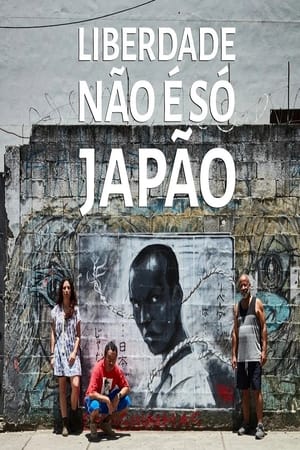
This documentary started as part of a photography project about the indigenous Ainu population in northern Japan, portraying people from tightly knit communities. They feel deeply connected by their culture and tradition. With gorgeous pictures, the directors explore how different generations of Ainu reflect on their identity after centuries of oppression.
The impact of Marx on the 20th century has been all-pervasive and world-wide. This program looks at the man, at the roots of his philosophy, at the causes and explanations of his philosophical development, and at its most direct outcome: the failed Soviet Union.
Western culture treats mental disorders primarily through biomedical psychiatry, but filmmakers Phil Borges and Kevin Tomlinson reveal a growing movement of professionals and survivors who are forging alternative treatments that focus on recovery and turning mental “illness” into a positive transformative experience.
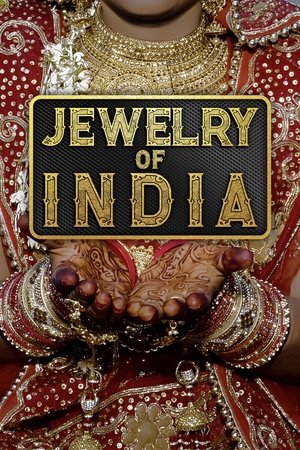
Mother India is home to many castes, tribes and religions and one common factor that brings this diverse country all together is Jewelry. Come explore the deep history and culture of the jewelry of India dating back more than 5000 years. As we explore the history we also take you into Bangalore, India and talk to local Jewelry Stores and Jewelry Artisans as they share their stories and their family history of their involvement in jewelry going far back into their family ancestry.
At the peak of Perestroika, in 1987, in the village of Gorki, where Lenin spent his last years, after a long construction, the last and most grandiose museum of the Leader was opened. Soon after the opening, the ideology changed, and the flow of pilgrims gradually dried up. Despite this, the museum still works and the management is looking for ways to attract visitors. Faithful to the Lenin keepers of the museum as they can resist the onset of commercialization. The film tells about the modern life of this amazing museum-reserve and its employees.
REVOLUTION OS tells the inside story of the hackers who rebelled against the proprietary software model and Microsoft to create GNU/Linux and the Open Source movement.
The Mentuwajê Guardians of Culture (a group of young Krahô filmmakers) invite the Beture Collective (Mebêngôkre-Kayapó) to visit their village and attend the Kêtwajê festival – an important initiation ritual that has not taken place for ten years. Over the course of several days, children and adolescents undergo various “tests” to transform into adult warriors, under the watchful and shared gaze of the local filmmakers and the Mebêngôkre-Kayapó guests.
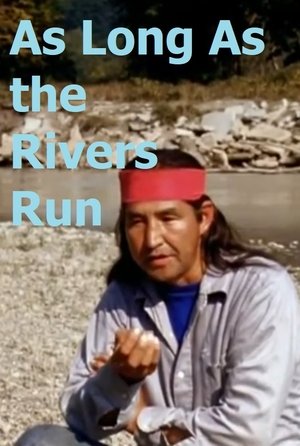
Alanis Obomsawin, a North American Indian who earns her living by singing and making films, is the mother of an adopted child. She talks about her life, her people, and her responsibilities as a single parent. Her observations shake some of our cultural assumptions.
Legendary Canadian documentarian Alanis Obomsawin digs into the tangled history of Treaty 9 — the infamous 1905 agreement wherein First Nations communities relinquished sovereignty over their traditional territories — to reveal the deceptions and distortions which the document has been subjected to by successive governments seeking to deprive Canada’s First Peoples of their lands.
A documentary about the concrete sections of the Berlin Wall that have been acquired by institutions or individuals since 1989 and are now scattered across the USA. Cherished or abandoned, they have become silent witnesses to recent history.
Did Leonardo da Vinci come up with all of his ideas and inventions by himself or did he also borrow some of them from ancient scientists including those who lived 1,700 years before him.
The last two surviving members of the Piripkura people, a nomadic tribe in the Mato Grosso region of Brazil, struggle to maintain their indigenous way of life amidst the region's massive deforestation. Living deep in the rainforest, Pakyî and Tamandua live off the land relying on a machete, an ax, and a torch lit in 1998.
Archival footage of an American Nazi rally that attracted 20,000 people at Madison Square Garden in 1939, shortly before the beginning of World War II.
Buddhist monks open up about the joys and challenges of living out the precepts of the Buddha as a full-time vocation. Controversies swirling within modern monastic Buddhism are examined, from celibacy and the role of women to racism and concerns about the environment.
Two Lawalapiti young men from Alto Xingu learn to build a canoe from the bark of the jatobá tree, a quick and simple technique that leaves the tree still rooted and alive, and that has ceased to be used and is only known by the oldest Lawalapiti men.
In 1980, the first march of gays, lesbians and transvestites took place in Brazil in protest against the constant police operations that took place in São Paulo, which aimed to repress these groups. Based on Renan Quinalha's doctoral thesis, “Against morality and good customs: the sexual politics of the Brazilian dictatorship (1964-1988)”, carried out by the Institute of International Relations, a series of four 5 minute videos about the birth of the LGBT movement during the Military Regime.
Follows the waves of literary, political, and cultural history as charted by the The New York Review of Books, America’s leading journal of ideas for over 50 years. Provocative, idiosyncratic and incendiary, the film weaves rarely seen archival material, contributor interviews, excerpts from writings by such icons as James Baldwin, Gore Vidal, and Joan Didion along with original verité footage filmed in the Review’s West Village offices.
Dr Janina Ramirez travels across glaciers and through the lava fields of Iceland to find out about one of the most compelling of the great Viking stories - the Laxdaela Saga. This hour-long film explores how the unique literary achievements of the Saga writers were possible at a time of such immense cultural, political and religious upheaval.
Was the Christ Story stolen from other, older religions? Theologian Dr Robert Beckford investigates remarkable parallels between the stories of Jesus, Krishna, Buddha, Mithra, and other major religious entities, and examines how these similarities impact Christianity and its message.
It is the year 2546. Corporations rule the world, and an agent is on a secret mission to explore the untold stories of the past. His journey leads him into a secret virtual reality where one corporation has recreated the 1980s, an era that witnessed the birth of video game development, an event in which a politically and economically restricted small European country, Hungary, had a significant role. He discovers a strange but exciting world, where computers were smuggled through the Iron Curtain and serious engineers started developing games. This small country was still under Soviet pressure when a group of people managed to set up one of the first game development studios in the world, and western computer stores started clearing room on their shelves for Hungarian products.