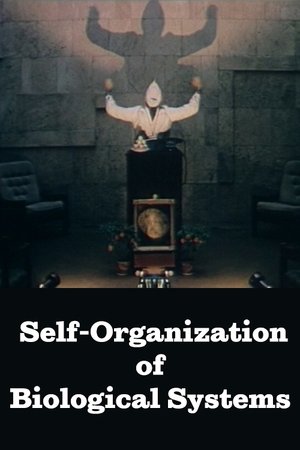
With input from actor and writer Jan Hlobil, director and cinematographer Rene Smaal presents a film in the true surrealist tradition, in the sense that only 'found' elements were used, and that it defies interpretation based on ordinary cause-and-effect time sequence.
In the nineteenth century, a French adventurer sets off to establish a kingdom in the inhospitable South of Chile, uniting the feared Mapuche under him. The response of the Chilean army is devastating.
This is the only feature directed by the famed French painter and sculptor Martial Raysse. In keeping with the revolutionary spirit of the time, the movie has no plot to speak of and appears to have been largely made up on the spot. We follow the cat man into a bizarre fantasy universe presented in negative exposure that reverses color values (black is white and vice versa) and written words. The cat man steals a car and then picks up a young girl he promises to take to “Heaven.” Heaven turns out to be a country chateau inhabited by several more animal mask wearing weirdoes...
Tympanum
Memories haunt a man and blur the lines between reality and imagination.
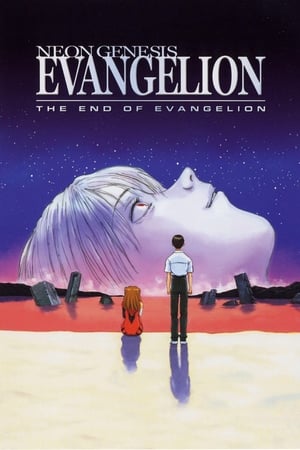
SEELE orders an all-out attack on NERV, aiming to destroy the Evas before Gendo can advance his own plans for the Human Instrumentality Project. Shinji is pushed to the limits of his sanity as he is forced to decide the fate of humanity.
Hoping to find a sense of connection to her late mother, Gorgeous takes a trip with her friends to visit her aunt's ancestral house in the countryside. The girls soon discover that there is more to the old house than meets the eye.
Prometheus, on an Odyssean journey, crosses the Brooklyn Bridge in search of the characters of his imagination. After meeting the Muse, he proceeds to the "forest." There, under an apple tree, he communes with his selves, represented by celebrated personages from the New York "underground scene" who appear as modern correlatives to the figures of Greek mythology. The filmmaker, who narrates the situations with a translation of Aeschylus' Prometheus Bound, finds the personalities of his characters to have a timeless universality.
A taxi driver, a young girl and a backpacker simultaneously experience a wonderful journey in Tokyo, where they find connections to their own homes in Africa, Europe and Southeast Asia.Throughout their journey, they run into the same Japanese woman named Akiko. Meanwhile, a writer in Paris recalls her encounter with Akiko in Tokyo.
A work that spun a story inspired by the world view of the song "You Named Me Blue" by jazz singer Yurifa Matsumoto. A short film that you want to see with your right brain, like watching a painting in a museum.
Visionary artist Matthew Barney returns to cinema with this 3-part epic, a radical reinvention of Norman Mailer’s novel Ancient Evenings. In collaboration with composer Jonathan Bepler, Barney combines traditional modes of narrative cinema with filmed elements of performance, sculpture, and opera, reconstructing Mailer’s hypersexual story of Egyptian gods and the seven stages of reincarnation, alongside the rise and fall of the American car industry.
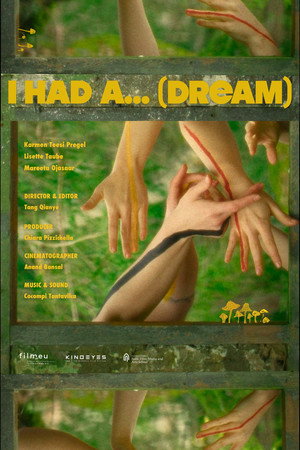
A woman returning home falls asleep and has vivid dreams that may or may not be happening in reality. Through repetitive images and complete mismatching of the objective view of time and space, her dark inner desires play out on-screen.
Begotten is the creation myth brought to life, the story of no less than the violent death of God and the (re)birth of nature on a barren earth.
An old man, cut off from his future and his past, brings a young taxi driver into his game. The two meet Karkalou, a crazy prostitute, whom the former once loved madly and the latter will soon love.
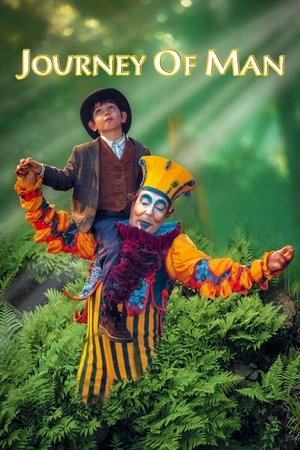
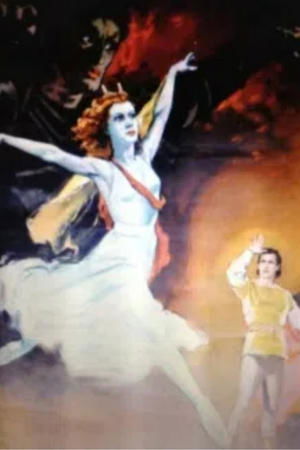
A child is born. We see underwater swimmers representing this. He is young, in a jungle setting, with two fanciful "instincts" guiding him as swooping bird-like acrobats initially menace, then delight. As an adolescent, he enters a desert, where a man spins a large cube of metal tubing. He leaves his instinct-guides behind, and enters a garden where two statues dance in a pond. As he watches their sensual acrobatics of love, he becomes a man. He is offered wealth (represented by a golden hat) by a devil figure. In a richly decorated room, a scruffy troupe of a dozen acrobats and a little girl reawaken the old man's youthful nature and love.
CREMASTER 2 is rendered as a gothic Western that introduces conflict into the system. On the biological level it corresponds to the phase of fetal development during which sexual division begins. In Matthew Barney's abstraction of this process, the system resists partition and tries to remain in the state of equilibrium imagined in Cremaster 1.
CREMASTER 3 is set in New York City and narrates the construction of the Chrysler Building, which is in itself a character - host to inner, antagonistic forces at play for access to the process of (spiritual) transcendence. These factions find form in the struggle between Hiram Abiff or the Architect...
CREMASTER 4 adheres most closely to the project's biological model. This penultimate episode describes the system's onward rush toward descension despite its resistance to division. The logo for this chapter is the Manx triskelion - three identical armored legs revolving around a central axis. Set on the Isle of Man, the film absorbs the island's folklore...
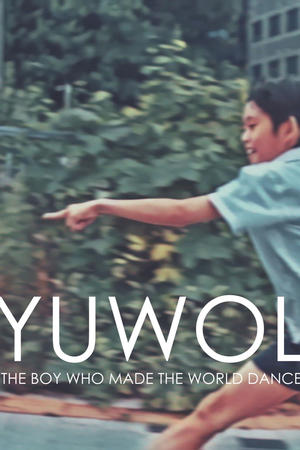
This fantastical movie inspired by the music of Michael Jackson features imaginative interpretations of hit tracks from the iconic 1987 album “Bad”.
An unknown future. A boy confesses to the murder of another in an all-boy juvenile detention facility. More an exercise in style than storytelling, the story follows two detectives trying to uncover the case. Homosexual tension and explosive violence drives the story which delivers some weird and fascinating visuals.