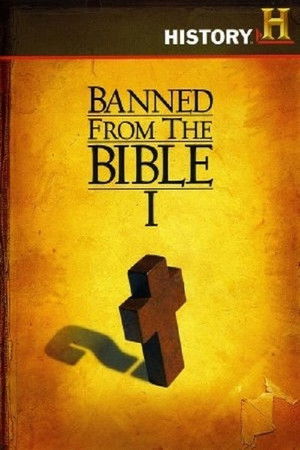
The film presents the Bible's account of God's plan from the creation of the earth through to the end of the 1,000 year reign of Christ.
Following the Prophet Muhammad’s (PBUH) recommendation to journey to three mosques - (in Makkah, Madinah and Jerusalem), this film sets out in the company of British bass player Danny ‘Hamza’ Thompson to discover the reasons why the last of these three holds such an important place in the hearts of Muslims everywhere.
Has the age-old stand-off between science and religion taken a new turn? Can the Bible's account of creation be reconciled with modern scientific fact? How did so many life-forms come into existence? This carefully researched video sheds helpful new light on the debate.
A biography of Charles Wesley, father of the Weselyan Church, hymn writer, and preacher.
The documentary adresses the meaning of music and the musical diversity present in Umbanda (a Brazilian religion with afroindigenous roots). With interviews with four umbandistas from Fortaleza - Ceará, Crossroads of the Sound pays reverence to the enchanted dimension where the sounds cross each other to make the spirits dance.
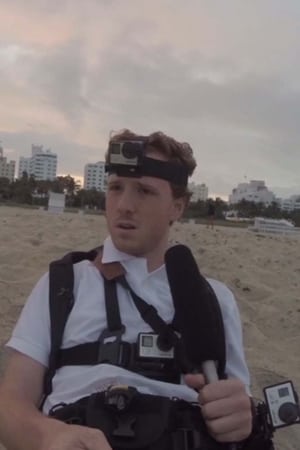
My Trip to Miami follows a well-meaning, misguided, tourist as he tries to self-actualize via Trip Advisors algorithmic script. My Trip to Miami is a documentation of a fantasy, a failure in image-based expectations.
A collaboration between filmmaker Ayoka Chenzira and performance artist Thomas Pinnock, who performs his "immigrant folktales" using traditional lore of his native Jamaica to dramatize his migration to New York in the 60's.
In times of conflict, a companion can be the final thread linking one to human connection. In Call of Duty: Warzone, communication is fractured, making it even harder to truly know those you play with. Dialogue is just a series of terse exchanges of orders and instructions; everything revolves around the game, everything is subsumed by war. Forming a meaningful connection with an anonymous player seems nearly impossible. In The Zone, the protagonists confront this challenge, pushing beyond the fleeting interactions dictated by random matchmaking. They seek to reclaim their humanity, engaging with pressing themes — religion, terrorism, and representation — subtly embedded in the game’s mechanics and geography.
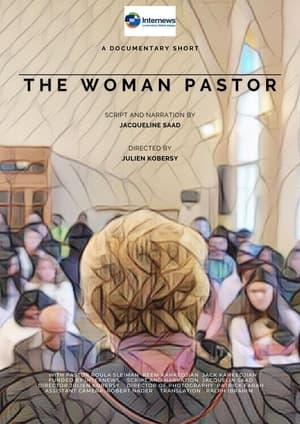
Femmes prêtres : vocations interdites
Rich Peppiatt delivers a satirical dissection of the newspaper trade by turning the tables on unscrupulous editors. Through a series of mischievous stunts and interviews with heavyweights of journalism, comedy & politics, Peppiatt hilariously exposes the hypocrisy at the heart of modern journalism.
In 2003, Dutch artist Iepe Rubingh became the first World Champion of Chessboxing. This brain-busting combination of alternating rounds of chess and boxing was in fact an art performance calling for more balance in a world of extremes, and the audience reaction was so electric that it inspired Rubingh to push it as a real sport. Rubingh’s methodical ability to achieve balance in the ring is put to the test outside of it when impulsive British TV Producer Tim Woolgar takes up the sport and his opposing vision for success creates a rift between them, endangering chessboxing’s future.
SOUND OF THE SOUL is a compelling portrait of an Arab country where Muslims, Christians, and Jews have lived together in relative peace for centuries. Beautifully photographed during the Fez Festival of World Sacred Music, the film presents unforgettable performances from groups from Morocco, Ireland, Russia, Afghanistan, Mauritania, the USA, Portugal and France, which carry viewers into what the film's Moroccan sufi guide calls "the hearing of the heart": the essential Oneness at the core of all religions and faiths.
Imagine Dragons’ Mormon frontman Dan Reynolds is taking on a new mission to explore how the church treats its LGBTQ members. With the rising suicide rate amongst teens in the state of Utah, his concern with the church’s policies sends him on an unexpected path for acceptance and change.
Filmed at New York’s Carnegie Hall, Cut Piece documents one of Yoko Ono’s most powerful conceptual pieces. Performed by the artist herself, Ono sits motionless on the stage after inviting the audience to come up and cut away her clothing in a denouement of the reciprocity between victim and assailant.
Pistolteatern in Stockholm, Sweden, was a leading experimental scene in the mid 1960s, comparable to the Living Theater in New York. In the years 1964-67. Pistolteatern produced theatre plays, exhibitions and happenings at a very high pace. The name, Pistolteatern, comes from two of creators, PI Lind and STaffan OLzon.
Discover the story behind the man who sparked the Protestant Reformation. Told through a seamless combination of live-action storytelling and artistic animation, Martin Luther's daring life is presented in extensive detail while still making the film relevant, provocative, and accessible.
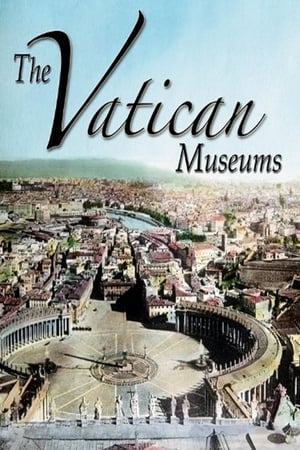
An extraordinary voyage of discovery to see the most impressive collection of works of art built up over two thousand years of history. VATICAN MUSEUMS 3D, a SKY production in collaboration with the Vatican Museums Directorate, for the very first time brings Ultra HD 4K/3D film cameras inside the Vatican Museums and the Sistine Chapel, to show the masterpieces in these collections as they have never been seen before.
A notorious political satirist conceals his identity and poses as a political candidate.
Terrence McNally’s Corpus Christi is a play retelling the Jesus story, with Jesus as a gay man living in the 1950s in Corpus Christi, Texas. This documentary follows the troupe, playwright, and audience around the world on a five-year journey of Terrence McNally’s passion play, where voices of protest and support collide on one of the central issues facing the LGBT community: religion.
Challenging the Western view that Islam inherently represses women’s rights, journalist Samira Ahmed travels across the world examining Islamic customs as they relate to women. In this two-part series, Ahmed explores whether current Islamic customs such as polygamy, honor killings, and requiring women to wear the hijāb (veil) are actually rooted in the Quran.