Zanzibar: Trouble in Paradise depicts a group of women who gained financial independence and stability in an otherwise male dominated culture through seaweed farming, until climate change killed the seaweed. The film follows the women, whose ingenuity led them to a new crop, more resistant to climate change: sea sponges. However, new challenges occurred; combating bacteria and climate change threatening their new product as well. In bringing the story of these women to light, the film demonstrates their resiliency and individual struggles facing the effects of climate change. While many documentaries focus on the science, Zanzibar shines a light on the disaster's impact upon those least likely to be heard.
The endless expanses of the Indian Ocean are home to the last natural paradises: Remote atolls surrounded by coral reefs in crystal clear water. Whole regions of this ocean are still unexplored, many reefs are not marked on any map. The departure of the research vessel Agulhas II from the island of La Réunion marks the beginning of one of the greatest scientific adventures of our time. The expedition, initiated by Monaco Explorations with the support of the Prince Albert II of Monaco Foundation, lasted six weeks and led into the Western Indian Ocean along the Mascarene Plateau.
With unprecedented access to the nuclear industry in France, Russia, and the United States, Nuclear Now explores the possibility for the global community to overcome the challenges of climate change and energy poverty to reach a brighter future through the power of nuclear energy. Beneath our feet, Uranium atoms in the Earth’s crust hold incredibly concentrated energy. Science unlocked this energy in the mid-20th century, first for bombs and then to power submarines. The United States led the effort to generate electricity from this new source. Yet in the mid-20th century as societies began the transition to nuclear power and away from fossil fuels, a long-term PR campaign to scare the public began, funded in part by coal and oil interests.
Canvi
'The Forgotten Pacific' travels to five Pacific islands to discover how communities are weaving indigenous knowledge into the modern-day fight to adapt, rebuild and save their islands from climate change.
Greenland
A documentary following 12-year-old Paul and his brother Germain during a transformative summer in rural France. The film explores the loss of innocence as Paul confronts the harsh financial and physical realities of his family's farming livelihood, highlighting the father-son bond and an uncertain future.
The Guarani people have searched for a land without shadows for a hundred years. The beauty in their home is precious and undeniable, but climate change threatens to ruin this special place.
Documentary about human impact on the world.
French actress Marion Cotillard travelled to the Philippines to meet with children and young people on climate change and what they want big-polluting governments to do about it. One of the girls she met is Marinel, a survivor of the Super Typhoon disaster in the Philippines in 2013, who is taking action on climate change in her own community. She participates in Plan International’s climate change adaptation projects and now teaches at youth camps to pass on everything she has learnt to the younger children. Marinel travelled to Paris with Plan International for the United Nations Framework Convention on Climate Change (UNFCCC) 21st Conference of the Parties (COP21) in December 2015.
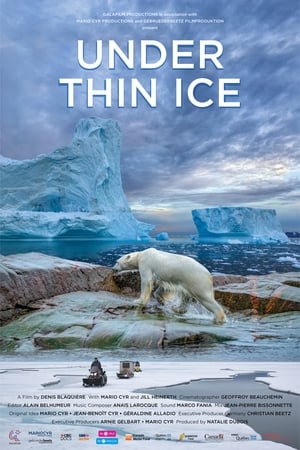
Two Canadian experts in underwater filming, Mario Cyr and Jill Heinerth, join forces for the first time to record how Arctic wildlife is adapting to the dramatic effects of climate change.
Procreation is the social duty of all fertile women, was the political thinking during the 1960s and 1970s in Romania. In 1966, Ceaucescu issued Decree 770, in which he forbade abortion for all women unless they were over forty or were already taking care of four children. All forms of contraception were totally banned. The New Romanian Man was born. By 1969, the country had a million babies more than the previous average. Romanian society was rapidly changing. By using very interesting archival footage and excerpts from old fiction films and by interviewing famous personalities from that time – gynecologists or mothers who were part of the new society - the director revives this period of tremendous oppression of personal freedom. Many deaths were caused by the mere fact that women, including wives of secret Romanian agents, famous TV presenters, and actresses, had to undergo illegal abortions. Many women were jailed for having them.
An immersive journey into the world of wild horses, Wild Beauty illuminates both the profound beauty, and desperate plight faced by the wild horses in the Western United States. Filmmaker Ashley Avis and crew go on a multi-year expedition to uncover the truth in hopes to protect them, before wild horses disappear forever.
UN’s Genocide Agenda dressed up as a Climate Change Agenda
The decision to move to Holland doesn't sound like a wise idea. Why move to a country that could be flooded at any moment? For the last 25 years, the political climate has shifted. The public debate on migration has become harsher, more heated, and polarized. What would have been considered right-wing xenophobia back then, is now considered mainstream. Populists simplify complex realities into good and evil, victims and perpetrators: ‘us’ versus ‘them’. Their rhetoric often consists of dehumanizing words and metaphors. One of these is ‘water’. In reality, water is not an immediate threat to the average Dutch person; but it is a huge threat to the thousands trying to reach the Netherlands. People trying to survive the Mediterranean Sea in rubber boats. Trying to survive winter on the Aegean coast in primitive tents. To them, water really is deadly.
Disobedience tells the David vs. Goliath tale of front line leaders battling for a livable world. Filmed in the Philippines, Turkey, Germany, Canada, Cambodia and the United States, it weaves together these riveting stories with insights from the most renowned voices on social justice and climate. Disobedience is personal, passionate and powerful - the stakes could not be higher, nor the mission more critical.
How does a nation survive being swallowed by the sea? Kiribati, on a low-lying Pacific atoll, will disappear within decades due to rising sea levels, population growth, and climate change. This exploration of how to migrate an entire nation with dignity interweaves personal stories of survival and resilience.
Photographer and visual artist Sammy Baloji’s fascinating film essay explores the Democratic Republic of Congo’s colonial history and its ecological significance. Drawing on research from the 1930s, the film highlights the Congo Basin’s vital role in consuming carbon dioxide and shaping global environmental balance over a century.
The story of a brilliant ecologist with a plan to save the world by restoring the planet's forests. His original work was hijacked by corporations and politicians with disastrous effect. Now he's using science to fight back.
Après le déluge