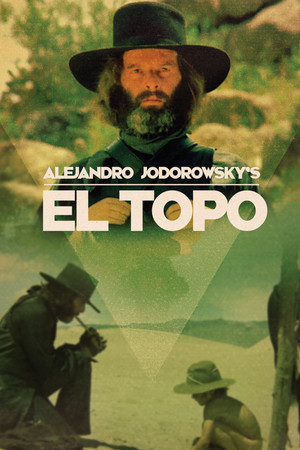
El Topo decides to confront warrior Masters on a trans-formative desert journey he begins with his 6 year old son, who must bury his childhood totems to become a man.
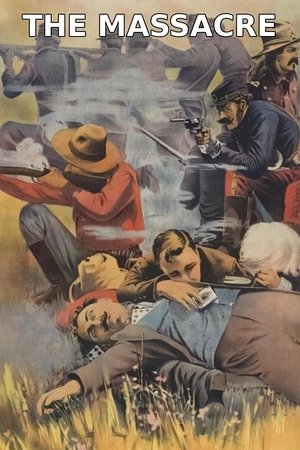
The story of the massacre of an Indian village, and the ensuing retaliation.
Une vie avec Oradour
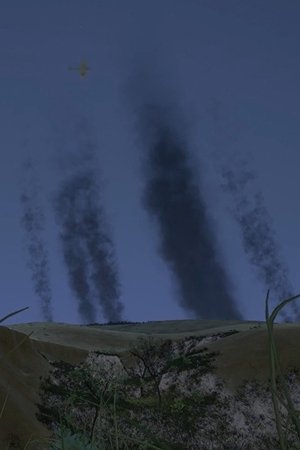
Return to al-Ma’in chronicles the multiyear collaboration between Forensic Architecture (FA) and Palestinian historian and Nakba survivor Salman Abu Sitta on the reconstruction of his birthplace, the lost village of Ma’in Abu Sitta (or al-Ma’in). Guided by the work and memories of Abu Sitta, FA-researchers reconstructed al-Ma’in’s occupation by Israeli forces on 14 May 1948, its subsequent demolition, and the settlements constructed on its ruins. The movie looks to the present moment and the connections between Israeli military’s conduct and appropriation of Palestinian land during and after 1948, and today in Gaza. The project looks back at the sophistication and sensitivity with which the Abu Sitta family cultivated their land, and the rich agricultural diversity that was lost when Israeli settlements were subsequently constructed over this landscape.
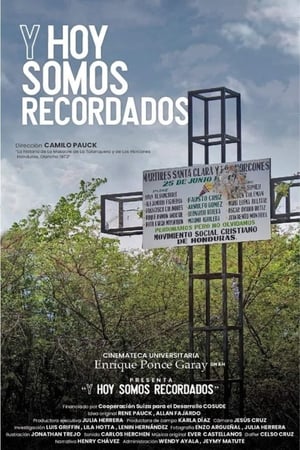
Y hoy somos recordados
Based on the novel by Güzide Sabri Aygün, the film tells the relationship of a mentally-ill woman and the doctor whom she loved in her youth.
In "The Bride with the Black Veil" (1975), director Süreyya Duru continues to focus on social issues, exposing problems of the peasants and feodal relations.
A Russian Police Major is enlisted by the LAPD to help solve a series of gruesome murders perpetrated against young women by a sadistic sociopathic killer on the mean streets of Hollywood.
Based on Yılmaz Güney's script and filmed in semi-documentary style, the movie provides a fresh perspective on the history of labor issues in 1970s.
The film traces the destiny of Kapila, an outcast child who had been deemed by his fellow villagers to have supernatural powers of destruction, because of the timing of his solar eclipse birth.
A brothel disguised as a teahouse is staffed with old ladies long past their prime. However, things begin to change and become chaotic when the owner takes in a young girl.
With the help of his assistant Anja, Ottocaro Weiss intends to put the plague on stage: circumstances beyond his control and a lack of fresh talent have forced him to close down his flea circus. For Weiss, the plague means the «extinction of everything that makes life miserable and low and freedom along with it. Unbeknownst to him, he has won the support of a patron who is of the exact opposite opinion: for Johannes Wagner, the plague is an organising principle, and, aided by his agent Moosbrugger, he is able to smuggle a new number onto the programme. Whereas Ottocaro Weiss means to represent the plague theatrically, what appears on stage is the scientific reality of the rat-borne infestation.
The film tells the story of Pir Sultan Abdal, a famous folk poet in Turkey, who criticized some Ottoman governors, Hizir Pasha in particular and as a result was hung by him.
Four junkyard kids go into town looking for something to cure their hero, Grand Batche. On the way, they come across various symbols of society: the cop, the mayor, the postman, the madman, the artist...