Overwhelmed by her suffocating schedule, touring European princess Ann takes off for a night while in Rome. When a sedative she took from her doctor kicks in, however, she falls asleep on a park bench and is found by an American reporter, Joe Bradley, who takes her back to his apartment for safety. At work the next morning, Joe finds out Ann's regal identity and bets his editor he can get exclusive interview with her, but romance soon gets in the way.
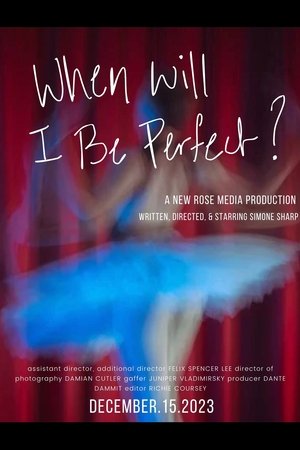
In the 80s, in an aerobic gym, Katarina, an ambitious teacher, obsessively pursues perfection. Between intense choreography and rivalry, she needs to stay on top at any cost. What is the limit of the search for perfection, and how far is one willing to go to achieve it?
Santiago Mitre co-directs his first movement following The Student together with choreographer Onofri Barbato. Although it would have been more accurate to say “his first film-story-adventure-movie-great movie following The Student”, the word movement fits perfectly in Los posibles, the most overwhelmingly kinetic work Argentine cinema has delivered in many, many years. The film deals with the adaptation of a dance show directed by Onofri together with a group of teenagers who came to Casa La Salle, a center of social integration located in González Catán, trying to find some refuge from hardship. Already entitled Los posibles, the piece opened in the La Plata Tacec and was later staged in the AB Hall of the San Martín Cultural Center. Now, it dazzles audiences out of a film screen, with extraordinary muscles and a huge heart: Los posibles is a rhapsody of roughen bodies and torn emotions. Precise and exciting, it’s our own delayed, necessary, and incandescent West Side Story.
A gold prospector in Alaska struggles to survive the elements and win the heart of a dance hall girl.
A funny, cruel exploration of the male psyche, Enter Achilles is set in a typical British pub, a shabby, nicotine-stained boozer. Pop songs tumble out of the jukebox, there is football on the TV, and the eight men lark around, pint glasses in hand. But their blokish fun is balanced on a knife-edge of tension, for beneath the mateyness lurks a disturbing undercurrent of paranoia and insecurity, where weakness is brutally exploited and violence covers up vulnerability.
Join Anna and her friend Colby, the mouse, in an online adventure as they encounter the Mastodons: Musclehead, Tangler, Blazer and Crusher. They are fighting a fire that threatens two children and a nearby school!
A profile on Moses Pendleton, the founder of the Pilobolus Dance Theater and MOMIX.
When teenager Ren and his family move from big-city Chicago to a small town in the West, he's in for a real case of culture shock after discovering he's living in a place where music and dancing are illegal.
When Jacques d'Amboise took a group of dancers and members of his teaching staff to China, they worked with acclaimed dancer Dou Dou Huang and more than a hundred Chinese children. Their goal: to create a special performance using a variety of dance styles - including hip-hop, freestyle jazz and traditional Chinese folk dance - that would premiere at the Shanghai Grand Theatre in honor of the 2007 Shanghai Special Olympics World Games. Part of a month-long cultural exchange between d'Amboise's National Dance Institute and several Chinese troupes, featuring some of that country's most talented young dancers, the collaboration underscored the power of dance to transcend obstacles of culture and language.
A dance school organizes a mysterious casting to select a dancer for a future show. Suzie, after passing the audition, will be chosen as the lucky one.
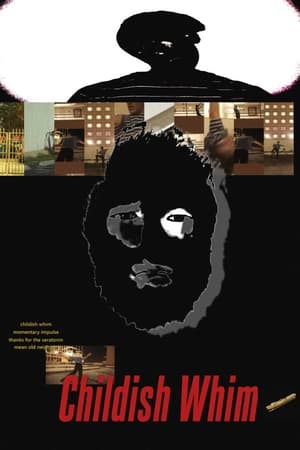
A man looks into a mirror and sees a reflection version of himself dancing, carefree, and rebellious -- only for the reflection to be shattered by a mystery man with a box over his head.
In this musical short, a man tries to woo the manager of a dance troupe.
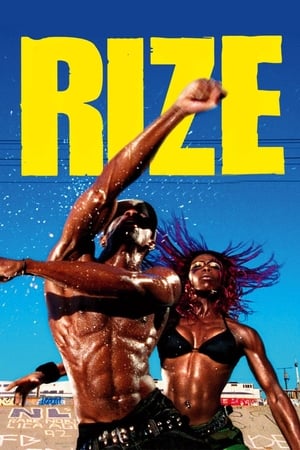
A documentary film that highlights two street derived dance styles, Clowning and Krumping, that came out of the low income neighborhoods of L.A.. Director David LaChapelle interviews each dance crew about how their unique dances evolved. A new and positive activity away from the drugs, guns, and gangs that ruled their neighborhood. A raw film about a growing sub-culture movements in America.
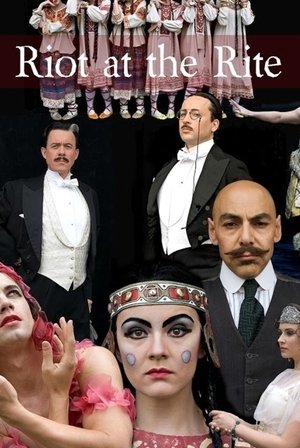
In the spring of 1913, Parisian businessman Gabriel Astruc opens a new theater on the Champs Elysées. The first performance is the premiere of Igor Stravinsky's 'The Rite of Spring', danced by the Ballet Russes. The rehearsal process is extremely fraught: the orchestra dislike Stravinsky's harsh, atonal music; the dancers dislike the 'ugly' choreography of Vaslav Nijinsky. The volatile, bisexual Nijinsky is in a strained relationship with the much older Sergei Diaghilev, the Ballet Russes' charismatic but manipulative impresario. Public expectation is extremely high after Nijinsky's success in 'L'apres-midi d'un faune'. Finally, 'The Rite of Spring' premieres to a gossip-loving, febrile, fashion-conscious Parisian audience sharply divided as to its merits.
For two hundred years, the Shakers have been America's most successful utopian society. While seeking harmony, order and perfection in every aspect of their lives, they built minimalistic furniture and buildings that influenced modern design. The Shakers wrote songs of exquisite beauty and danced to the point of ecstasy during their religious meetings. Inspired by this music and dance, choreographer Tero Saarinen created Borrowed Light, a dance piece about communal life and individual sacrifice. Shot in Finland and the United States, featuring interviews and excerpts from Borrowed Light, this documentary explore the cultural legacy of this religious group devoted to creating heaven on earth.
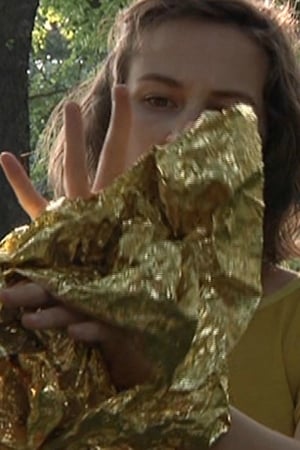
A film crew is shooting a scene. Their gestures gradually slip into dancing, revealing the beauty lying in the choreography of film sets.
During his thirty-year career, Walter Hus, a Belgian composer and pianist, has taken a thousand musical faces. While he wanted to compose a new work, a crisis blocked his creation. During an exchange with his therapist, he comes to an existential question: "Who am I musically? » Through the portrait of this composer, as abundant as it is fascinating, the film aims to give access to his creative process and thus to the endurance and beauty of creation.
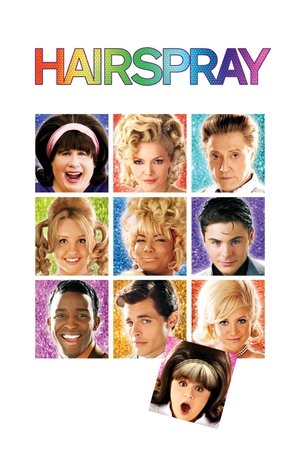
Pleasantly plump teenager Tracy Turnblad auditions to be on Baltimore's most popular dance show - The Corny Collins Show - and lands a prime spot. Through her newfound fame, she becomes determined to help her friends and end the racial segregation that has been a staple of the show.
A chronicle of the lives of several teenagers who attend a New York high school for students gifted in the performing arts.
The first revival of Wayne McGregor’s critically acclaimed ballet triptych to music by Max Richter, inspired by the works of Virginia Woolf.