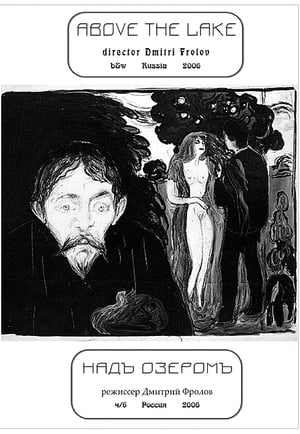
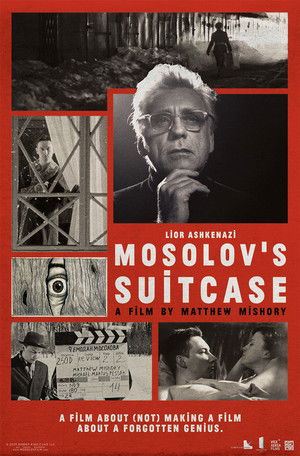
A dying man in his forties recalls his childhood, his mother, the war and personal moments that tell of and juxtapose pivotal moments in Soviet history with daily life.
Born in Los Angeles but a New Yorker by choice, Barbara Hammer is a whole genre unto herself. Her pioneering 1974 short film Dyketactics, a four-minute, hippie wonder consisting of frolicking naked women in the countryside, broke new ground for its exploration of lesbian identity, desire and aesthetic.
Shot in a series of long-takes over several days, the film follows a flower shop attendant (played by Devereaux, then actually employed at a small flower shop by the beach) in fragmented detail. The order of scenes resists chronology: moments recur, shift, or vanish, creating not the passage of a single day but the jumble of many, refracted into a meditation on routine and its quiet abstractions.
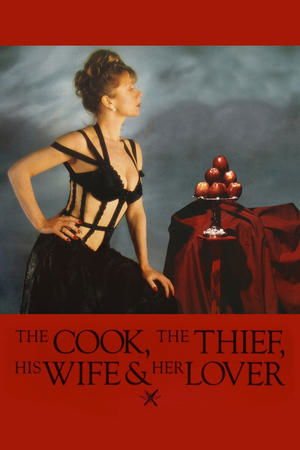
When churlish mobster Albert Spica acquires an upscale French restaurant in London, he dines there nightly, effectively scaring off the clientele with his bad manners. His wife, Georgina, is especially disgusted by him, and soon begins an affair with regular guest Michael. Despite their best efforts to keep it secret, Spica learns about their trysts, and he plots a terrible revenge.
"Assassination" - Adaptation of Hermann Hesse's novel "Demian". A young man's detachment from and revolt against the superficial ideals of the world of appearances and eventually awakens into a realization of self. Max Demian is his childhood friend and mentor.
Five lonesome cowboys get all hot and bothered at home on the range after confronting Ramona Alvarez and her nurse.
The Alchemist assembles together a group of people from all walks of life to represent the planets in the solar system. The occult adept's intention is to put his recruits through strange mystical rites and divest them of their worldly baggage before embarking on a trip to Lotus Island. There they ascend the Holy Mountain to displace the immortal gods who secretly rule the universe.
A successful mod photographer in London whose world is bounded by fashion, pop music, marijuana, and easy sex, feels his life is boring and despairing. But in the course of a single day he unknowingly captures a death on film.
An abstract perspective into two young South African workers in the heart of Johannesburg's industrial sector during Covid-19
A quasi-sequel to Michel Houellebecq's novel The Possibility of an Island, Masbedo's short presents a post-apocalyptic landscape overseen by a distant mother nature or perhaps mother of nature portrayed by French icon Juliette Binoche.
Mockumentary experimental film, which shows one day in the life of a young man. The action takes place on the Day of Soviet Cosmonautics, April 12, one of the last years of the USSR. Outside the window, it is gradually getting warmer, the onset of spring is felt, promising hope for the possibility of changes in the country. The hero of the film is fond of space. The young man, who idolizes Gagarin, is engaged in reconstruction, making the uniform in which the cosmonaut walked in the prime of his glory. Our hero is also a film enthusiast. He makes films with stories of space flights and shows them to his friends. The film is stylized as amateur films of the 1980s and was shot on a 16-mm color film made by the company" Svema", made in the Soviet Union. The quality of this film allows the viewer to fully immerse themselves in the atmosphere of the time of the film, which is dedicated to Soviet cosmonautics and Edward D. Wood Jr.
Adachi's follow-up to Bowl using the figure of a woman suffering from an unusual sexual aliment has often been taken as a controversial allegory for the political stalemate of the Leftist student movement after their impressive wave of massive fiery protests failed to defeat the neo-imperialist Japan-US Security Treaty. The ritualistic solemnity of the charged sexual scenes contribute to the oneiric qualities of Closed Vagina which Adachi would later insist was an open work, not meant to deliver any kind of deliberate political message. - Harvard Film Archive
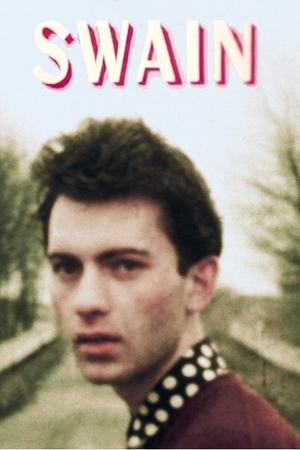
Swain is inspired by Nathaniel Hawthorne’s Fanshawe, features a dreamlike narrative of a young man’s ritualized rejection of heterosexuality, as a mysterious woman in white gossamer pursues him through a ruined landscape.
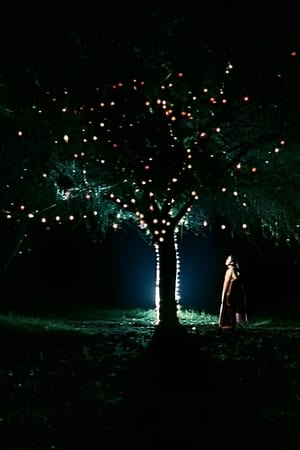
Prometheus, on an Odyssean journey, crosses the Brooklyn Bridge in search of the characters of his imagination. After meeting the Muse, he proceeds to the "forest." There, under an apple tree, he communes with his selves, represented by celebrated personages from the New York "underground scene" who appear as modern correlatives to the figures of Greek mythology. The filmmaker, who narrates the situations with a translation of Aeschylus' Prometheus Bound, finds the personalities of his characters to have a timeless universality.
An unknown future. A boy confesses to the murder of another in an all-boy juvenile detention facility. More an exercise in style than storytelling, the story follows two detectives trying to uncover the case. Homosexual tension and explosive violence drives the story which delivers some weird and fascinating visuals.
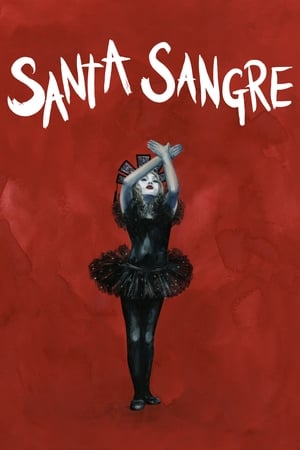
A former circus artist escapes from a mental hospital to rejoin his armless, cult leader mother, and is forced to enact brutal murders in her name.
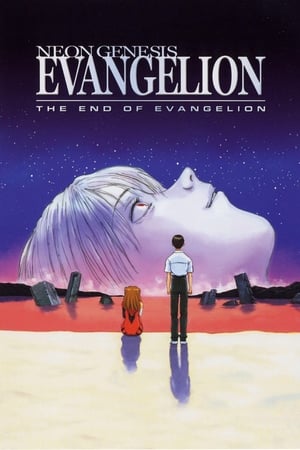
SEELE orders an all-out attack on NERV, aiming to destroy the Evas before Gendo can advance his own plans for the Human Instrumentality Project. Shinji is pushed to the limits of his sanity as he is forced to decide the fate of humanity.
The death of the minotavr talks about the concept of the heroine's journey. Suffering, horror and exhaustion lead the protagonist to a process of transformation, abyss and expiation, because only murdering to minotaur and everything he represents is possible to return to life. From the female gaze, it shows the depth of the emotional wounds caused by domestic violence; the same one that the surrealist Dora Maar lived and that ask why, as a society, instead of killing the minotaur, we blindly continue to send him women only to be devoured and ask them why they simply did not fight, why they did not try get out of the labyrinth.
A Japanese fairy tale meets commedia dell'Arte. All in white, the naïf Pierrot lies in a wood. Doo-wop music plays as he rises, stares about, and reaches for the moon. Although music abounds and the children of the wood are there at play, Pierrot is melancholy and alone. Harlequin appears, brimming with confidence and energy. He conjures the lovely Colombina. Pierrot is dazzled. But can the course of true love run smooth?
Based on the novel "Šta bi učinio Zobec?" (What Would Zobec Do?) by Svetozar Vlajković. It's a short movie about a young man who is afraid of being turned down by a girl.