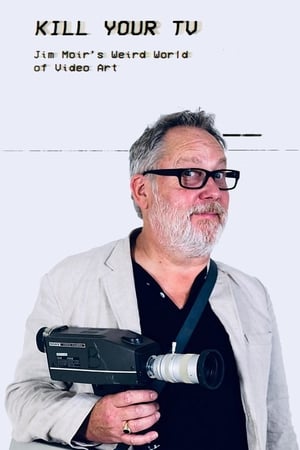
Jim Moir (aka Vic Reeves) explores Video Art, revealing how different generations ‘hacked’ the tools of television to pioneer new ways of creating art that can be beautiful, bewildering and wildly experimental.
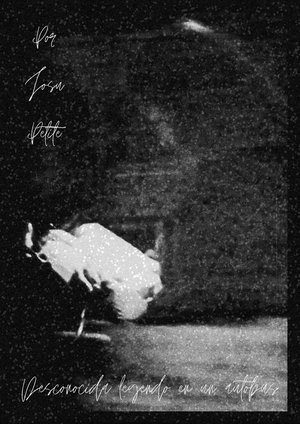
A girl reads during a bus ride
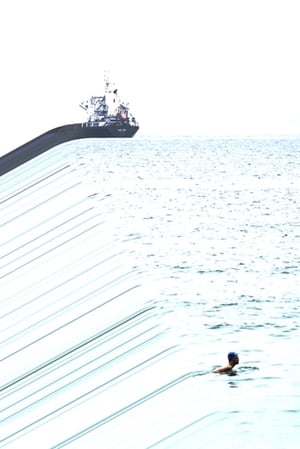
Shenzhen River (the border btw Hong Kong and Shenzhen), and the Second Line of Shenzhen Special Economic Zone (the border between Socialism China and Capitalism China) were compared to the Berlin Wall. The Second Line were constructed June 1982, demolished June 2015. The First Line (Shenzhen River) still flows, running deeper and deeper after 1997. Artist Miaoyuan LONG and Zen LU (the ON/OFF media Group) documented major checkpoints along these two boundaries. It’s a piece to illustrate the Big Escape (Touch Base Policy) from mainland China to Hong Kong during 1950-70’s and the geopolitical history of Shenzhen. The 48min audio-visual live performance version was Official selection of Draft Systems 2017 WRO Media Art Biennale, Poland.
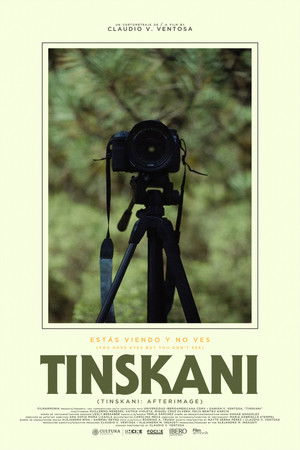
Tinskani mourns the death of his friend and mentor, Salvador. His partner, Citlali, urges him to attend the funeral with her, but Tinskani is haunted by the photograph of his friend's corpse. He'd rather wander through the town’s carnival, camera in hand, seeking to replace that ghostly portrait with new ones.
A depiction of a girl’s uneasy state of mind as it wavers between life and death.
A former circus artist escapes from a mental hospital to rejoin his armless, cult leader mother, and is forced to enact brutal murders in her name.
Shot in two places marrying with each other by a single and fractured bridge between Condrieu and les Roches-de-Condrieu, this film is the continuation of exploring ephemeral movement through the use of editing, camera movements and color sampling.
In this fragile yet frightening poetic fantasy set against a dark industrial landscape, a woman sits knitting on the porch of her home when a man appears and takes the knitting from her.
As a major storm strikes Texas in 1900, a mysterious televisual device is built and tested. Blake Williams’ experimental 3D sci-fi film immerses us in the aftermath of the Galveston disaster to fashion a haunting treatise on technology, cinema, and the medium’s future.
Features four distinct, bizarre, existential tales about people whose lives are in transition, who are each asking questions about themselves, their environments, and about God(s).
"This film explores how freedom of speech — including dissent — is afforded to all Americans, and shows freedom of expression in art, music, dance, architecture, and science. The film also emphasizes the importance of the individual’s contribution to the whole of society and demonstrates how a productive and creative society is formed by the open and respectful exchange of ideas. The film was written, produced, and directed by William Greaves" (National Archives).
Avant-garde homage to pre-revolution Russian silent movies, and to the poet Aleksandr Blok.
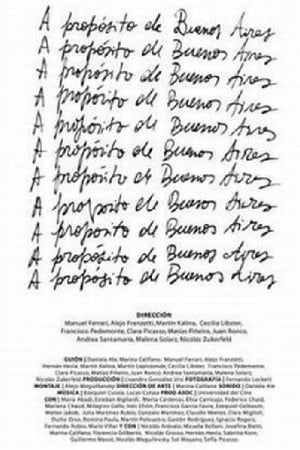
Eleven young film-makers got together to collaborate in this atypical project. Atypical not only because of its technical specs, but because of its narrative structure. There are several scenes with only the city in common, and more as a conceptual presence at that than as a precise geography. None of those scenes contains a single "story": Each one of them is part of a larger situation that we cannot see, as though the beginning and end of each "story" had to be filled in by the audience.
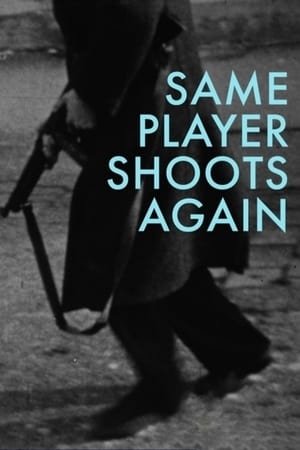
Sequence of five shots, each one with a particular color treatment, in which a man carrying a machine gun runs. He moves fast in the beginning but, as the end comes closer, he starts to walk in zigzag. Is he hurt?
An experience of a camera swinging in different gestures facing the optical distortion of the Sun. The last appearance of the smudge.
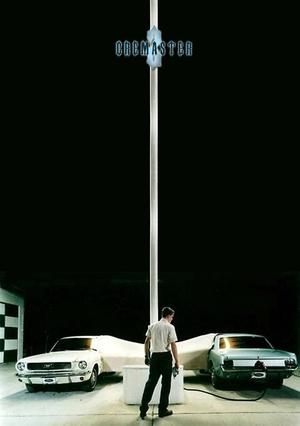
CREMASTER 2 is rendered as a gothic Western that introduces conflict into the system. On the biological level it corresponds to the phase of fetal development during which sexual division begins. In Matthew Barney's abstraction of this process, the system resists partition and tries to remain in the state of equilibrium imagined in Cremaster 1.
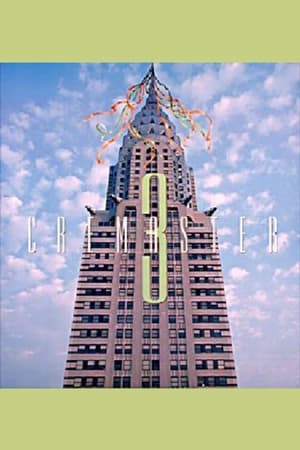
CREMASTER 3 is set in New York City and narrates the construction of the Chrysler Building, which is in itself a character - host to inner, antagonistic forces at play for access to the process of (spiritual) transcendence. These factions find form in the struggle between Hiram Abiff or the Architect...
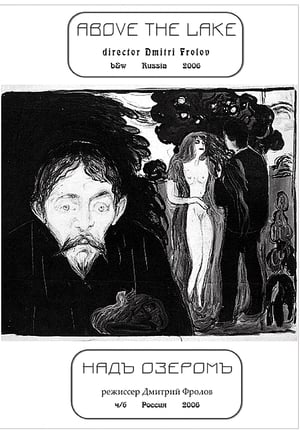
Here I am. A mind backed up by delusion of previous condition. Free or humiliated? Who is ashamed? Me or you? It is so hard to share one's secret.
The constant movement of the wheels, threads, sprockets, feet and hands suggests restlessness, and this is paralleled by the soundtrack. The unknown woman could be Gretchen from Faust, hopelessly in love or Ariadne who gave Theseus the thread to find his way out of labyrinth or perhaps she is one of the fates, weaving destiny… Enlarged from Super-8 to 35mm, the film is very grainy, in itself an homage to the medium of film which is also emphasized by the depiction of all kinds of turning machines, both in image and sound.
Short experimental 16mm film.