Immediately after the Boston Marathon bombing in April 2013, amateur detectives took the Internet chat rooms to try to find the culprits, looking for details in photographs uploaded to the sites that could point to the guilt of potential suspects.
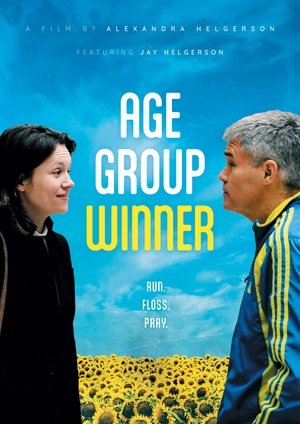
In 1980 Jay Helgerson shocked the world, becoming the first person to run a marathon a week for a year – each race completed in under three hours. For the last ten years, his daughter, filmmaker Alexandra Helgerson, followed him with a camera in order to understand the eccentric man who raised her. What she gets are his projected anxieties, his struggles with physical age and emotional distress, all while he endlessly trains for the Boston Marathon. But as Jay trains, the film is nearly derailed by Alexandra’s encounter with a life threatening illness. Ultimately, AGE GROUP WINNER is an affirmation of the will to live.
A retrospective on the Boston bombing.
In April 2013, chaos erupted in Boston near the finish line of one of the world's oldest and most prestigious marathons. It was the worst terrorist attack on the United States since 9/11 and led to one of the most extensive and public manhunts in American history. Now, as the one-year anniversary approaches, National Geographic Channel presents a special two-hour event, Inside the Hunt for the Boston Bombers.
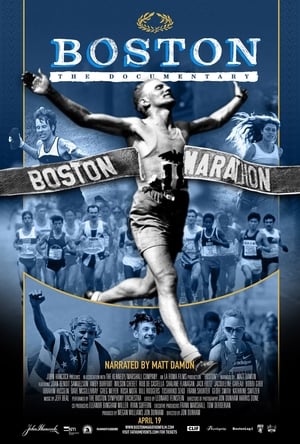
The history of the Boston Marathon from its humble origins starting with only 15 runners, to the first female runners, through the tragedy in 2013, and ultimately the triumph of 2014.
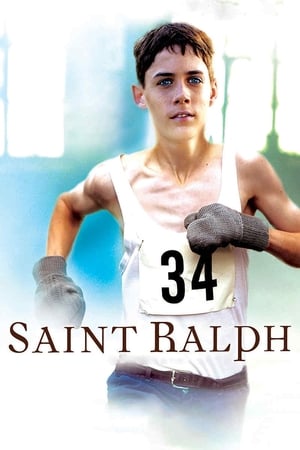
This Canadian made comedy/drama, set in Hamilton, Ontario in 1954, is a sweet and - at times - goofy story that becomes increasingly poignant as the minutes tick by. It's the fictional tale of a wayward 9th grader, Ralph (Adam Butcher), who is secretly living on his own while his widowed, hospitalized mother remains immersed in a coma. Frequently in trouble with Father Fitzpatrick (Gordon Pinsent), the principal of his all-boys, Catholic school, Ralph is considered something of a joke among peers until he decides to pull off a miracle that could save his mother, i.e., winning the Boston Marathon. Coached by a younger priest and former runner, Father Hibbert (Campbell Scott), whose cynicism has been lifted by the boy's pure hope, Ralph applies himself to his unlikely mission, fending off naysayers and getting help along a very challenging path from sundry allies and friends.
A fictional film about a runner's relationship with his sister and brother as he tries to qualify for Boston.
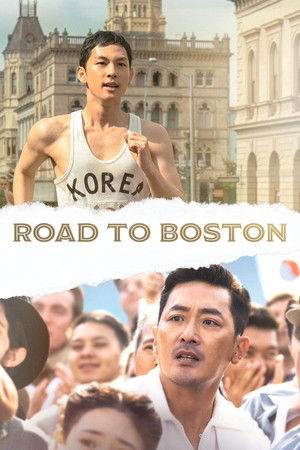
A rousing tale of the Korean athletes who ran the 1947 Boston International Marathon, the first international marathon held since World War II.
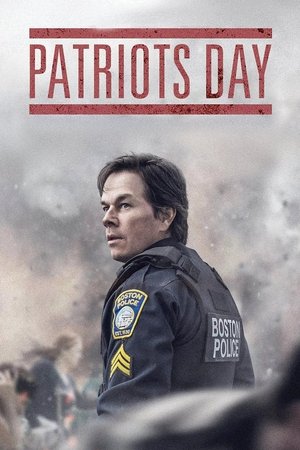
In the aftermath of an unspeakable act of terror, Police Sergeant Tommy Saunders joins courageous survivors, first responders and investigators in a race against the clock to hunt down the Boston Marathon bombers before they strike again.
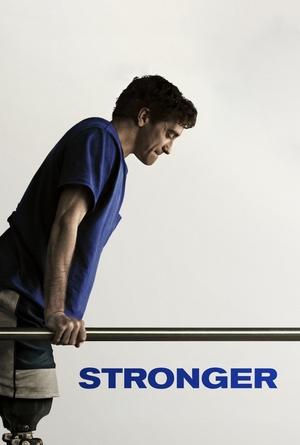
A victim of the Boston Marathon bombing in 2013 helps the police track down the killers while struggling to recover from devastating trauma.
Discover more about Aromatherapy with the help of a very experienced Aromatherapist, a range of the most popular essential oils are explained and the best ways in which to use them.
With many breeds and countless variations, canines are one of the most diverse species on Earth. From ears to tails, coats to paws, every part of their bodies is uniquely structured to serve a purpose. How Dogs Got Their Shapes shines a light on a variety of canine shapes to explain how each aspect plays a pivotal role in the evolution, history, and behavior of distinct dog breeds.
"Born in a coffin" - For 60 years Sonja Malmberg worked as a undertaker in Filipstad, Värmland, Sweden. At the age of 83 she leaves the office, after also having written three books. Poems and texts from these books form the backbone of this portrait of her, in the meeting with filmmaker Staffan Winbergh. A friendship for almost 50 years.
"With one foot in eternity. Arne in the boat." - About the existential everyday artist, subsistence and natural philosopher Arne Ottoson who has chosen to isolate himself in an earthen hut in the woods of western Värmland, Sweden.
Set in the mountains of northeast Italy, this film may be considered an observational documentary about rural life. Although this is undeniably the case, at the same time Under the cold stars can hardly be considered a documentary: the microcosm on which it focuses appears to be a reflection of a broader reality and perhaps a way to deal with the themes of man’s existence and his relationship with animals, nature and, most importantly, with time. As written by Franco Piavoli "it is a film which essentially relies on images and sound, where words themselves are sound and the music of life, of the relentless flow of time."
Film Geek is a joyous and emotional look back at a movie obsessed kid growing up in New York City, and his relationship with his mysterious father. Crafted entirely out of film clips from over 2,000 movies, as well as his personal archives, Emmy and DGA-award winning director Richard Shepard mines the material for clues to understand his own DNA.
The story of Alexa's journey as a trans woman, navigating the toxic culture that encompasses skateboarding, and what it means to transcend fear through community.
A nuanced portrait of a new generation, Dear Thirteen is a cinematic time capsule of coming of age in today’s world. Through the eyes of nine thirteen-year-olds, we see how pressing social, geographical and political challenges are shaping, and being shaped by, young people: rising anti-Semitism in Europe, guns in America, gender identity and racial divisions across Australia and Asia. With no adult commentary outside the filmmaker, Dear Thirteen offers an intimate view into the universal uncertainty inherent in growing up.
For 30 years, Chef Jimmy Lee Hill has dedicated himself to the gourmet culinary training program he leads at Lakeland Correctional Facility in Coldwater, Michigan. The pioneering program gives prisoners a prestigious skill they can take back into the workforce and provides a sense of purpose as they serve their time. As he enters his senior years, tensions arise over Chef Hill’s faith in a particular trainee.
In May 2015, a group of students from Tokyo, ranging in age from 16 to 23, head to a farmhouse in Sukagawa, Fukushima Prefecture. They were met by Kazuya Tarukawa, a farmer, and his mother, Mitsuyo. Kazuya's father took his own life immediately after the nuclear accident, saying that he may have encouraged his son, who had taken over the farming business, down the wrong path. Kazuya struggles as a farmer and the students who listen to him talk about the reality of crops in Fukushima four years after the disaster and the absurdity of TEPCO's compensation system, as well as his determination to carry on farming on his ancestral land.