Tim Noonan investigates the ultimate wildlife mystery to find out if the Tasmanian tiger, the world's rarest, most elusive animal, is gone for good or just very good at hiding.
The Last Bumblebee is a solution-based documentary featuring interviews with scientists, and environmentalists discussing the importance of bumblebees as pollinators and the various threats they face.
Original 35mm nitrate negative film shot by naturalist David Fleay at Beaumaris Zoo, Hobart in December 1933. Colorized by Samuel François-Steininger at the Paris-based, Composite Films, from a 4K scan of the negative by the National Film and Sound Archive Australia.
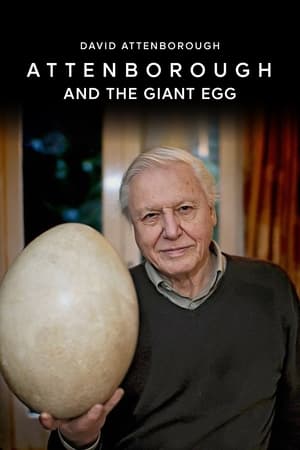
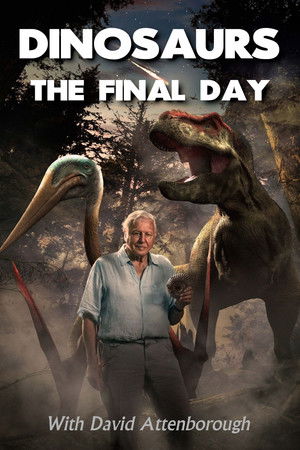
David Attenborough returns to the island of Madagascar on a very personal quest. In 1960 he visited the island to film one of his first ever wildlife series, Zoo Quest. Whilst he was there, he acquired a giant egg. It was the egg of an extinct bird known as the 'elephant bird' - the largest bird that ever lived. It has been one of his most treasured possessions ever since. Fifty years older, he now returns to the island to find out more about this amazing creature and to see how the island has changed. Could the elephant bird's fate provide lessons that may help protect Madagascar's remaining wildlife? Using Zoo Quest archive and specially shot location footage, this film follows David as he revisits scenes from his youth and meets people at the front line of wildlife protection. On his return, scientists at Oxford University are able to reveal for the first time how old David's egg actually is - and what that might tell us about the legendary elephant bird.
Recorded by pioneers as far back as 1805, the Tasmanian tiger has become an intensely mystifying Australian icon, whose entire existence has become the stuff of both fable and legend. This program investigates a chequered past and puts the speculation into perspective, taking into account the tragic culling and ‘bounty era’ where the carnivorous creatures were thought to be solely responsible for a considerable loss of farmers’ livestock. Balancing the facts with personal reflections from Tasmanian locals, scientists and other informed practitioners, The Tasmanian Tiger is a thought-provoking and revealing look at the extraordinary life and death of one of Australia’s most mysterious marsupials.
The original film of the Tasmanian tiger (also known as the thylacine) was shot by Australian zoologist David Fleay in 1933 on black-and-white film. Recently, this historic footage has been colorized and digitized by a team of international experts. You can watch the remastered footage of the last-known surviving Tasmanian tiger here. The thylacine, which resembled a medium-to-large-sized canid, had dark transverse stripes radiating from the top of its back. Sadly, the last known thylacine died in 1936 at the Hobart Zoo in Tasmania.
There are about 250 people with a unique ancestry. Livonians – one of the smallest and most endangered nations. Each of Livonians has a duty to preserve their identity and the great history of their ancestors. Trillium follows the footsteps of a poet and researcher Valts Ernštreits, who is one of 20 people able to speak fluent Livonian – an indigenous language related to Estonian and Finnish – in his efforts to look after the language and culture of these ancient settlers of the Baltic Sea coast.
An extinct species, the Tasmanian tiger. A long-forgotten legend, “The Pieman” aka Alexander Pearce, who was hanged for cannibalism in 1824. Both had a desperate need to survive; both could have living descendants within the Tasmanian bush. Four hikers venture deep into isolated territory to find one of these legends, but which one will they come upon first?
Adopted by a big, lively and spirited kangaroo family of traveling wrestlers, Teo’s life is pretty great. But when mysterious visions lead him to a faraway land, Teo is forced to rediscover his roots and embark on an epic journey to save his homeland from impending destruction.
A Tasmanian tiger wanders around in his zoo enclosure. A glacier is slowly melting. Facing its predicted disappearance, nature exerts its fury, bursts over the frame and resists its extinction by transformation.
A strange race of human-like marsupials appear suddenly in Australia, and a sociologist who studies these creatures falls in love with a female one. Is this a dangerous combination?
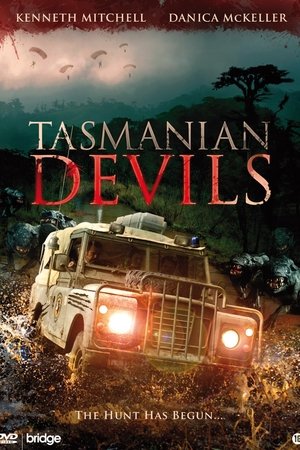
Martin, a mercenary, is sent from Europe by an anonymous biotech company to the Tasmanian wilderness on a hunt for the last Tasmanian tiger.
Bruce Brown's The Endless Summer is one of the first and most influential surf movies of all time. The film documents American surfers Mike Hynson and Robert August as they travel the world during California’s winter (which, back in 1965 was off-season for surfing) in search of the perfect wave and ultimately, an endless summer.
An exploration —manipulated and staged— of life in Las Hurdes, in the province of Cáceres, in Extremadura, Spain, as it was in 1932. Insalubrity, misery and lack of opportunities provoke the emigration of young people and the solitude of those who remain in the desolation of one of the poorest and least developed Spanish regions at that time.
Megacities is a documentary about the slums of five different metropolitan cities.
Warsaw's Central Railway Station. 'Someone has fallen asleep, someone's waiting for somebody else. Maybe they'll come, maybe they won't. The film is about people looking for something.
A dramatisation of the workers' protests in June 1976 in Radom, seen from the perspective of the local Secretary of the Polish United Workers' Party.
A detailed chronicle of the famous 1969 tour of the United States by the British rock band The Rolling Stones, which culminated with the disastrous and tragic concert held on December 6 at the Altamont Speedway Free Festival, an event of historical significance, as it marked the end of an era: the generation of peace and love suddenly became the generation of disillusionment.
Primary is a documentary film about the primary elections between John F. Kennedy and Hubert Humphrey in 1960. Primary is the first documentary to use light equipment in order to follow their subjects in a more intimate filmmaking style. This unconventional way of filming created a new look for documentary films where the camera’s lens was right in the middle of what ever drama was occurring. Preserved by the Academy Film Archive in partnership with The Film Foundation in 1998.
In this wildly entertaining vision of one of the twentieth century’s greatest artists, Bob Dylan is surrounded by teen fans, gets into heated philosophical jousts with journalists, and kicks back with fellow musicians Joan Baez, Donovan, and Alan Price.