Robin Hood is a 1912 film made by Eclair Studios when it and many other early film studios in America's first motion picture industry were based in Fort Lee, New Jersey at the beginning of the 20th century. The movie's costumes feature enormous versions of the familiar hats of Robin and his merry men, and uses the unusual effect of momentarily superimposing images different animals over each character to emphasize their good or evil qualities. The film was directed by Étienne Arnaud and Herbert Blaché, and written by Eustace Hale Ball. A restored copy of the 30-minute film exists and was exhibited in 2006 at the Museum of Modern Art in New York City.
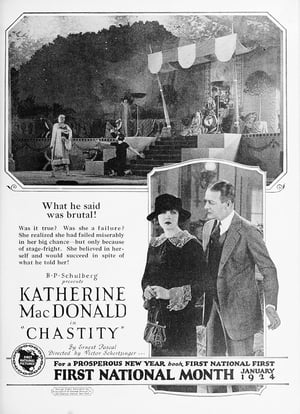
Ethel, whose financially distressed parents depend on her marrying into wealth, may be forced to abandon the man she loves for her father's rich friend.
Joe Henry, head of a one-ring circus, plays a small town and after the departure of the troupe a young girl, fascinated by the prospects of being a star, follows. She is engaged and her presence causes jealousy on the part of Joe's sweetheart.
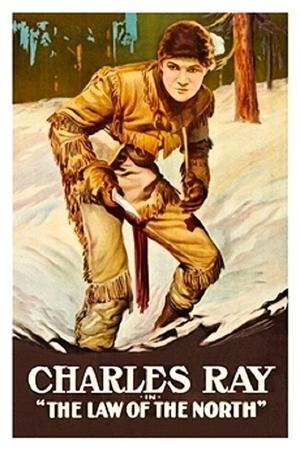
Ranch hand Jack Harlan comes to the aid of his girlfriend’s father when his ranch is threatened by an outlaw gang led by a woman known only as "The Hellion".
A young girl is reared on a desert island by natives and led to believe that she is a goddess. One day an outsider comes to the island, and persuades her to accompany him to preach about the kindness and love she has experienced. She agrees, but she's soon confronted by the problems and travails of the "outside" world.
Becoming imbued with a lawless spirit, Tom, a street waif of twelve, holds up an old woman with a toy pistol, robs her of a dollar and gets away. Exhibiting the money to some of his companions, the boy proceeds to give them all an ice cream treat. The feast is interrupted by the police, who nab Tom.
Edward Thursfield, chief engineer of the bridge building firm of Henry Killick and Company, is building the largest concrete bridge in the world. Employed in the New York office is a young man named Arnold Faringay. Arnold sees an opportunity of using money from the payroll for a big deal.
Belle Bennett plays as the widowed mother of seven children living in Sioux City, Iowa. She moves with them to Cambridge, Massachusetts in order to educate her children with culture and give them every advantage. Bennett, who is unversed in financial matters, soon faces poverty for herself and her children. She takes out a loan from an unscrupulous lender (played by Richard Tucker), who is so impressed by the charm and valiant spirit of Bennett than he neglects to ask her for collateral. Bennett, however, is only able to partially pay her creditors. Marion Nixon, Bennett's eldest daughter, is shocked by her mother's actions and attempts to sacrifice herself to Tucker in order to clear her mother's obligations, even though she is engaged to marry a well to do Harvard undergraduate, played by Rex Bell. This film is believed lost.
An entire city has lost its voice. Mr. TV, the owner of the city's only television channel, is carrying out a sinister plan to control all of the city's inhabitants.
Marcia Kane, daughter of an American capitalist, is persuaded by her father to marry the expatriated Russian Grand Duke Sergei, and believing Wally, her real love, to be dead, she consents. Discovering after the ceremony that her father has tricked her, Marcia vows to be the duke's wife in name only, though she refuses Wally's proposal that she go away with him.
The story of two feuding Irish immigrant families living in a tenement.
Fannie joins Johnny to perform a music-hall act which becomes a success, until two Broadway producers catch the act and offer Fannie a job on their latest show; however, they have no place for Johnny, so Fannie turns down the offer. (Film considered lost.)
A girl in search of sailors lost in the Pacific.
Based on the David Belasco stage production of the Max Marcin play in which heavyweight-champion Jack Dempsey played the role of the fighter, Tiger: This "behind-the-scenes look of a heavyweight-championship fight" looks much like all of the other boxing films in which the Champ gets involved in a frame-up and is asked to take a dive.
Neglected by shallow husband Dick, young bride Paula Wayne seeks male companionship outside the marital nest. She soon finds it in the form of mature lover Frank Gordon. Lost film.
Bertha Sloan loses her job as a sewing-machine girl and subsequently is employed as telephone girl with a lingerie manufacturing company. She soon falls in love with the assistant shipping clerk, Roy Davis, and is promoted to chief model for the firm, owing to the patronage of Morton, the wealthy and wicked manager. Bertha is about to take a position in Paris as designer when Morton lures her to his home.
Mike Kildare, a swaggering youth from New York City's Bowery at the turn of the century, comes to the defense of Mamie Rose, a mender in a secondhand clothing shop, when his own gang of Irish-Americans insult her.
A rich girl's fiancé poses as a chauffeur to stop her eloping with a major.
The daughter of a count and the son of a shoemaker, both Hungarian, fall in love in America. As they're about to marry, the young woman is called back to Europe. When her betrothed goes after her, difficulties ensue.
In Paris an Apache dancer weds his ex-fiancée's sister for revenge but learns to love.