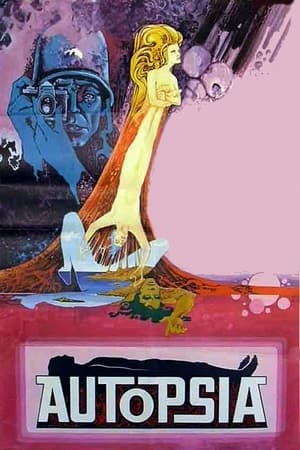
Mondo-style docudrama about a war correspondent who comes back home and has a spiritual crisis about his own mortality. Surreal fantasy sequences are mixed with graphic real autopsy footage.
A Hmong guide's daily life in the mountains of Sapa, North Vietnam.
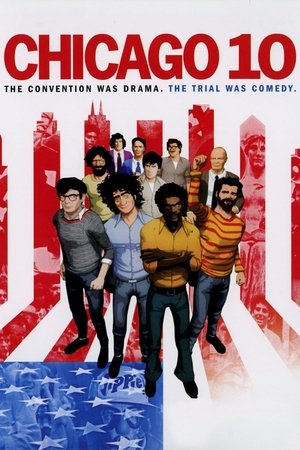
Archival footage, animation and music are used to look back at the eight anti-war protesters who were put on trial following the 1968 Democratic National Convention.
This documentary interviews young people on war, religion, music, sex, and other topics. Part of NBC's Experiment in Television.
In Saigon, family culture carries on as it has for centuries, even when blood ties are broken. Through a mosaic of intimate portraits, Má Sài Gòn explores humanity’s universal desire for love, acceptance, connection and belonging through an LGBTQ+ lens. The film is a love letter – a bittersweet ode to a comforting yet disturbing mother, to a city that is as liberating as it is oppressive.
A Vietnamese documentary on human suffering and the meaning of kindness.
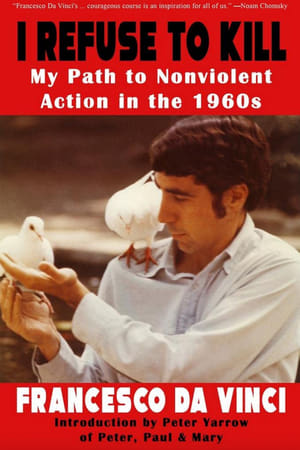
At the risk of a 5-year prison term, Francesco Da Vinci struggles with his Virginia draft board to be recognized as a sincere conscientious objector to the Vietnam war.
A U.S. Navy Commander Jeremiah Denton leading a plane sortie into North Vietnam was shot down and captured as a POW. For 8 years of his life, he was a prisoner at Hanoi Hilton where he and other POWs were tortured. In a press conference, being forced by the North Vietnamese to say he was being treated well he blinked out the letters TORTURE in Morse code.
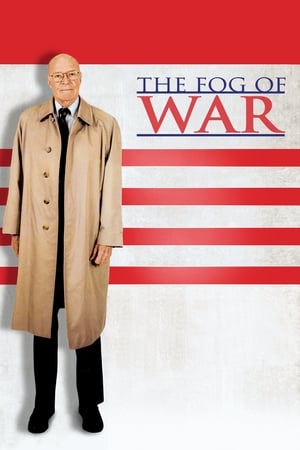
Using archival footage, cabinet conversation recordings, and an interview of the 85-year-old Robert McNamara, The Fog of War depicts his life, from working as a WWII whiz-kid military officer, to being the Ford Motor Company's president, to managing the Vietnam War as defense secretary for presidents Kennedy and Johnson.
As queer trans and gender non-conforming children of the Vietnamese diaspora, we are fragmented at the crossroads of being displaced from not only a sense of belonging to our ancestral land, but also our own bodies which are conditioned by society to stray away from our most authentic existence. Yet these bodies of ours are the vessels we sail to embark on a lifetime voyage of return to our original selves. It is our bodies that navigate the treacherous tides of normative systems that impose themselves on our very being. And it is our bodies that act as community lighthouses for collective liberation. Ultimately, the landscape of our bodies is our blueprint to remembering, to healing, to blooming.
Sir! No Sir! is a documentary film about the anti-war movement within the ranks of the United States Military during the Vietnam War. It consists in part of interviews with Vietnam veterans explaining the reasons they protested the war or even defected. The film tells the story of how, from the very start of the war, there was resentment within the ranks over the difference between the conflict in Vietnam and the "good wars" that their fathers had fought. Over time, it became apparent that so many were opposed to the war that they could speak of a movement.
When Jennifer Laude, a Filipina trans woman, is brutally murdered by a U.S. Marine, three women intimately invested in the case--an activist attorney, a transgender journalist and Jennifer's mother)--galvanize a political uprising, pursuing justice and taking on hardened histories of US imperialism.
In the gathering dusk of 18 August 1966, 108 young, inexperienced Australian and NZ soldiers are separated and surrounded, fighting for their lives, holding off an overwhelming force of 2,500 battle-hardened Viet Cong and North Vietnamese soldiers. And, in the pouring rain, amid the mud and shattered trees of a rubber plantation called Long Tan, with their ammunition running out and another Vietnamese battalion massing for the final assault, the digger's situation seemed hopeless. Long Tan is the true story of ordinary boys who became extraordinary men.
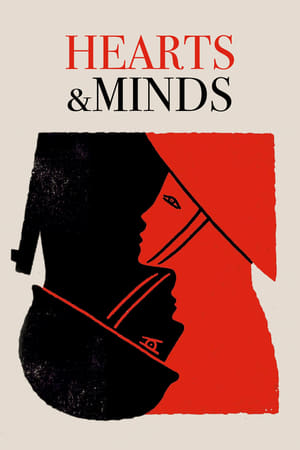
Many times during his presidency, Lyndon B. Johnson said that ultimate victory in the Vietnam War depended upon the U.S. military winning the "hearts and minds" of the Vietnamese people. Filmmaker Peter Davis uses Johnson's phrase in an ironic context in this anti-war documentary, filmed and released while the Vietnam War was still under way, juxtaposing interviews with military figures like U.S. Army Chief of Staff William C. Westmoreland with shocking scenes of violence and brutality.
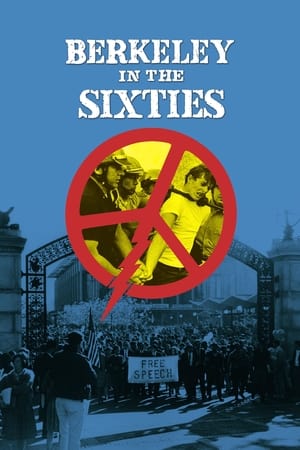
A documentary about militant student political activity at the University of California, Berkeley in the 1960s.
Bookended by call-to-action quotes from Margaret Mead and Mahatma Gandhi, this inspiring documentary follows three extraordinary women -- in Bosnia-Herzegovina, Mali, and Vietnam -- as they lead day-to-day battles against ignorance, poverty, oppression, and ethnic strife.
American Experience looks at the 1968 Democratic National Convention in Chicago where Vice President Hubert Humphrey won his party's nomination for president amid massive civil unrest and violence perpetrated by Chicago Police and anti-Vietnam War protesters.
The untold stories of six Australian army nurses who served at the only Australian field hospital in the Vietnam War.
A Hundred Years of Happiness; an observational documentary, is a personal portraiture of a Vietnamese farming family and their daughter Tram. While her father instils in her the importance of familial obligation to care for one’s ageing parents, her mother desires a secure future devoid of economic hardship. Determined to fulfil both her parent’s wishes, Tram pursues a new life in South Korea as a migrant bride, but her fast-tracked journey leaves little time for reflection.
Real-life letters written by American soldiers, sailors, airmen, and Marines during the Vietnam War to their families and friends back home. Archive footage of the war and news coverage thereof augment the first-person "narrative" by men and women who were in the war, some of whom did not survive it.