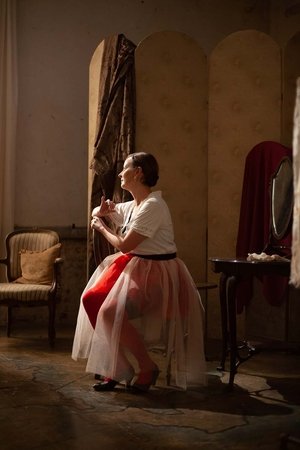
The story of how Aurora Mardiganian (1901-94), a survivor of the Armenian genocide perpetrated by the Ottoman Empire (1915-17), became a Hollywood silent film star.
In 1896, three survivors of a whaling ship-wreck in the Canadian Arctic are saved and adopted by an Eskimo tribe but frictions arise when the three start misbehaving.
An exploration of Sigmund Freud, including his relationship to German nose and throat specialist Dr. Wilhelm Fliess.
A farmer's son transforms into a fashion mogul, building a billion-dollar luxury empire while staying true to his humanistic values and commitment to ethical business practices and fine craftsmanship.
Film made at Hyde Park Corner in 1896 by an unknown filmmaker. It looks south west across Grosvenor Place. The southern wing of St George's Hospital (today the Lanesborough Hotel) can be seen on the right of the picture. The road stretching away in the centre of the picture is Grosvenor Crescent. The busy two way horsedrawn traffic movement is seen on what would today be Grosvenor Place and Apsley Way (the road layout now is different to 1896). The approximate camera position would be today on Apsley Way, just east of the Royal Artillery Memorial. Not to be confused with another Hyde Park Corner film by British Pathé made in the same year but with a different view. (That film looks north towards the triumphal arch at the corner of Hyde Park next to Apsley House.)
An account of the last two centuries of the Anthropocene, the Age of Man. How human beings have progressed so much in such a short time through war and the selfish interests of a few, belligerent politicians and captains of industry, damaging the welfare of the majority of mankind, impoverishing the weakest, greedily devouring the limited resources of the Earth.
An examination of the intimate life of America's most consequential president, Abraham Lincoln. As told by preeminent Lincoln scholars and never before seen photographs and letters, Lincoln's romantic relationships with men is detailed. The lens is widened into the history of human sexual fluidity and focuses on the profound differences between sexual mores of the 19th century and those we hold today.
Boško Tokin, the hero, was the first filmmaker in the Balkans and the first in the world to go to prison for it.
Based on the autobiography of Sonny Bono, this film focuses on the volatile relationship between Sonny and Cher during the early 60's to their messy divorce in the late 70's.
Based on Anna Sewell's novel. In rural England of the 1880's, widower Squire Wendon is rearing his young daughter Anne. Her father has forbidden her to be present when their mare, "Duchess," gives birth. Anne sneaks out to the stable, however, and is discovered by her father who forbids her ever to ride Duchess again. Despite this punishment, he gives Anne Duchess's colt because it is her birthday, and she names him "Black Beauty."
In mid-19th-century Costa Rica, President Juan Rafael Mora vows to defend his nation from American filibuster and slaver William Walker, who has seized nearby Nicaragua. Flashbacks trace Mora’s rise from reformist coffee planter to national leader, modernizing his family’s plantation with fair wages and new methods. Guided by love, loss, and his cautious brother-in-law, José María Montealegre, Mora builds trade ties with British merchant William Le Lacheur. In 1856, Costa Ricans defeat Walker, but cholera devastates the land. Betrayed by Montealegre, Mora is executed—like Walker—undone by ambition and history’s cruel turns.
In the pre-revolutionary years, a young shepherd follows Kitsos and his men into the mountains to fight the Turks. When the shepherd kidnaps his beloved – and while her relatives pursue him – Kitsos and his men defend the couple.
A Victorian surgeon rescues a heavily disfigured man being mistreated by his "owner" as a side-show freak. Behind his monstrous façade, there is revealed a person of great intelligence and sensitivity. Based on the true story of Joseph Merrick (called John Merrick in the film), a severely deformed man in 19th century London.
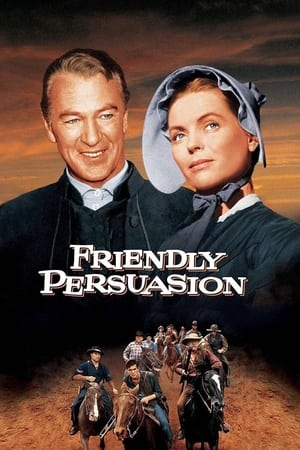
A former gunslinger is forced to take up arms again when he and his cattle crew are threatened by a corrupt lawman.
A look at the world of US writer Paul Auster, on the occasion of the publication of his new novel, an exploration of human identity and the soul of New York, the city that Auster has portrayed as no one else has ever done.
A dying man in his forties recalls his childhood, his mother, the war and personal moments that tell of and juxtapose pivotal moments in Soviet history with daily life.
The story of the romance between the King of Siam (now Thailand) and the widowed British school teacher Anna Leonowens during the 1860s. Anna teaches the children and becomes romanced by the King. She convinces him that a man can be loved by just one woman.
Almost a decade since larger-than-life glam-rock enigma Brian Slade disappeared from public eye, an investigative journalist is on assignment to uncover the truth behind his former idol.
In 1895, Oscar Wilde (1854-1900) was the most famous writer in London, and Bosie Douglas, son of the notorious Marquess of Queensberry, was his lover. Accused and convicted of gross indecency, he was imprisoned for two years and subjected to hard labor. Once free, he abandons England to live in France, where he will spend his last years, haunted by memories of the past, poverty and immense sadness.
Watched by crowds, Sir Redvers Buller, Lady Buller, the Mayor of Southampton and others walk along the gangway leading to the ship towards the camera. Sir Redvers pauses to be introduced to one of the ship's officers before embarking. According to BFI programme notes, the filmmaker William K.L. Dickson can be seen bottom left, attempting to introduce himself to General Buller as he passes. Film companies were in competition to film reportage of the Boer War and Dickson was one of those filmmakers keen to do so.