Documentary brings the time of the Holocaust to life and provides insight into the mind of the organizer of this crime: Adolf Eichmann. The documentary contrasts Eichmann's statements and memories - documented in the original soundtrack - directly with those of Holocaust survivors. The picture of the person and the crime is rounded off by the many contemporary witnesses who were involved either in Eichmann's arrest or the subsequent trial - such as the doctors and psychologists who looked after him, the guards and police officers through to the interrogator, the public prosecutor and the judge at the trial.
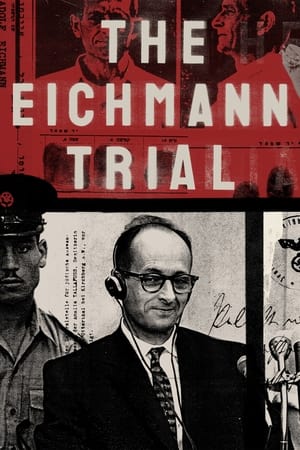
In 1961, history was on trial... in a trial that made history. Just 15 years after the end of WWII, the Holocaust had been largely forgotten. That changed with the capture of Adolf Eichmann, a former Nazi officer hiding in Argentina. Through rarely-seen archival footage, The Eichmann Trial documents one of the most shocking trials ever recorded, and the birth of Holocaust awareness and education.
In 1960, a team of Israeli secret agents is deployed to find Adolf Eichmann, the infamous Nazi architect of the Holocaust, supposedly hidden in Argentina, and get him to Israel to be judged.
Samuel Willenberg and Kalman Taigman, the last two survivors of the Nazi extermination camp Treblinka, recount the horrors they experienced during the war and talk about their lives after their escape in a prisoner uprising in 1943. Willenberg would go on to become a hero of the 1944 Warsaw uprising while Taigman would be called as a witness during the infamous trial of Adolf Eichmann.
Composed exclusively of the footage recorded by Leo Hurwitz during the trial of Adolf Eichmann in Jerusalem in 1961, A Specialist is a courtroom drama painting the portait of a zealous bureaucrat who has immense respect for the Law and hierarchy, a police official responsible for the elimination of several million people, a modern criminal.
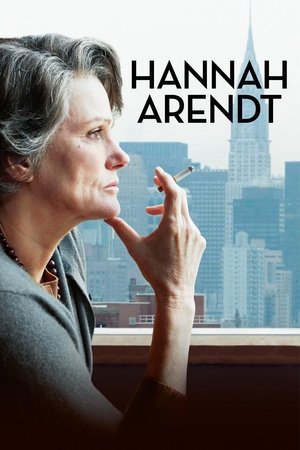
The life and work of German political philosopher of Jewish descent Hannah Arendt (1906-75), who caused a stir when she coined a subversive concept, the banality of evil, in her 1963 book on the trial of Nazi war criminal Adolph Eichmann (1906-62), held in Israel in 1961, which she covered for the New Yorker magazine.
When Israeli officials learn that Nazi war criminal Adolf Eichmann may be living in Argentina, they send a team of secret agents to apprehend him.
A portrait of the genius that shook the world with her discovery of “the banality of evil.” After she attends the Nazi Adolf Eichmann’s trial in Jerusalem, Arendt dares to write about the Holocaust in terms no one has ever heard before. Her work instantly provokes a furious scandal, and Arendt stands strong as she is attacked by friends and foes alike. But as the German-Jewish émigré also struggles to suppress her own painful associations with the past, the film exposes her beguiling blend of arrogance and vulnerability — revealing a soul defined and derailed by exile.
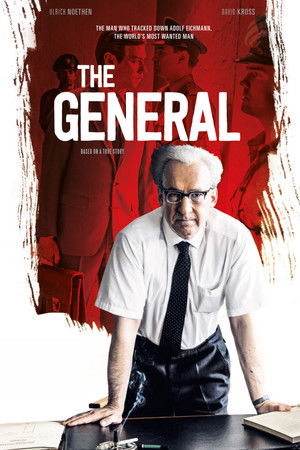
In the young Federal Republic of Germany, which in the late 1950s in politics and justice is still interspersed with only superficially purified Nazi cliques, leads the Hessian Attorney General Fritz Bauer a lonely fight against the coverup of Nazi crimes and the restorative policy of the government Adenauer - he is firmly convinced that only in this way can the young democracy be consolidated. Not only his attitude, but also his temperament make Bauer vulnerable, again and again resistance forms from politics, intelligence services and the judiciary against the lone fighter.
This large historical production was staged simultaneously with A. Khanzhonkov's painting "The Accession of the House of Romanov", but it was carried out on a larger scale; It ends with documentary footage of the coronation of Nicholas II.
An unnamed man narrates the downward trajectory of his life from beyond the grave, from delinquency to the string of fateful decisions and foolhardy moves that tied him inextricably to the opiate that was the elusive love of his life.
This film tells the story of three defeats: Berlusconi’s political and human defeat in his “twilight”, the one of Ciccio Mirra, Berlusconi’s unconditional supporter, deeply rooted in an ancient culture that dies hard, and the director’s artistic defeat in an Italy that recognised itself in this “Berlusconian culture” for a long time, and probably still does.
Bülent Ceylan - Haardrock
Winter can be long and boring but grab a pair of skis or a snowboard and transform it and find out what it’s like to have an Extreme Winter. Ride along with skiers like Tamara McKinney, Jim “Moose” Barrows, Billy Kidd, Scotty Brookwbank, and Warren Miller himself as they travel across North America all the way down to Antactica to show you how extreme winter can really be.
Pierre's the photographer, Gilles is the painter. This video follows the pair of French artists for one year as they team to concoct their patented bizarre and beautiful imaginary world in pictures, often conflating gay, Hollywood, and religious iconography. They've attracted as models such international celebrities and stars as Michael Jackson, Nina Hagen, Madonna, Boy George, Mark Almond, Catherine Deneuve, Rupert Everett, Jean-Paul Gaultier, and Prince. Some critics dismiss their work as simply kitsch, while some of the world's top art galleries have held shows celebrating the duo's work.
Illustrated with archival photographs, animations and live action, this film explores the history and historical and spiritual heritage of Emir Abd El-Kader. Algerian leader of the 19th century, was admired by Abraham Lincoln and celebrated to this day by the Red Cross as a great humanitarian. Emir Abd el-Kader, the man who challenged the French armies from 1832 to 1847 before creating the bases of a real Algerian state, is today considered by independent Algeria as one of the most outstanding figures. of its history. The nobility of his attitude after his capture and the very effective protection he brought to the Christians of Damascus at the end of his life also earned him great prestige among his former adversaries. A documentary told in dialectal Arabic by the voice of Amazigh Kateb.
When Juan Catalan is arrested for a murder he insists he didn't commit, he builds his case for innocence around unexpected raw footage.
Interview with French director Jacques Tati, focusing on his on-screen persona, Monsieur Hulot. Produced for the British television series "Omnibus".
Documentary originally produced for BBC's television series "Natural World".