Koro wants to get to the other side of the road.
Nazi Third Reich propaganda film that used architecture as a statement about "racial accomplishment," and so called "racial superiority." Hitler claimed that between 1934 and 1940, the Nazi rule of Germany had produced architectural uniqueness, and this film was produced to shown to attempt to validate that. The opening montage gives a survey of earlier Gothic and Baroque structures in the country as an example of "architectural superiority" that the German race was said to be the sole inventor of; then moves on to deride the recent construction of the Bauhaus school (with a racially motivated score of Jazz music) and an example of German "architectural decay." Then proceeds to show off buildings constructed by the Nazi and an architectural revival, to "last 1000 years," Film also spends a great of time dwelling on massive and "busy" monuments that had been erected all over the county.
A pawnbroker's assistant deals with his grumpy boss, his annoying co-worker and some eccentric customers as he flirts with the pawnbroker's daughter, until a perfidious crook with bad intentions arrives at the pawnshop.
A tailor's apprentice burns Count Broko's clothes while ironing them and the tailor fires him. Later, the tailor discovers a note explaining that the count cannot attend a dance party, so he dresses as such to take his place; but the apprentice has also gone to the mansion where the party is celebrated and bumps into the tailor in disguise…
Kill
The earliest surviving motion-picture film, and believed to be one of the very first moving images ever created, was shot by Louis Aimé Augustin Le Prince using the LPCCP Type-1 MkII single-lens camera. It was taken on paper-based photographic film in the garden of Oakwood Grange, the Whitley family house in Roundhay, Leeds, West Riding of Yorkshire (UK), on 14 October 1888. The film shows Adolphe Le Prince (Le Prince’s son), Mrs. Sarah Whitley (Le Prince’s mother-in-law), Joseph Whitley, and Miss Harriet Hartley walking around in circles, laughing to themselves, and staying within the area framed by the camera. Roundhay Garden Scene is often associated with a recording speed of around 12 frames per second and runs for about 2 to 3 seconds.
A green-skinned demon places a woman and two courtiers into a flaming cauldron.
Rami Haruvi, a daring Mossad Agent, is sent to rescue the abducted US ambassador held at the state of Sugyra. If Rami fails his mission, the annual mossad vacation at "Olga Resort" will be canceled. Due to the importance of the mission, Hayim, the Head of the Mossad decides to assign Rami a new agent to his mission - the daughter of a mythological Mossad agent named Shuki, a ladies' man and Rami's role model. The two are getting into trouble both in their mission and relationship. Are the Americans good? Are the terrorist bad? Yet none of it compares to the real important question: will Hayim get his longed annual vacation at the Olga Resort?
The story of a Soviet military serviceman and a male Georgian dancer. An anti-violence film about the awakening of human instinct in an invader
This is an animated version of Yanase Takashi's picture book featuring the friendship between a mother dog, Muku-muku, who lost her puppy, and the baby lion Buru-buru, who lost her mother.
The first woman to appear in front of an Edison motion picture camera and possibly the first woman to appear in a motion picture within the United States. In the film, Carmencita is recorded going through a routine she had been performing at Koster & Bial's in New York since February 1890.
Short film of 300 individually painted images. A lost film.
One of the first animated short films. A wanderer enters a cabaret in the countryside and asks a waitress for a beer. She comes back with a pint, as the wanderer begins to court her. However, the kitchen boy comes, drinks the beer and vanishes. The wanderer, misunderstanding, asks for another beer. Then a traveler enters and has an argument with the wandered. During the argument, the kitchen boy appears, sips the second beer and runs away. As the traveler quits, the customer finds his glass empty again. He calls the waitress, expresses his disappointment and leaves. The kitchen boy comes in and explains to the waitress what he did with the two beers. They make fun together of the wanderer and leave. A lost film.
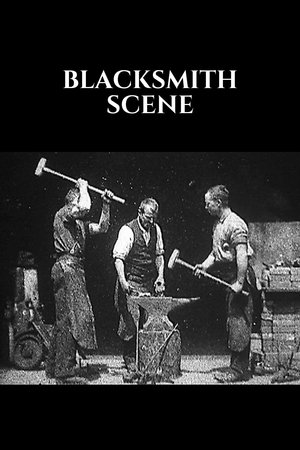
Three men hammer on an anvil and pass a bottle of beer around. Notable for being the first film in which a scene is being acted out.
A cut-out of Soviet leader Nikita Khrushchev sails over newspaper articles as they take place. Combines live photography and collage animation in one film.
Elephants Dream is the story of two strange characters exploring a capricious and seemingly infinite machine. The elder, Proog, acts as a tour-guide and protector, happily showing off the sights and dangers of the machine to his initially curious but increasingly skeptical protege Emo. As their journey unfolds we discover signs that the machine is not all Proog thinks it is, and his guiding takes on a more desperate aspect. Elephants Dream is a story about communication and fiction, made purposefully open-ended as the world’s first 3D animated “Open movie”. The film itself is released under the Creative Commons license, along with the entirety of the production files used to make it (roughly 7 Gigabytes of data). The software used to make the movie is the free/open source animation suite Blender along with other open source software, thus allowing the movie to be remade, remixed and re-purposed with only a computer and the data on the DVD or download.
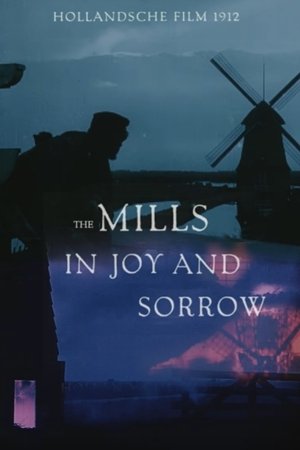
A hobo takes revenge to a miller who didn't give him something to eat.
Lost Worlds looks at untouched aspects of nature in parts of the world where humans rarely tread. From plants, to animals, to geology, this artfully photographed documentary presents facets of the biological world that you are not likely to see anywhere else.
A girl has to decide who to marry: a poor country boy or a rich nightclub owner.
Bernie Cates requests the services of the most absent-minded waiter he's ever seen, who pours water before setting the glasses, endlessly repeats questions, brings wrong orders, and ruins everything- but the bill.