After his brother's death, Larry Talbot returns home to his father and the family estate. Events soon take a turn for the worse when Larry is bitten by a werewolf.
When Barbe-bleue loses his fifth wife, the turbulent Boulotte is selected at random to be the next one. But Barbe-Bleue falls in love with Hermia – who loves the shepherd Saphir – and soon wearies of Boulotte. So, he asks his alchemist to concoct for him an “anti-wife” philtre. But, as on the previous occasions, it is merely a sleeping potion and Boulotte wakes up the other five “dead” wives. They reappear, dressed up as gypsies and bring the truth to light.
As Blanche’s fragile world crumbles, she turns to her sister Stella for solace – but her downward spiral brings her face to face with the brutal, unforgiving Stanley Kowalski. This is the world premiere performance by the San Francisco Opera on September 19, 1998.
In February 1972, the American president Richard Nixon went to China to meet Mao Zedong. In the context of the war in Vietnam and the cold war, this encounter marked a turning point in Chinese‑American relations. John Adams, a major musical figure of the last forty years, made this event of contemporary history the subject of his first opera. Nixon in China tackles the political thaw instigated by ping-pong diplomacy, begun by the invitation of the American table tennis players by their Chinese counterparts, one year before the presidential visit. A mesmerising work in which the pulsations and repetitions typical of minimalism are combined with melodic lines of great lyricism. For its entry into the Paris Opera repertoire, this work has been entrusted to the director Valentina Carrasco, who underlines the importance and the mediating power of Chinese national sport in history.
As part of the 2019 Aix-en-Provence Opera Festival, filmmaker Christophe Honoré delivers an innovative staging of Giacomo Puccini's famous drama. His cleverly staged "opera within the opera" is a melancholy homage to the fascinating figure of the diva, who thrives on art and love and upsets the laws of time and death.
One night in Judea, a disabled shepherd boy-turned-beggar and his mother are visited by three strangers. They are the Three Kings, and they are on their way to Bethlehem to visit the Christ Child, who has just been born.
Tchaikovsky's Swan Lake, a ballet in three acts, is present by the Ballet Company of the National Opera of Ukraine, with music provided by the Orchestra of the National Opera of Ukraine, conducted by Mykola Dyadura
A biopic of Italian operatic tenor Luciano Pavarotti, who broadened the audience for opera and became a global pop culture icon.
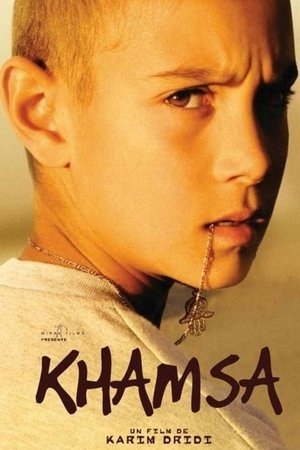
After fleeing from his foster family, 11-years-old Khamsa returns to the gypsy camp where he was born. With his cousin, Tony "The Midget", Khamsa dreams of getting rich with cock fights. Nothing seems to have changed since he left, the card games, the Mediterranean Sea... Until his best friend, Coyote, meets Rachitique, a small-time crook. Very soon they pass from stealing scooters to armed robbery, and Khamsa quickly spirals down into delinquency.
On Saturday, 5 April 1941, one day before the Invasion of Yugoslavia of the Kingdom of Yugoslavia, a colourful group of random passengers on a country road deep in the heart of Serbia board a dilapidated bus, headed for the capital Belgrade. The group includes two gypsy musicians, a World War I veteran, a Germanophile, a budding singer, a sickly looking man, and a hunter with a shotgun. The bus is owned by Krstic senior, and driven by his impressionable and dim-witted son Misko.
The life and work of stage designer ADOLPHE APPIA, originator of the most profound agitations in contemporary theatre. Through the dynamic alternation of animated drawings and choreographies specially conceived for the film, we discover the steps of his artistic evolution.
With more than 50 years of experience as film director, Peter Greenaway (Nightwatching, Eisenstein in Guanajuato) combines the worlds of film and opera at the Verdi Festival in Parma, demonstrating what magic those two can do together with an all new approach to Giuseppe Verdi's Giovanna d'Arco, staged and edited by himself and his wife, Saskia Boddeke. The opera's libretto is based on Friedrich Schiller's 'The Maid of Orleans'. It tells the story of the French national hero Jeanne d'Arc, who defends her country against the English troops during the Hundred Years' War. Constantly torn between her humble roots, her love for King Charles VII and her heavenly task to fight for France, she gains eternal glory by giving her life in the final, victorious battle against England.
Beethoven’s only opera is a masterpiece, an uplifting story of risk and triumph. In this new production, conducted by Antonio Pappano, Jonas Kaufmann plays the political prisoner Florestan, and Lise Davidsen his wife Leonore (disguised as ‘Fidelio’) who daringly sets out to rescue him. Set in strong counterpoint are the ingredients of domestic intrigue, determined love and the cruelty of an oppressive regime. The music is transcendent throughout and includes the famous Act I Quartet, the Prisoners’ Chorus and Florestan’s impassioned Act II cry in the darkness and vision of hope. Tobias Kratzer’s new staging brings together the dark reality of the French Revolutionary ‘Terror’ and our own time to illuminate Fidelio’s inspiring message of shared humanity.
In Rigoletto, the deformed figure of the hunchbacked jester at the Mantuan court acts as a foil to his cynical and powerful master, an unscrupulous philanderer contrasted with his cruel and unforgiving fool. Rigoletto encourages and welcomes the Duke's conquests, pitilessly mocking his victims until he discovers that the Duke has abducted the one person he genuinely loves, his own daughter. As a result, the character of the court jester is transformed into a tragic figure who, in spite of his evident immorality and malice, allows us to sense the devotion he feels for his daughter and his horror at being destroyed by the same despotic world as that which he himself has helped to create.
Weber was at the forefront of the rise of German Romantic opera and sought to dethrone Rossini from his position as the leading operatic composer in Europe. In his breakthrough and most popular opera Der Freischütz (The Marksman) composed in 1821, he succeeded in his aim of establishing a truly German form. Turning to the folklore and folk songs of his native land he took a story of a marksman who makes a pact with the Devil, vesting it with powerful intensity not least in the famous Wolfs Glen scene and an astonishing control of orchestral color and atmosphere.
The World Orchestra for Peace, conducted by Sir Georg Solti, performs pieces by Rossini, Bartók, and Beethoven in Victoria Hall, Geneva in July 1995 in celebration of the fiftieth anniversary of United Nations.
Massenet’s tale of passion, excess, and their consequences stars rising soprano Lisette Oropesa in the effervescent title role. Tenor Michael Fabiano is her ardent admirer, Chevalier des Grieux, with Maurizio Benini conducting Laurent Pelly’s enchanting production.
Julie Taymor’s kaleidoscopic production returns to select cinemas this holiday season in an encore presentation of the company’s first-ever Live in HD transmission that includes tenor Matthew Polenzani, baritone Nathan Gunn, and bass René Pape in this abridged, English-language version of Mozart’s classic fable.
As the imperious title empress, mezzo-soprano Joyce DiDonato leads the Met premiere of Handel’s tale of deception and deceit. Harry Bicket conducts Sir David McVicar’s wry new production, which gives this Baroque black comedy a politically charged, modern updating.
Mozart’s early masterpiece returned to the Met for the first time in more than a decade with Music Director Emeritus James Levine, who led the work’s company premiere in 1982, again on the podium. Tenor Matthew Polenzani brings both steely resolve and compassionate warmth to the title king of Crete, who is faced with an impossible decision. With her rich mezzo-soprano, Alice Coote sings the trouser role of Idomeneo’s son Idamante, who loves the Trojan princess Ilia, sung with delicate lyricism by Nadine Sierra. Elza van den Heever gives a thrillingly unhinged portrayal of the jealous Elettra. Jean Pierre-Ponnelle’s timeless production blends the grandeur of ancient myth with the elegance of Enlightenment ideals.