Richard Wagner's Parsifal, staged at the Teatro Massimo in Palermo in 2020, opened the opera season on January 26. The production, directed by Graham Vick and conducted by Omer Meir Wellber, featured staging with references to the imagery of war.
Car Men is a collaboration between the renowned choreographer Jíri Kylían and filmmaker Boris Paval Conen. Based on the opera 'CARMEN' by Georges Bizet they shot a hilarious and poetic short film in the destroyed landscape of a Czech brown coal mine. The actors in this film are older dancers from Kylían's troupe (around 50 years old) and the main prop is a 'TATRA 87', a famous car from 1937.
All the throbbing eroticism—and ultimate heartbreak—of Puccini’s youthful score is unleashed by James Levine and his top-flight cast. Plácido Domingo is Des Grieux, the handsome, headstrong young aristocrat who falls head over heels for the enticing, impetuous Manon Lescaut (Renata Scotto). Manon returns his love, but her obsession with luxury ruins them both. Gian Carlo Menotti’s opulent production, with sets and costumes by Desmond Heeley, superbly captures the colorful world of 18th century France.
A version of Benjamin Britten's opera based on the Melville story. Will the virtuous young sailor Billy Budd be hanged for murder?
Pietro Mascagni's opera recorded in 2009. Conductor Stefano Ranzani leads the orchestra and chorus of the Zurich Opera House, with performances by Argentinian tenor Jose Cura and soprano Pauletta Marrocu.
Desdemona in Verdi's Otello was a career role for soprano Renata Tebaldi, from her first operatic performance outside of Italy to her final appearance on the opera stage. Between those landmarks she performed the role nearly 100 times all over the world and made studio audio recordings that became reference recordings for the role. This 1962 production with the Deutsche Oper Berlin and Giuseppe Patane was planned as a media event from the outset and blessedly captures a consummate artist in a signature role at the peak of her gifts.
La traviata (Italian: [la traˈviaːta], "The Fallen Woman"[1][2]) is an opera in three acts by Giuseppe Verdi set to an Italian libretto by Francesco Maria Piave. It is based on La dame aux Camélias (1852), a play adapted from the novel by Alexandre Dumas, fils. The opera was originally entitled Violetta, after the main character. It was first performed on 6 March 1853 at the La Fenice opera house in Venice. Piave and Verdi wanted to follow Dumas in giving the opera a contemporary setting, but the authorities at La Fenice insisted that it be set in the past, "c. 1700". It was not until the 1880s that the composer and librettist's original wishes were carried out and "realistic" productions were staged.[3]
Disciplined Italian composer Antonio Salieri becomes consumed by jealousy and resentment towards the hedonistic and remarkably talented young Salzburger composer Wolfgang Amadeus Mozart.
37-year-old Italian-American widow Loretta Castorini believes she is unlucky in love, and so accepts a marriage proposal from her boyfriend Johnny, even though she doesn't love him. When she meets his estranged younger brother Ronny, an emotional and passionate man, she finds herself drawn to him. She tries to resist, but Ronny, who blames his brother for the loss of his hand, has no scruples about aggressively pursuing her while Johnny is out of the country. As Loretta falls for Ronny, she learns that she's not the only one in her family with a secret romance.
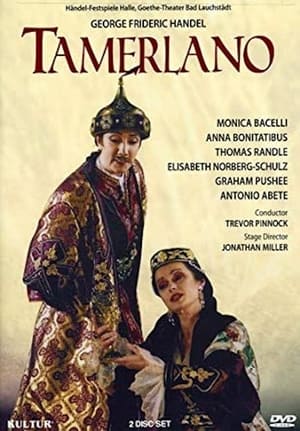
Here is a rare and exceptional example in which the director and costume designer amuse themselves with `silly' costumes, but it actually works. I usually loath the stupid concept of 'clever' producers' of dressing opera singers in an motley set of `modern' and bizarre costumes (mostly tasteless) to help the `stupid' spectators to understand the universality of the opera across time and place. However, in this particular production I enjoyed every moment of it. All my reservations withstanding, I found that the costumes have actually helped highlight the `buffa' aspects of this supposedly `siria' opera. This work may not be among Handel's greatest masterpieces, but the way it is presented and sung here makes it a thorough pleasure for the senses.
An invitation to enter the soul of an artist - director Erick Ifergan - through a highly personal retelling of the Orpheus tale suffused with Ifergan's striking paintings, sculpture and conceptual photography.
This is the 2004 version of Kaija Saariaho's opera performed by the Finnish National Opera and conducted by Esa-Pekka Salonen.
This Blu-ray is a splendid record of a creative production with terrific voices and direction, as good as the Met's videos any day. It also tends to be creepy and atmospheric, with music as good as anything Gounod wrote for his FAUST. Recommended to lovers of horror and opera!
Visually this is a gripping production which captures the drama of this opera perfectly. It's downright exciting! and I found the singing, acting, and orchestral playing reasonably fine. I found only one major problem with it, a problem that kept Puccini for quite a few years. Turandot has been looking for an opportunity to kill Calif and Calif has singlemindedly tried to get Turandot to love and wed him focusing on her and ignoring a better looking girl who loves him truly. The problem is how to get the audience to applaud the match once Calif gets his wish. Puccini couldn't figure out how to do it. The traditional quick ending doesn't do it, and Berio's attempt is longer , tries its best, but ends up making it plain this is one wierd couple.
Joan Sutherland's farewell performance to the operatic stage offsets this story of the St. Bartholomew's Day massacre and the magnificence of 16th century France.
There are elements of Eurotrash in this outdoor Aix-en-Provence summer opera production. Nevertheless, the splendid singing and acting transform the story, normally treated as farce, into something considerably more serious. As many other critics have noted, the young lovers have not yet sorted everything out as this performance ends. Act One begins with the principal characters running around in the outdoor theater -- while the audience takes it in as if they had been advised to sit back and enjoy the novelty. Very likely they were also asked to refrain from applauding at the end of arias and ensemble pieces, in which the three-hour opera abounds.
The writer Dario Fo applies his inventive genius to Rossini's comic opera in its premiere DVD release. Recorded in 2005 under the musical direction of Maurizio Barbacini, Fo's production brings fresh vitality and colour to the story of Lisetta, and of her father Don Pomponio's increasingly ridiculous attempts to find a husband for her through an advertisement in the newspaper LA GAZZETTA. Filmed using high definition cameras with multitrack sound.
The many passionate, fiery or lyrical vocal pieces of Spanish zarzuela have continued to thrive in concert and recitals all over the world. One of the most renowned and ardent supporters of zarzuela melodies is Plácido Domingo. Belying his 66 years, the world-famous tenor sings these rousing, seductive melodies with the beguiling sweetness of a much younger man and tranports the enraptured listener to the calles and plazas of Madrid and Seville, Domingo is accompanied by Mozarteum Orchestra underJesús López Cobos and, above all, by his partner for the evening, sprano Ana Maria Martínez, "a beautiful woman with a fascinating voice, full of velvety mezzoish half-tints in the middle and bottom ranges, with a gleaming top." (London Times) Martínez and Domingo serve up an evening of infectious good spirits and exquisite vocal treats."The dazzle of genuine stars shone brightly over Salzburg!" (Die Welt)
Opera in one act, libretto by G. Forzano based on Dante's Divine Comedy. Third part of his opera Triptych. The plot is based on canto XXX of "Inferno" from "The Divine Comedy", which are dedicated to the rogue and deceiver Gianni Schicchi, who was punished for his sins: he impersonated a dying rich man in order to make a forged will on his behalf. Gianni Schicchi is Puccini's only comic opera, a brilliant example of a modern opera buffa based on the tradition of Verdi's Falstaff. The most expressive recitative, bubbling melody, sharp character, impetuous tempo distinguish her music. Recorded live at Glyndebourne Opera House, Sussex, UK on 11 July 2004.
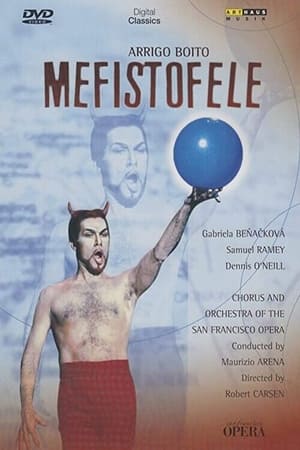
The director, Roland Schwab, has created his version of Hell. The set is like a high iron walled hanger and the stage is continually occupied with people who look like fugitives from Mad Max and who interact with Mefistofele. The orchestra and choir are wonderful. Rene Pape gives a nuanced interpretation with a certain amount of sardonic humour under the evil. His singing and acting are first rate, as is that of Kristine Opolais and Joseph Calleja.