Un Chien Andalou is an European avant-garde surrealist film, a collaboration between director Luis Buñuel and Salvador Dali.
Guard Dog Global Jam
Spiral
An animated short about the relationship between a father and his grown up daughter. The daughter is waiting for her dinner and is irritated by her father’s nagging questions and suggestions. Soon we’re transported into the surreal and snowy world swirling in her head.
A soldier served a long time service. He took as a reward an old drum and went where his eyes were looking. He walked for a long time, and went to the hut, and in it the small girl was crying, because the fierce witch has destroyed her parents.
The cartoon based on the works of Alexander Pushkin was created on the basis of drawings from the exhibition "Pushkin through the eyes of children".
An exploration —manipulated and staged— of life in Las Hurdes, in the province of Cáceres, in Extremadura, Spain, as it was in 1932. Insalubrity, misery and lack of opportunities provoke the emigration of young people and the solitude of those who remain in the desolation of one of the poorest and least developed Spanish regions at that time.
The night before he is set to leave Uruguay in search of a better future, Lucas, an ambitious yet doubtful young man meets Juan, a Venezuelan immigrant who challenges his views on life and pushes him to enjoy the present.
A young virgin guy does not manage to have sex with his beloved long-term girlfriend on his 23rd birthday. By putting an ultimatum on their relationship, he acknowledges the incredible truth beyond her rejection.
A lyrical recreation of Lightnin’ Hopkins’ decision at age eight to stop chopping cotton and start singing for a living. Preserved by the Academy Film Archive in 2013.
When Ethel is threatened with eviction from her retirement community, her friends Vivian and Ruth become co-conspirators in the heist of the century. Their target: the local bingo hall.
A film by Henry Stone
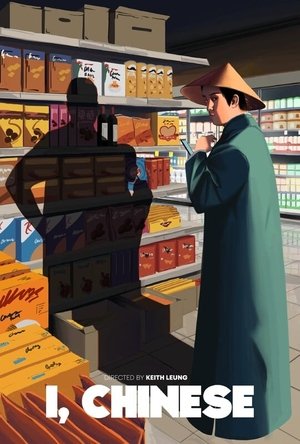
A Chinese American girl faces her racist bully with the help of the Nian, a mythological creature said to eat bad children.
When a white civil servant visits his Nigerian girlfriend's family to ask for their blessing, he must face the darkness hidden in his history.
A man confronts his past during an experiment that attempts to find a solution to the problems of a post-apocalyptic world caused by a world war.
Working men and women leave through the main gate of the Lumière factory in Lyon, France. Filmed on 22 March 1895, it is often referred to as the first real motion picture ever made, although Louis Le Prince's 1888 Roundhay Garden Scene pre-dated it by seven years. Three separate versions of this film exist, which differ from one another in numerous ways. The first version features a carriage drawn by one horse, while in the second version the carriage is drawn by two horses, and there is no carriage at all in the third version. The clothing style is also different between the three versions, demonstrating the different seasons in which each was filmed. This film was made in the 35 mm format with an aspect ratio of 1.33:1, and at a speed of 16 frames per second. At that rate, the 17 meters of film length provided a duration of 46 seconds, holding a total of 800 frames.
A Maori gang member and a Neo-Nazi become trapped in an elevator and must put aside their differences to escape their predicament; all the while dealing with an equally racist Chinese maintenance worker.
Once upon a time, a mysterious stranger visits a tavern with his unusual barrel organ and gives a scary musical performance to the beggars within.
A group of people are standing along the platform of a railway station in La Ciotat, waiting for a train. One is seen coming, at some distance, and eventually stops at the platform. Doors of the railway-cars open and attendants help passengers off and on. Popular legend has it that, when this film was shown, the first-night audience fled the café in terror, fearing being run over by the "approaching" train. This legend has since been identified as promotional embellishment, though there is evidence to suggest that people were astounded at the capabilities of the Lumières' cinématographe.