An exploration —manipulated and staged— of life in Las Hurdes, in the province of Cáceres, in Extremadura, Spain, as it was in 1932. Insalubrity, misery and lack of opportunities provoke the emigration of young people and the solitude of those who remain in the desolation of one of the poorest and least developed Spanish regions at that time.
"Meat Joy is an erotic rite — excessive, indulgent, a celebration of flesh as material: raw fish, chicken, sausages, wet paint, transparent plastic, ropes, brushes, paper scrap. Its propulsion is towards the ecstatic — shifting and turning among tenderness, wildness, precision, abandon; qualities that could at any moment be sensual, comic, joyous, repellent. Physical equivalences are enacted as a psychic imagistic stream, in which the layered elements mesh and gain intensity by the energy complement of the audience. The original performances became notorious and introduced a vision of the 'sacred erotic.' This video was converted from original film footage of three 1964 performances of Meat Joy at its first staged performance at the Festival de la Libre Expression, Paris, Dennison Hall, London, and Judson Church, New York City."
Max Gimblett: Original Mind documents the life and process of eccentric, creative genius Max Gimblett. One of New Zealand’s most successful and internationally prominent living painters, Gimblett has been working in America since 1962. The filmmakers spent a week in Gimblett’s Soho loft where he and his devoted studio assistants generously revealed the techniques and philosophy behind his beautiful art.
A documentary about the great American movie palaces of the 1920s and 1930s. Filmed on location at some of the extraordinary theaters across the country, the program explores the diverse and priceless architecture of such greats as the Atlanta Fox, the Wiltern in Los Angeles, San Antonio's Majestic, Seattle's Fifth Avenue and, perhaps the most famous, Radio City Music Hall in New York City. Also included are stills and vintage clips of classic movies and newsreels of the era that illustrate the historical evolution and mass appeal of the movie palaces. Picture palace organist Gaylord Carter performs a variety of movie accompaniments.
94-year old Esther, a pensioner with bad sight, is in search of her artist daugther’s public decoration. Endless phone conversations takes her through municipal bureaucracy and lost culture secretaries. Will she ever get an answer to the eternal question: Where does the art really go?
Shannon Amen unearths the passionate and pained expressions of a young woman overwhelmed by guilt and anxiety as she struggles to reconcile her sexual identity with her religious faith. A loving elegy to a friend lost to suicide.
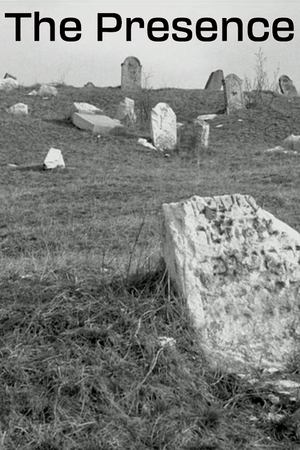
Two old men enter an abandoned synagogue, look at the decay around them, and pray.
Two rabbis show the ruins of an abandoned synagogue to a group of primary school-age Jewish children, and stand by as the children dip bread in honey, drink wine, pray, and sing.
Lost short film.
Filmmaker Alain Resnais documents the atrocities behind the walls of Hitler's concentration camps.
Giuseppina Pasqualino di Marineo, better known as Pippa Bacca, was a 34 years old Italian artist. She crossed 11 countries involved in wars, hitchhiking with another Milanese artist, Silvia Moro, both wearing a wedding dress. This was a performance for peace, trust and hoping to prove that if you rely on others, you’ll receive good things only. After travelling many roads, the two artists decided to split for a while in Istanbul, planning to meet again in Byblos. Pippa left then, alone, and nobody heard from her again.
A promotional video for the film “Death and Rebirth.” Released on January 25, 1997, it contains an overview of the series’ plot, cast interviews, a music video for “Soul’s Refrain,” and several trailers for the film.
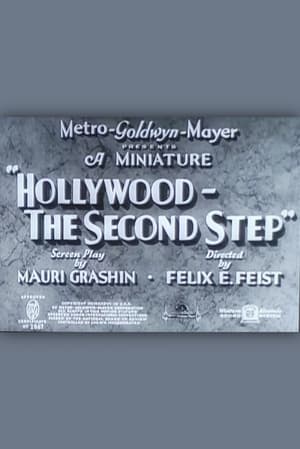
This short travelogue depicts snippets of locations in Hollywood, California, most of them as seen from the streets. Considerable time is taken showing the kinds of architecture of private homes. There are images of various important buildings, and a depiction of the Hollywood Bowl. Finally, there is a sequence revolving around the premiere of the film “Dirigible” (1931) at the famed Chinese Theatre.
Documentary about the special friendship between the 72-year-old music machine collector Johann Bartisch and the 12-year-old farm boy Gerd from the village of Arnsgereuth. As a child, the Romanian Johann played "O sole mio" on the piano while his brother accompanied him on the violin. Even then, he was fascinated by the music machines that could be found at fairgrounds, in cinemas and on trains. As an adult, Johann began his passion for collecting in Bucharest, rescuing self-playing instruments from barns, cellars or even garbage dumps. With great attention to detail, Johann restores his found treasures in his 250-year-old schoolhouse in the village of Arnsgereuth.
Twenty years ago, novelist Salman Rushdie was a wanted man with a million pound bounty on his head. His novel, The Satanic Verses, had sparked riots across the Muslim world. The ailing religious leader of Iran, the Ayatollah Khomeini, had invoked a little-known religious opinion - a fatwa - and effectively sentenced Rushdie to death. This film looks back on the extraordinary events which followed the publication of the book and the ten year campaign to get the fatwa lifted. Interviews with Rushdie's friends and family and testimony from leaders of Britain's Muslim community and the Government reveal the inside story of the affair.
Lord Baden-Powell's 1908 handbook Scouting for Boys is one of the most influential and best-selling books of all time. In the 20th century, only the Bible, the Koran and the Thoughts of Chairman Mao sold more. But they had fewer jokes, no pictures and were useless at important stuff like tying knots. In this entertaining and affectionate film, Ian Hislop uncovers the story behind the book which kick-started the Scout Movement - a work which is very eccentric, very Edwardian and very English. Hislop discovers that the book is also very radical and addresses a variety of modern issues, such as citizenship, disaffected youth and social responsibility. He explores the maverick brilliance of Baden-Powell, a national celebrity after his heroism in the Boer War, and considers the book's candid focus on health and well-being.
Young men are faced with a medical commission for army recruits and asked to choose where they want to get to, at least theoretically.
The 1966 visit of Hollywood movie star Kirk Douglas at the legendary Polish State Film School in Lódz.
A satirical look at the Soviet-block hairdressing contest which was held in Warsaw in 1971.
The Pony Express delivered mail from coast to coast for only 18 months. Yet during its brief glory days, it became a legend of the American frontier. This fascinating and well-researched video recounts the history of the Pony Express, retraces the famous trail, and uncovers the reasons behind its demise and lasting legacy.