This documentary looks at the surge in political violence through the story of the 1995 Oklahoma City bombing, showing the roots of anti-government sentiment and its reverberations today, along with the emotionally charged warnings of those who suffered tragic losses in the deadliest homegrown attack in U.S. history.
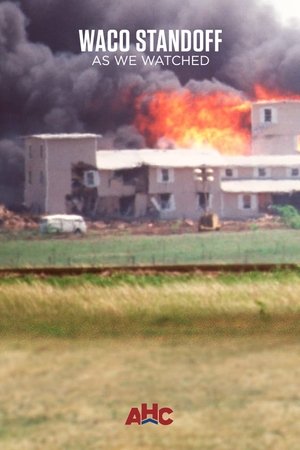
In one of the most tragic face-offs in the history of law enforcement, the deadly debacle at Waco pitted the Branch Davidian sect against the FBI in an all-out war. This documentary makes the most of footage and recordings to examine how the events that led to the tragedy of April 19, 1993, unfolded, and how the FBI's unrelenting approach made what was already a bad situation much worse.
An in-depth look into the Branch Davidians, a religious cult led by David Koresh in the late 1980s and early 1990s that ultimately met with a tragic, fiery end.
Documentary charting the rise of David Koresh, the 51-day siege at the Branch Davidian compound and the tragic conclusion to that stand-off. Featuring testimony from five of the 'true believers'.
A documentary about the conflict in 1993 between the Branch Davidians, a religious apocalyptic group, and the FBI based on further research by the roll behind Waco: The Rules of Engagement. Interviews with new people are conducted and more evidence is presented.
Alex Jones' second feature documentary. Jones takes a closer look at the 1993 incident with the Branch Davidians in Waco. The documentary presents evidence for the US government overstepping Constitutional boundaries and perpetuating a cover up.
Waco, the Big Lie is a 1993 American documentary film directed by Linda Thompson that presents video-based analysis regarding the Waco siege. The first film made about the Waco siege, Waco, the Big Lie gained significant notoriety when it was viewed during the trial of American domestic terrorist Timothy McVeigh. As part of the defense, McVeigh's lawyers showed Waco, the Big Lie to the jury.
Twenty-five years after the 51-day standoff and deadly siege on David Koresh and the Branch Davidian compound, new details and survivor revelations come to light.
The bombing of the Alfred P. Murrah Federal Building in Oklahoma City in April 1995 is the worst act of domestic terrorism in American history. This documentary explores how a series of deadly encounters between American citizens and federal law enforcement—including the standoffs at Ruby Ridge and Waco—led to it.
On April 19, 1993, FBI agents attacked a religious compound in Waco, Texas, occupied by a small obscure religious cult. 76 people, including 26 children, died. The repercussions of Waco are still being felt. What happened? How did it go so wrong?
At the intersection of a provincial track and an international road a Gypsy community of a small Romanian town begin and end their day. It is the point of the geographical crossing that divides them from the rest of the world and keeps them within the traditional lifestyle, where in generations survive families, elderly, men and women, children and teenagers.
Every month, hundreds of unemployed nurses travel from the south to the north of Italy in search of work. Two of them organise the trips by overnight buses; a long journey of hope that often leads to nothing at all. Shot as a road movie, the two filmmakers paint a pitiless portrait of modern Italy before, during and after the health crisis.
In Pasolini's vision, Euripides' Medea becomes an emblem of the Third World deceived and exploited by the pragmatic rationality of the West (Jason). The sequences of human sacrifice, shot in Turkey, are among the highest and cruelest in Pasolini's cinema. Maria Callas in her only film role, is a lunar goddess of revenge.
Adam Ondra is the best. Born in 1993, the Czech climber has broken a series of records and is widely recognised as the most accomplished in his discipline. No mountain or wall can resist him. But who is this young man who knows no fear and never seems to encounter failure? Jan Šimanek and Petr Záruba deliver an intimate portrait, beyond the usual sensationalism of sports headlines.
At the death of her mother, Aga decides to leave her life in Germany with her partner Maja to look after her younger brother in Poland. To do this, she has to hide her love for another woman from the authorities. Closely following its protagonists, Silent Love delicately narrates their discreet struggle against a prying and viscerally homophobic society.
Jerusalem can rightfully be called the hat capital of the world. Whereas the rest of the world has allowed its hats to gather dust in the closet since the 1950s, Jerusalem still teems with hats and caps. From soldier to monk, everyone is identifiable by his hat. Director Nati Adler, who is neither religious nor a hat-wearer, explored the how and the why of the hats of Jerusalem. His colourful and personal trip takes us along the diverse headdresses of the three religions populating the city. What begins as an innocent exercise by a curious documentary filmmaker develops as it were into a Pandora's box full of stories and history lessons. Every answer evokes new questions. Why do people in Jerusalem wear so many hats, what is a shtreimel, why don't Armenian Christians use their Turkish hats in their ceremonies, and why do women actually have to cover their heads?
Swedish punk documentary from 1985 about Anti Cimex, more specifically Sixten Andersson. Shows the edgier side of Swedish music in the 80s, the anarchist ideals of the members and friends of the band and an overall discontent with the 'promising' future of the "Svensson life".
In this essay film, the narrator describes how his fixation on a gay pornographic model from a phone sex advertisement leads to a new project, an elegy for a complex, troubled man named Alain Lebeau.
Irritated by Catholicism, Linda, an American-based, Blonde Caucasian, falls in love with Qater-based Ali Al-Saigel, adopts the Islamic faith, and gets married. She follows her new faith to the letter, and subsequently gives birth to seven children (four daughters and three sons), brings them up according to true Islamic dictum's, and reflects on her 20-year married life, her children, as well as her reaction when her husband indicates that he wants to re-marry.
The Coup of 1979 was the "straw that broke the camel's back". The most influential sectors in the country, both from the Left and the Right, radicalized and decided to rebel against a power they considered unjust and unbearable. From this decision to rebel emerged three Revolutionary Juntas made up by civilians and the military.