The two-part documentary Pop & Passion tells of power and magic, but also of the pressure and excess that prevails in the pop business.
THE ARYANS is Mo Asumang's personal journey into the madness of racism during which she meets German neo-Nazis, the US leading racist, the notorious Tom Metzger and Ku Klux Klan members in the alarming twilight of the Midwest. In The ARYANS Mo questions the completely wrong interpretation of "Aryanism" - a phenomenon of the tall, blond and blue-eyed master race.
Many migrants live in search of a mirror in which to recognize themselves; they are not from here, but they are not from there either. Los Williams / The Williams, a feature-length documentary, familiar and sporting, told in first-person by Iñaki and Nico Williams. Two brothers, footballers, Basques and "beltzas" or black, of Ghanaian descent, reveal their incredible tale across the two most crucial years of their lives. From their historic participation in the Qatar World Cup with two different selections, to the long-awaited victory of the Athletic Club in the Copa del Rey after 40 years, and Nico's triumph at the European Championship. Two international stars, face to face with their past and their future, through the conflicts that have marked their lives: racism, identity, frustration, ambition, and success.
Dracula, l'éternel
On December 20, 2023, at the age of 84, Jack Lang was reappointed for a fourth term as head of the Arab World Institute. Proof, if any were needed, of the incredible longevity of a man who has embodied culture in motion for more than sixty years. From the creation of the Nancy Festival in 1963 to his legendary tenure as Minister of Culture on Rue de Valois, Jack Lang has moved through the decades without ever stopping. Professor, mayor, deputy, minister in all Mitterrand governments... he has remained a central figure in cultural and political life, always in action. Jack Lang tells his story, recounting his decisive encounters, his great achievements, his failures, and his personal dramas.
How the Fiddle Flows follows Canada's great rivers west along the fur-trading route of the early Europeans. The newcomers introduced the fiddle to the Aboriginal people they intermarried with along the way. A generation later, their mixed-blood offspring would blend European folk tunes with First Nations rhythms to create a rich and distinct musical tradition. From the Gaspé Peninsula, north to Hudson Bay and to the Prairies, How the Fiddle Flows reveals how a distinctive Metis identity and culture were shaped over time. Featuring soaring performances by some of Canada's best known fiddlers and step dancers and narrated by award-winning actress Tantoo Cardinal.
How African artists have spread African culture all over the world, especially music, since the harsh years of decolonization, trying to offer a nicer portrait of this amazing continent, historically known for tragic subjects, such as slavery, famine, war and political chaos.
The rock-wild youth of the 1960s during the apparitions of their idols.
From humble beginnings in a small slate roofed village in Greece to the heyday of America's movie palaces, the Latchis Family built an empire of theatres throughout New England in the hard-scrabble years of the Great Depression. Their story is told through historically accurate footage, photographs and music from the Latchis family, local historical societies and national archives.
Il Centro per i Giovani - volti, racconti ed esperienze sotto la mascherina
The Music of the Spheres
A Calling to Care is the inspiring story of 55 year-old Grace Stanley, a Canadian nurse who left her home and prestigious career behind to answer a calling halfway around the world in Karachi, Pakistan. Teaching nursing to local women in a strict Muslim culture that forbids them to even to touch men is a formidable task. However, Grace challenges her own values and belief systems to find common ground with her students, helping them to excel and feel respect for themselves in a culture that doesn't respect them. Whether it is getting her hands painted with henna, swimming fully-clothed in the ocean, or marching bravely with them on International Women's Day, Grace bonds with her students in a very special way, and ultimately discovers how the West can learn a lot more from the Third World than she ever thought.
Nestled at the heart of Canada’s national capital, the Wabano Centre for Aboriginal Health has been a haven for generations of Indigenous people from many cultures since its founding in 1998. A place of togetherness, thecentre celebrated a large expansion in 2013 designed by renowned First Nations architect Douglas Cardinal, which greatly increased its ability to serve Ottawa’s Indigenous population in one of the city’s poorest neighbourhoods. Under the determined leadership of Allison Fisher, Wabano has become far more than a health centre; through its focus on Indigenous pillars of healing and good health, Wabano has become a home for many.
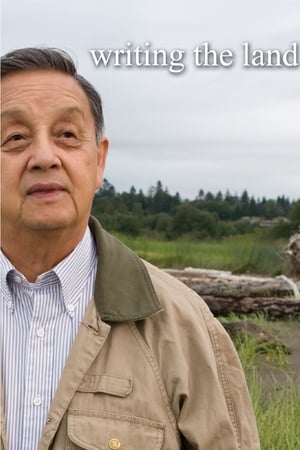
In this short documentary, a Musqueam elder rediscovers his Native language and traditions in the city of Vancouver, in the vicinity of which the Musqueam people have lived for thousands of years. Writing the Land captures the ever-changing nature of a modern city - the glass and steel towers cut against the sky, grass, trees and a sudden flash of birds in flight and the enduring power of language to shape perception and create memory.
This feature-length documentary chronicles the Sundance ceremony brought to Eastern Canada by William Nevin of the Elsipogtog First Nation of the Mi'kmaq. Nevin learned from Elder Keith Chiefmoon of the Blackfoot Confederacy in Alberta. Under the July sky, participants in the Sundance ceremony go four days without food or water. Then they will pierce the flesh of their chests in an offering to the Creator. This event marks a transmission of culture and a link to the warrior traditions of the past.
Now I lay me down to sleep, I pray the Lord my Soul to keep. If I should die before I wake, I pray the Lord my Soul to take.
Greek Sarakatsani community members, a former group of nomadic animal breeders, share personal experiences and discuss the concept of identity in today's world. A tribute to collective memory through an experiential journey that sets out from the past, progresses into the present, and contemplates the future.
In 150 years, twice marked by total destruction —a terrible earthquake in 1923 and incendiary bombings in 1945— followed by a spectacular rebirth, Tokyo, the old city of Edo, has become the largest and most futuristic capital in the world in a transformation process fueled by the exceptional resilience of its inhabitants, and nourished by a unique phenomenon of cultural hybridization.
A local fisherwoman navigates her way through a male dominated environment to work in an industry that has been essential to island life for hundreds of years.
A young Dutch girl (my mother, filmed by my father in-love). A little redhead (me, filmed by my father). Boys (my brothers). And through the images of flowers, animals and rallies (super 8s that were found): A chalet (Switzerland), dikes (the Netherlands). And my memories, childhood, teenage years mixed up with the history of women (of my family).