The life and career of the hailed Hollywood movie star and underappreciated genius inventor, Hedy Lamarr.
A docu-drama shot in 1970, but not completed until 1973, the film sought to encapsulate in an experimental form issues that were under discussion within the Women’s Liberation Movement at this time and to thus contribute to action for change. In its numerous community screenings, active debate was encouraged as part of the viewing experience.
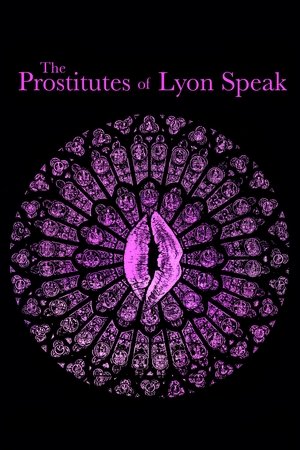
Documentary about the Lyon sex workers who occupied the church of St. Nizier on June 3, 1975.
Documentary about Congres VI of the Women's Union.
Over many years, the director’s father filmed his family life almost obsessively. His daughter’s birth, his son’s first steps, and always Valérie, the young mother. An impressive fund of material which their now grown-up daughter Faustine appropriates to tell quite a different story: that of a woman who sees her role as a mother and its demands take away her freedom step by step.
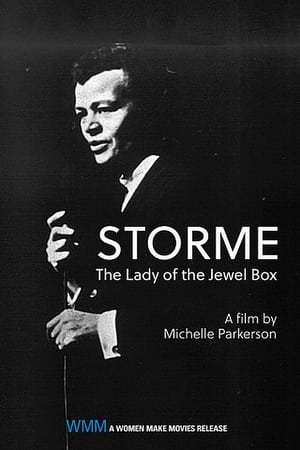
“It ain’t easy…being green” is the favorite expression of Stormé DeLarverie, a woman whose life flouted prescriptions of gender and race. During the 1950s and '60s she toured the black theater circuit as a mistress of ceremonies and the sole male impersonator of the legendary Jewel Box Revue, America’s first integrated female impersonation show and forerunner of La Cage aux Folles.
Not For Sale: Feminism and Art in the USA during the 1970s
Dancing For Change is a story about secular and socialist women of the Islamic world, their ideals, activism, and visions for a better world. It focuses on six Kurdish Iranian women from three different generations. These women live with their male comrades in a mountain camp.
In a squat in Nantes, Mat and her friends organise a self-gynaecology workshop to “look at oneself and know oneself”. A lively and intimate portrait of a young woman, filmed through her personal and collective questioning of the relationship with oneself, love, sex and the links that they all maintain between each other.
In 1977, a book of photographs captured an awakening - women shedding the cultural restrictions of their childhoods and embracing their full humanity. This documentary revisits those photos, those women and those times and takes aim at our culture today that alarmingly shows the need for continued change.
In the 1970s, Françoise d'Eaubonne stood out in the French intellectual landscape. At 50, she has already won several literary prizes and published around forty novels and essays, but is resuming her militant fight with renewed vigor. She is the first to define ecofeminism, denouncing the common oppression of women and the planet as a consequence of patriarchy. She participated in the actions of the MLF (Women's Liberation Movement), in the creation of the FHAR (Homosexual Revolutionary Action Front) and theorized counter-violence, going so far as to sabotage the construction site of the Fessenheim nuclear power plant. This film presents unpublished documents for the first time. Drawing freely from the manuscripts and photographic archives that she bequeathed to the Memory Institute for Contemporary Publishing, her relatives and researchers, historians and publishers comment on the resonance of her feminist and ecological heritage.
El Cuerpo del Escándalo - Un film acerca de Natacha Voliakovsky
Gloria Allred overcame trauma and personal setbacks to become one of the nation’s most famous women’s rights attorneys. Now the feminist firebrand takes on two of the biggest adversaries of her career, Bill Cosby and Donald Trump, as sexual violence allegations grip the nation and keep her in the spotlight.
And urban planner's journey to making the impossible possible.
The life of Sara Winter - former Brazilian feminist and founder of FEMEN in Brazil - told by herself; since the troubled youth, through the years of prostitution and feminist militance, until the discovery of motherhood and God.
A painter, a naked woman, and a camera. In this triple constellation we explore the power of the gaze and the roles it imposes on us. An artist's studio turns into the setting for questions about how we look at and perceive women. The naked skin of the model becomes the canvas for an audiovisual exploration of the ways in which seeing and being seen anchors us in our body. And how this body shapes our experience of the world and our role in it.
This documentary interweaves celluloid and voice recordings by Maya Deren, and colleagues who knew her firsthand: Jean Rouch, Jonas Mekas, Alexander Hammid, Cecile Starr etc. Maya Deren (1917-1961) was an experimental filmmaker. In the 1940s and 1950s she made several influential avant-garde films, such as Meshes of the Afternoon (1943). Images from this and her other work are used in this documentary. You can also hear her voice, as well as accounts by contemporaries such as Jean Rouch and Jonas Mekas.
“Olive” is a short documentary that follows Olive Hagemeier, an energetic woman, on her daily routine of salvaging, repackaging and redistributing food, and occasional other types of “waste”, across Atlanta, GA. Presented in a quiet observational style, this film is both a character study of a committed and enigmatic volunteer, as well as an ethnographic work that places the audience in the heart of a decentralized, volunteer-run mutual aid network in a “post-COVID” American city.
Women’s Liberation protesters target the 1969 Miss America Pageant… The movie shows the boardwalk action — Women’s Liberation protest and crowd reactions — as well as behind-the-scenes pageant preparations inside Convention Hall.
In 1988, workers at the 'Busan Working Women's House' study the Labor Standards Act, receive overdue salaries, and take menstrual leave and pre- and post-partum leave. As the subdivided women's movement develops, Busan women also take to the streets to fight against domestic and sexual violence. Around the same time, female students in Busan and South Gyeongsang Province actively campaigned to create school rules to regulate sexual violence in universities. In 2000, Pusan National University's first feminist festival