Bikes for Africa is an entertaining, insightful and moving documentary following the life adventures of Hap Cameron and Mandy Todd, and their attempt to help implement a self sustainable bike workshop in rural Namibia with a container load secondhand donated bikes from Melbourne. The film investigates how a bicycle can fundamentally change the lives of rural Africans, and brings to focus the great works of two-wheeled charities Bicycles for Humanity and the Bicycling Empowerment Network Namibia.
HAS HEART is an intimate and inspiring documentary capturing the emotional journey of U.S. Navy veteran Michael Hyacinthe and artist Tyler Way, who unite to transform veterans' experiences through the power of art. After serving in conflict zones and experiencing personal loss and trauma, Michael grapples with his own sense of identity and purpose. He finds new meaning by collaborating with Tyler, a talented footwear designer, to create a unique space where veterans can express their untold stories through art and design.
Sniper: Bulletproof deconstructs and analyzes the little-known sniper events that have occurred when no other course of action was possible. The people who planned the takedowns, or pulled the trigger, share their techniques and bring to light the many factors that had to be considered in each mission: terrain, wind speed, temperature, elevation changes... all are critical to taking out targets considered bulletproof. A sniper has one chance, one breath, to rise to the occasion and save the day... if they miss, there may never be another opportunity. As these never told before stories unfold, the viewer also learns about the high-tech gear each sniper carries on their classified missions.
As debate in Canada and the world rages over health care, Hospital City offers a moving, human portrait of the people whom the issues touch most closely.
They are around us. Everywhere. People talk about it, movies and TV shows talk about it, but what are UFOs? What do they want? And the most important question: what do they do in our daily life?
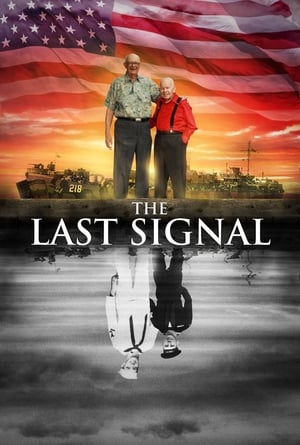
Lieutenant Colonel John Stevens served in both World War II and the Korean War. During the Korean War, he received a Bronze Star for leading his company in one of that war's harshest battles.
In the French music world, the beginning of the 2000s was marked by the arrival of a young rapper, Diam's. Over the course of three albums, she has become a phenomenon in France, as well as in many countries around the world. Diam's has won some of the most prestigious awards in French music, graced the covers of countless magazines, and sold millions of records. However, in 2010, at the height of her fame, Diam's made a life choice that shocked the French: she converted to Islam. How did a tortured and suicidal artist find her way to peace? For the first time Diam's, known to her family as Mélanie, tells us the real story.
How do you learn to talk about death when you are a future doctor? Mathilde and Fabian will be entering a residency next year. I'm looking at the gestural dialogue and language strategies that take place during the delicate moment of a "announcement" consultation. I am trying to understand how words, although they do not directly cure the disease, sometimes help to remove the fear it engenders.
Darol Kubacz is unstoppable. A U.S. Army veteran without the use of his legs, this leader and Freedom For Life Non-Profit Founder is determined to be the first disabled human to summit Mount Kilimanjaro, Africa's tallest peak, without being pushed, pulled or carried.
Mexican American Rodolfo P. Hernandez faced death along the 38th parallel, earning a Congressional Medal of Honor for valor during the Korean War. A story of heroism, perseverance and service, Hernandez proved that even in the most dire circumstances a wounded soldier can accomplish his mission and go on to greater service as a veteran.
When Harvard PhD student Jennifer Brea is struck down at 28 by a fever that leaves her bedridden, doctors tell her it’s "all in her head." Determined to live, she sets out on a virtual journey to document her story—and four other families' stories—fighting a disease medicine forgot.
About the extraordinary doctors and activists—including Paul Farmer, Jim Yong Kim, and Ophelia Dahl—whose work 30 years ago to save lives in a rural Haitian village grew into a global battle in the halls of power for the right to health for all.
A journey into the BBC archives unearthing glorious performances and candid interviews from some of Britain's greatest poets.
Odjezd branců
Voices in Wartime is a 2004 documentary that explores the human experience of war through poetry. Combining interviews with soldiers, journalists, and historians, it reveals how war affects individuals and societies across time and place. The film features poets from around the world – from Homer and Wilfred Owen to Shoda Shinoe and modern writers in Iraq and Nigeria – showing how poetry expresses the pain, trauma, and truth of conflict. By linking verse with real-life accounts, Voices in Wartime highlights how poetry helps us understand the emotional and moral impact of war.
Using obscure archival footage, animated illustrations and interviews, this film tells the story of the Vietnam War from the perspective of five Vietcong veterans: a soldier, an officer, an informant, a guerilla, a My Lai survivor, and the leader of the Long Hair army.
INVASION is a documentary about the collective memory of a country. The invasion of Panama by the U.S in 1989 serves as an excuse to explore how a people remember, transform, and often forget their past in order to re-define their identity and become who they are today.
Following the success of her debut novel, All This Could Be Different, author Sarah Thankam Mathews embarks on her second novel, drawing from her adolescence between India and Oman. As Sarah excavates lost place and time, she must contend with the weight of truthful representation and the contradictions within her childhood memories.
The documentary that answers the question: is having month-long double paid vacations, no fear of homelessness, and universal health care the nightmare we've been warned about? The answer may surprise you.
Michael Crichton discusses his early career as a writer, leading up to his writing of the best-selling novel "The Andromeda Strain" and his involvement with the making of the film.