A surburban California family is beset by the power of supernatural subconscious. A bone-chilling thriller with electrifying effects.
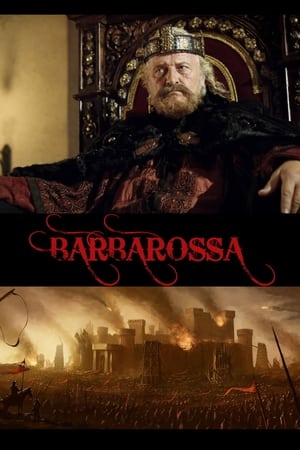
A new era is about to begin in Eastern Europe. Scythians, the proud warriors, are all but gone and most of the few remaining descendants have become ruthless mercenary assassins. Lutobor, a warrior who becomes involved in intertribal conflicts, sets off on a perilous journey to save his family guided by a captive Scythian.
Královské usínání
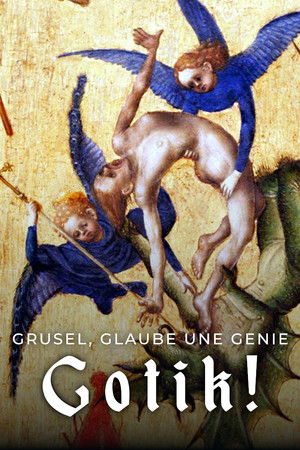
Death and the devil, nudity and eroticism, horror in blazing colours, Gothic art cast a spell over people 500 years ago. In these image-poor times, art deliberately and skilfully played with the emotions of the viewer, triggering fear, devotion, but also rapture. Art documentary on German gothic art of the late-middle ages.
Sweden, beginning of the 18th Century. Executions are popular entertainment and brothels a given. Still the executioner and the whore are both despised and shunned. The executioner became executioner against his will and the whore, only 17 years old, was forced into the brothel. This is the story of how the two meet and exchange cruelty with tenderness, guilt with innocence.
True story of Tom Butterfield and his crusade to provide family life for homeless children, becoming not only the first bachelor caretaker, but the youngest single adult to become a legal foster parent in the state of Missouri.
13-year-old Pauline, called Pik, has lived with her grandmother Wischonka since her mother died. Pik has never met her father. Her grandmother runs a boarding kennel that is on the verge of insolvency because many customers have handed in their animals at the wrong address. Pik wants to help her grandmother and tries to raise money at Cologne airport by performing a song. But she is taken away by the airport police. Although she manages to escape from the police at first, she accidentally observes how the corrupt policeman Kowatsch and a customs officer take away seized drugs. Kowatsch realizes that he has been observed, but is unable to catch Pik.
An expansive Russian drama, this film focuses on the life of revered religious icon painter Andrei Rublev. Drifting from place to place in a tumultuous era, the peace-seeking monk eventually gains a reputation for his art. But after Rublev witnesses a brutal battle and unintentionally becomes involved, he takes a vow of silence and spends time away from his work. As he begins to ease his troubled soul, he takes steps towards becoming a painter once again.
In 1375, China was in chaos between Yuan Dynasty and Ming Dynasty. Coryo (an ancient kingdom of Korea then) sent a delegation of many diplomats, soldiers and a silent slave to make peace with the new Chinese government. However, this delegation got charged as spies and sent in exile to a remote desert.
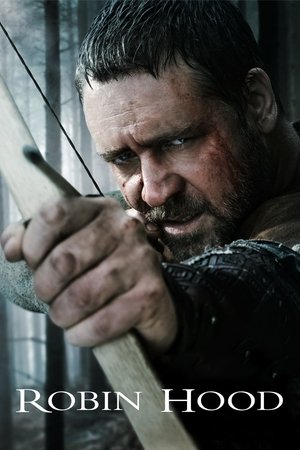
After his wife dies, a blacksmith named Balian is thrust into royalty, political intrigue and bloody holy wars during the Crusades.
Dolf a 15 year old boy is sent back in time by a timemachine. Accidentally he is sent back to the Middle Ages. He is rescued by children who are part of a childrens' crusade, on their way to rescue Jeruzalem. During the trip Dolf finds out the danger is not coming from outside the crusade, but from within.
Middle-aged Late is building a fence in his family home for a summer break, but he falls in love with his daughter's new friend, 16-year old flirtatious Saija.
Ivanhoe, a worthy and noble knight, the champion of justice returns to England after the holy wars, and finds England under the reign of Prince John and his henchmen and finds himself being involved in the power-struggle for the throne of England.
Ohnivý máj
Záviš a Kunhuta
The play about the life of Eliška, the last of the Přemyslid dynasty, follows ten years of her life journey from the moment of her marriage to John of Luxembourg to her rejection by the king in 1320.
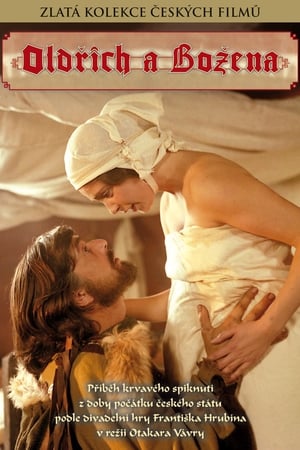
The historical television play was written based on Vančura's Pictures from the History of the Czech Nation and takes place against the backdrop of the European situation at the beginning of the thirteenth century. Přemysl Otakar I., father of Agnes of Přemyslid, sought recognition of the Czech lands as a hereditary kingdom. And what about his love and fickleness? The story will answer this, in which poetry and truth diverge only in the degree of emotional movements, in the tremors of souls, which lead to love as well as to hatred.
Wenceslas II, who already has adult children Eliška and Václav, refuses to marry the young Alžběta Rejčka. In the end, he succumbs to the insistence of Abbot Konrád. The queen brings him Poland as a dowry, and Wenceslas II thus expands his empire. He still lives in the shadow of his great father, Přemysl Otakar II, and his lords reproach him for his weakness and inability to fight. Wenceslas is truly afraid of the moment when he will have to lead an army into the field and prefers to settle disputes diplomatically. His fencing teacher Hynek of Dubá and his mistress Anežka know about the king's weakness, and Václav seeks their company rather than his young wife. However, Rejčka admires the king and trusts him with the charm of a young girl. The enemy invades the country and advances quickly. It is necessary to confront him in the field, but the king hesitates and postpones the decision.
A section of the life of George of Poděbrady from his coronation to his death (1458–1471), creating a portrait of a remarkable monarch whose name shone as a symbol of Czech statehood, as a symbol of a victorious military leader and a prudent statesman; a powerful, complex and contradictory personality in the midst of a very dramatic fifteenth century. During thirteen years of independent rule, he wanted to defend with all his might what had been won by the Hussites; he wanted to defend it even in a time and environment that, on the contrary, wanted to settle accounts with the Hussites. It was during this tense time that Poděbrady's idea of creating an association of monarchs who would resolve conflicts through agreements and treaties, and not through war, arose. Even as a father, he made a sacrifice for his beloved country when he did not hand over the crown of the Czech king to his son, but to the Polish king Vladislav, the "Prince of Peace".
The life story of Blessed Zdislava of Lemberk, about whom legends rather than sparse historical references tell us that she was a deeply religious woman with healing powers who devoted herself entirely to the humble service of her sick and suffering neighbors.