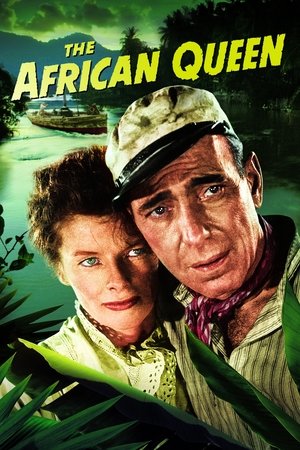
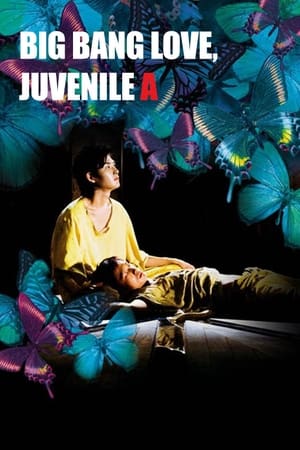
At the start of the First World War, in the middle of Africa’s nowhere, a gin soaked riverboat captain is persuaded by a strong-willed missionary to go down river and face-off a German warship.
A dying man in his forties recalls his childhood, his mother, the war and personal moments that tell of and juxtapose pivotal moments in Soviet history with daily life.
A successful mod photographer in London whose world is bounded by fashion, pop music, marijuana, and easy sex, feels his life is boring and despairing. But in the course of a single day he unknowingly captures a death on film.
After her fiancee admits to infidelity while on a business trip in France, a woman attempts to get her lover back and marry him by traveling to Paris despite her crippling fear of flying. On the way she unwittingly smuggles something of value that has a charming crook chasing her across France as she chases after her future husband.
A stream of mysterious rituals and symbols are encountered as a young boy journeys to school in the fantastical world of Kshya Tra Ghya.
An unseen character observes the cold, harsh world around them while listening to The Beach Boys, hidden away in the safety of their bedroom.
Three lives caught in limbo between dreams, reality, and oblivion.
The script is composed of three stories set in three different time periods and three different locations. One story takes place during an ascent of the Himalayas, another on a crossing of the Atlantic Ocean, while the third happens on an ocean-going fishing trip. The motivation/objective in every story is a quest, and hiding underneath under every motivation is the deepest level of human nature.
A serial killer stalks a woman he befriended after her car broke down.
History as immersion and dispersion in the fragments of the past, a visionary journey accompanied by the voice of Patty Pravo. Presented at the Taormina Festival '97.
In 17th-century Tuscany, a church play is performed for the benefit of young aristocrat Cosimo. In the play, a grotesque old woman gives birth to a beautiful baby boy. The child's older sister is quick to exploit the situation, selling blessings from the baby, and even claiming she's the true mother by virgin birth. However, when she attempts to seduce the bishop's son, the Church exacts a terrible revenge.
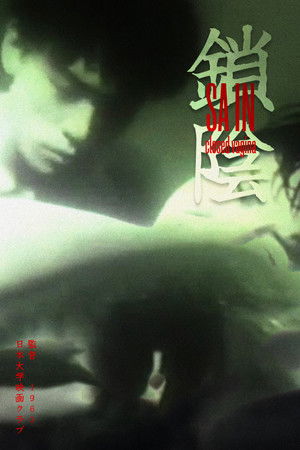
"In medical terminology, absence of genitalia in females is referred to as "gynatresia". In other words, an extreme defect that goes beyond a mere illness" Adachi's follow-up to Bowl using the figure of a woman suffering from an unusual sexual aliment has often been taken as a controversial allegory for the political stalemate of the Leftist student movement after their impressive wave of massive fiery protests failed to defeat the neo-imperialist Japan-US Security Treaty. The ritualistic solemnity of the charged sexual scenes contribute to the oneiric qualities of Closed Vagina which Adachi would later insist was an open work, not meant to deliver any kind of deliberate political message. - Harvard Film Archive
Gay, alienated Los Angeles teens have a hard time as their parents kick them out of their homes, they don’t have money, their lovers cheat, and they are harassed by gay-bashers.
Sequence of five shots, each one with a particular color treatment, in which a man carrying a machine gun runs. He moves fast in the beginning but, as the end comes closer, he starts to walk in zigzag. Is he hurt?
The young hero seems the essence of maleness, yet he's troubled by vaguely feminine objects. Soon his masculine and feminine selves are intercut, as each of his identities appears to look and gesture at the other. The film, at once melancholy and transcendent, consists of a shimmering, nearly plotless evocation of gender identity in flux through haunting, densely interlaced images.
Structured in nine tableaux each a study of a simple action or situation involving a lone, naked figure, the blind Eros, searching for fulfilment, for self. The objects he touches - books, paintings - can be seen as icons of the creative spirit; there is also a motor cycle and film equipment. In succeeding scenes he appears to try on identities offered by institutional doctrines of religion and social traditions of (overt) masculinity. Much of the film was constructed in-camera with a small amount of editing afterwards. An innovation was the use of in-camera fade-outs as phrase markers, not as terminal points, within a single set-up or shot.
Psyche 1947, made while a student at USC, shows Markopoulos’ developing style and his sensuous use of colour and composition. Shot in the Hollywood hills, the film was inspired by an unfinished novella by Pierre Louÿs. - Tate Modern
Markopoulos called Lysis “a study in stream-of-consciousness poetry of a lost, wandering, homosexual soul” and felt that the film foreshadowed The Illiac Passion.
Based on Plato's dialogue Charmides.
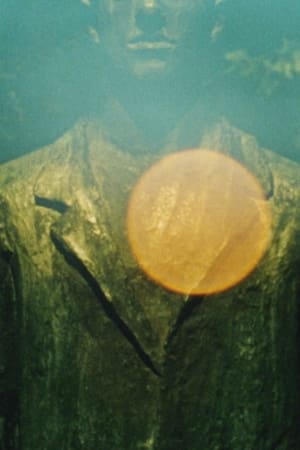
A triple exposure on EXR 50D 16mm film: two layers shot in summer, and the third captured on the cusp of winter. A collection of statues fading in and out of consciousness, around the Weissensee lake in northeast Berlin, where the filmmaker lives.