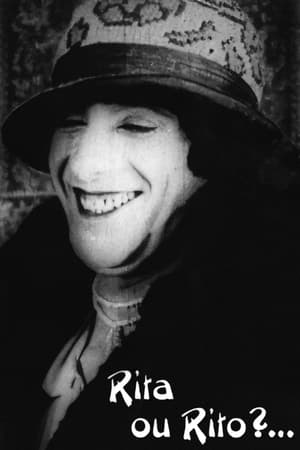
Peixe-de-Espada (literally, sword-fish), a retired Army colonel, his wife and nubile daughter are spending their holidays at the Palace Hotel, in the company of a lady doctor, Doctor Pilulas (literally, pills). He tells tall-tales of his African adventures, and she finds ways to promote the excellency of the pills of her own fabrication. To spend some time with Gabriela, his girlfriend, Rito appears disguised as a woman, pretending to be the new post-office operator. Desguises will come and go, and all ends well after a turmoil of twisted plots.
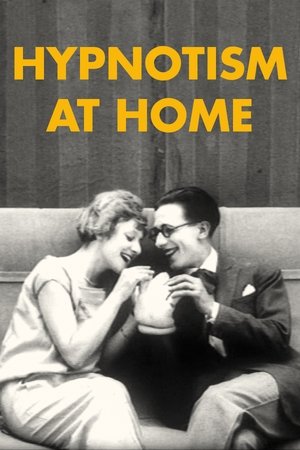
Sleepwalking and supernatural adventures, inspired by American farces.
A homeless bum, bored of eating the same food every night, promises his girlfriend a special dinner. He plans to take her out with money robbed from a passing stranger. But the bum’s in for a surprise when the man he targets for his mugging turns out to have special – and hilarious – powers.
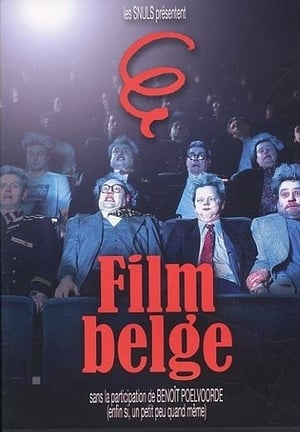
Scene 23, Slow pan The wind whistles over the dykes of the Willebroek Canal. Armand sighs. The viewer should feel goose bumps under their thick sweater. Make it clear that at this moment, Armand is craving a cup of Borain coffee. Scene 456, Armand's farm Armand puts down his coffee cup. Through the window, he sees a beautiful Romanian refugee with AIDS playing the cello in the beet field. Behind Armand, his wife, a former RTBF announcer, commits suicide by hitting herself with hot potatoes. Scene 2,347, sublime landscape of Flanders Armand can't take it anymore: will he choose the position of deputy for the Vlaamse Blok or that of puppeteer subsidized by the CUCF? No one can say.
A trippy pop-art collage of phallic objects, naked women and American icons, most notably Elvis Presley.
A deer, disillusioned by the consumerism that defines his life. A lizard, ostracized from society, forever wandering. A chance meeting in the middle of a field. Who will survive? And who will transcend existence? Preserved by the Academy Film Archive in 2009.
Follow a day of the life of Big Buck Bunny when he meets three bullying rodents: Frank, Rinky, and Gamera. The rodents amuse themselves by harassing helpless creatures by throwing fruits, nuts and rocks at them. After the deaths of two of Bunny's favorite butterflies, and an offensive attack on Bunny himself, Bunny sets aside his gentle nature and orchestrates a complex plan for revenge.
"All sounds travel in waves much the same as ripples in water." Educational film produced by Bray Studios New York, which was the dominant animation studio based in the United States in the years surrounding World War I.
A housewife tires of her husband's annoying behavior and returns to her mother. At first, the husband is quite pleased to have the house all to himself. But he quickly discovers that even the most basic domestic chores can be fraught with difficulty.
An Italian referee demoted and exiled to the remote island of Sardinia finds out what it takes to handle a real match
An 1895 British short black and white silent comedy film featuring two drunken men and a boy squabbling in a small bar.
Believed to be the first film to feature cannibals.
Enter Hamlet is a collage of images in cartoon form of a word put in balloon in each jump-cut scene as that word is said by the narrator Maurice Evans during his “To be or not to be…” soliloquy recording.
Thelma and Patsy find themselves in a spooky house inhabited by a nut who is a mechanical genius and has made a robot who does everything. The inventor manipulates the robot's control board from a hidden room. The girls are soon in a panic. Patsy gets into an argument with the robot and loses the match of wits. Blackie Burke, an escaped convict, is using the house as a hideout, and this adds to the problems the girls already have.
One of the two earliest horror films ever made. This film is presumed lost. In this black comedy scene, the bottom falls out of a coffin, the corpse tumble out, and is jolted back to life. Short sequences like this, as well as street scenes and dancing geisha girls were the main subjects of early Nippon cinema, pioneered by Shiro Asano and Shibata Tsunekichi from 1897 onwards. In creating dramatic, scenes, film-makers naturally chose the most striking or bizarre. Another undocumented film, recalled by cameraman Shiro Asano.
Scrat tries to finish his rather large collection of acorns when things start going nutty.
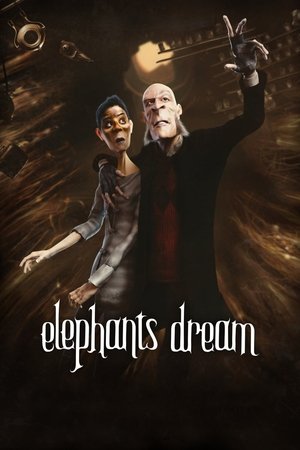
A man is trapped in a sinister flat, where nothing seems to obey the laws of nature.
With script and direction by Pablo Villaça and starring the comedian Geraldo Magela, Morte Cega has as main character a failed filmmaker named Francis (Maurício Canguçu, producer and one of the main actors of the theatrical success "Believe, a Spirit Downloaded Me"). One night, Francis has a frightening dream about Magela, known throughout the country for playing the character O Ceguinho. Determined to make a short film based on this dream, Francis uses his producer friend, Martinho (Carlos Magno Ribeiro, who acted in Villaça's first short, A_ética), to get to the comedian. From then on, the meeting brings unexpected results for everyone involved.
Jackie is a boy who is so trapped by his fears and doubts that he could not communicate with anyone. Then, a magic dragon named Puff comes to help Jackie by taking his soul force on a wonderous voyage to his island of Honah Lee. Along the way, they have adventures that nurture Jackie's imagination and courage in unorthodox ways.
At Thanksgiving, a tramp arrives in a homeless-hostile town.