Commentator-comic Bill Maher plays devil's advocate with religion as he talks to believers about their faith. Traveling around the world, Maher examines the tenets of Christianity, Judaism and Islam and raises questions about homosexuality, proof of Christ's existence, Jewish Sabbath laws, violent Muslim extremists.
In 2012, Stephen Vaughan and Kay Ferreter are invited to address the congregation at St. Joseph's Redemptorists Church in Dundalk, Ireland for the Solemn Novena Festival. In a powerful speech, the pair describe their experiences being gay and lesbian in Ireland, feeling excluded by Catholic doctrine, and the importance of a more inclusive church.
Saint Patrick, esclave et protecteur de l'Irlande
When two friends collect money for the so-called "suffering in America" in the streets of Accra, is it for fun, political provocation, or a prophecy? Two Swiss filmmakers will answer these questions with the help of seven musicians from Ghana-M3NSA, Wanlov The Kubolor, Adomaa, Worlasi, Akan, Mutombo Da Poet, and Poetra Asantewa-who have written new songs and produced video clips especially for the documentary film Contradict.
An exploration of the intersection between religion and homosexuality in the U.S. and how the religious right has used its interpretation of the Bible to stigmatize the gay community.
Rusia: Revolución conservadora
A harrowing exploration of the rapid rise of American religious fanaticism after 9/11. This film explores an emerging ultra Right Wing mass movement seeking dominion over all aspects of contemporary American society. The film weaves archival video, contemporary Christian Nationalist movement propaganda (recruiting videos, apocalyptic/military videogame imagery, etc.) and original investigative material) to create an intense examination of the totalistic mindset and its will to power.
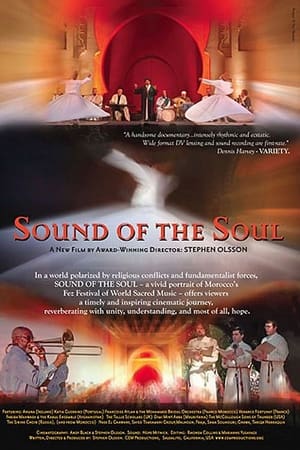
SOUND OF THE SOUL is a compelling portrait of an Arab country where Muslims, Christians, and Jews have lived together in relative peace for centuries. Beautifully photographed during the Fez Festival of World Sacred Music, the film presents unforgettable performances from groups from Morocco, Ireland, Russia, Afghanistan, Mauritania, the USA, Portugal and France, which carry viewers into what the film's Moroccan sufi guide calls "the hearing of the heart": the essential Oneness at the core of all religions and faiths.
On January 6, 2021, Americans witnessed an attack on the U.S. Capitol without precedent in our history. Armed militiamen and QAnon followers made headlines, but among them were a sea of crosses and Christian flags, rosaries and "Jesus Saves" signs. What motivated so many Christians to participate in this violent assault?
Bible expert Bill Gallatin explores biblical prophecies from the Book of Revelation that have transpired, with a discussion of whether these events signify that we are now living in the End Times preceding the return of Jesus Christ. Gallatin touches on events such as the increasingly acute difficulties in the Middle East, numerous environmental catastrophes, earthquakes and more, explaining how they connect to scriptural writings.
Buddhist monk and photographer Matthieu Picard as he returns to the Asian country in the Himalayas where he spent a decade after seven years away, revisiting breathtaking landscapes and experiencing local traditions.
American academic Norman Finkelstein discusses foreign policy toward Israel and the Middle East.
The filmmaker travels to the mysterious land of the “poor souls.” He visits eyewitnesses in rural areas of Central Switzerland. They offer their account of mystifying experiences in connection with the afterlife, of evil deeds by people who passed away long ago in need of atonement. The film investigates the hidden signs of mountain magic and reminds us of our own myths, ghosts and primal images. It also looks for paths to self-awareness that could be revealed to us within and under layers of centuries-old Catholic cultural sediment.
The movie recalls children who suffered mental and physical harm both during the last century, particularly in religious orphanages, and during the time of early modernperiod witch-hunts. It shows that the mindsets and behavioural patterns of both time periods are more alike than one might think.
With its fluid arrangement of black and white scenes paired with an immersive soundscape, Je me souviens d’un temps où personne ne joggait dans ce quartier is a celebration of the many faces of Park Extension. The film provides a glimpse inside a festive cultural gathering; the workshop of a meticulous artisan; and an alley where a young cyclist is learning to ride. With her restrained approach, the filmmaker hints little by little at a seemingly inevitable transformation, while the relentless onset of gentrification threatens the social fabric of a neighbourhood. After a critically acclaimed detour into audio documentary, Jenny Cartwright returns to the evocative force of images to evoke a rich and diverse community.
Guru Nanak, the founder of Sikhism, was a 15th-century teacher, poet, and activist whose universal message of justice and equality for all, women’s empowerment, service to others, and devotion to nature and the environment was ahead of his time. However, his story is virtually unknown to much of the Western world. Filmed on location in India, Pakistan, and throughout the U.S., this documentary interweaves the story of Guru Nanak’s life with a look at how his spiritual legacy continues to influence prominent American Sikh men and women, including Mayor Ravi Bhalla of Hoboken, N.J., Grammy Award nominee Snatam Kaur, and others.
This intimate ethnographic study of Voudoun dances and rituals was shot by Maya Deren during her years in Haiti (1947-1951); she never edited the footage, so this “finished” version was made by Teiji Ito and Cherel Ito after Deren’s death.
Hugh Bonneville reveals how a perfect storm of political intrigue, power struggles and clashing religious passions combined, in a single week, to cause the event that changed the world: the killing of Jesus.
In this fascinating and unusual conversation, writer and physician Deepak Chopra talks to religion professor Robert Thurman about the connections and differences between two of India's most important philosophical beliefs: Vedanta and Buddhism. Chopra explores the foundation of Vedanta, while Thurman -- the father of actress Uma Thurman -- provides the Buddhist point of view in this meeting held in 1999 at New York City's Tibet House.
A series of interviews are conducted concerning people's beliefs towards the possibility of an afterlife. The interviews are filmed against a set of strange backdrops, and are intercut with clips from classic films and a variety of stock footage.