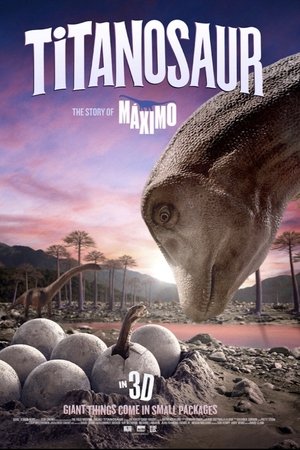
It's considered the discovery of the century in Japan -- the unearthing of a complete fossilized skeleton of an 8-meter long dinosaur. It was dubbed Mukawaryu based on the name of the town in Hokkaido where it was uncovered. The find opened up a new world of dinosaur research in Japan. But it also created another mystery because this land dinosaur was discovered in a location that, eons ago, would have been in the ocean. How did the fossil get there? The amazing answer is revealed in this documentary, using CGI to re-create how dinosaurs lived 72 million years ago.
Documents the 1985 expedition in the Painted Desert and Petrified Forest National Park, led by paleontologist Robert A. Long, to uncover a complete skeleton of a whopping small dinosaur
The discovery of a giant crater in the floor of the Gulf of Mexico is a step closer to solving the question if an asteroid ended the age of dinosaurs.
Dinosaurs Vs. Apes: DINOSAUR MOVIES and HOLLYWOOD GOES APE! have been hailed as the definitive documentaries on the prehistoric and anthropoid creatures that have appeared on the silver screen. Filled with rare movie clips, behind-the-scenes footage and interviews.
Following the journey of fossils from their discovery in remote corners of the earth to laboratories, museums, auction houses and collectors’ living rooms, the film weaves together interlocking stories of eccentric characters caught between the demands of commerce and the basic human drive to unlock the most profound mysteries of life. THE BONES takes us deep into the Gobi, Sahara, and North American badlands, and through laboratories, museums, high-end auction houses, and grungy hotel rooms at the Tucson gem show. Wrapped in elusive questions about the origins of life on earth, and its potential future demise, THE BONES unearths the deep passions at the heart of the dinosaur world.
When a huge meteorite crashed into the earth 66 million years ago and caused the disappearance of the dinosaurs, some of the planet’s tiniest species survived the cataclysm, and—against all odds—eventually became some of the greatest giants to ever roam the earth. From the poles of the planet to the belly of the equator, this documentary sheds new light on four giant animals that are still a great mystery to science today: the Titanoboa snake, the Megalodon shark, the giant rhinoceros and the giant sloth.
Three researchers work on a paleontological project focusing on two dinosaurs: one fictional, the one created by special effects genius Ray Harryhausen for the film The Valley of Gwangi (1969); the other real, the Concavenator corcovatus, whose remains were discovered in 2003 at the Las Hoyas site, in the province of Cuenca (Spain), very close to where the filming took place.
220 million years ago dinosaurs were beginning their domination of Earth. But another group of reptiles was about to make an extraordinary leap: pterosaurs were taking control of the skies. The story of how and why these mysterious creatures took to the air is more fantastical than any fiction. In Flying Monsters 3D, Sir David Attenborough the world’s leading naturalist, sets out to uncover the truth about the enigmatic pterosaurs, whose wingspans of up to 40 feet were equal to that of a modern day jet plane.
Richard Dawkins in a 1980's television special based on his book The Blind Watchmaker.
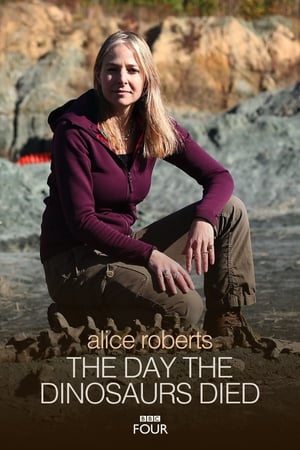
Dinosaurs died out 65 million years ago and we have hardly ever found a complete skeleton. So how do we turn a pile of broken bones into a dinosaur exhibit? Dr Alice Roberts finds out how the experts put skeletons back together, with muscles, accurate postures, and even - in some cases - the correct skin color. Here's a conundrum. Most dinosaur skeletons are incomplete, so how do you create museum exhibits that are realistic? As Dr Alice Roberts discovers, it's a practical question for those putting together an exhibition at LA County's Natural History Museum, who have to design dynamic, punter-pleasing displays that also reflect the latest thinking in paleontology circles.
In a race against developers in the Rocky Mountains, paleontologists uncover a unique fossil site packed with astonishingly well-preserved bones of mammoths, mastodons, and other giant extinct beasts. The discovery opens a highly focused window on the vanished world of the Ice Age in North America.
Les Dinosaures du pôle Sud
Renowned paleontologist Kirk Johnson takes us on an epic adventure through time at the polar extremes of our planet. Following a trail of strange fossils found in all the wrong places—beech trees in Antarctica, hippo-like mammals in the Arctic—Johnson uncovers the bizarre history of the poles, from miles-high ice sheets to warm polar forests teeming with life. What caused such dramatic changes at the ends of the Earth? And what can the past reveal about our planet’s climate today—and in the future?
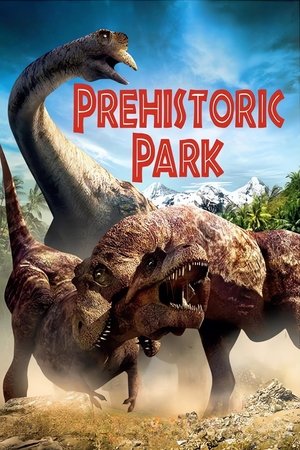
A BBC miniseries about Nigel Marvin's quest to bring the extinct dinosaurs through time to Prehistoric Park.
L’últim gegant d'Europa
49,000 year old Neanderthal bones have been discovered by chance in a remote, mountainous region of Northern Spain. The bones may help solve the biggest Neanderthal puzzle of all – why we are here today and Neanderthals are not. ‘The Neanderthals’ dark Secret’ revolves around ongoing investigations deep inside the forbidding subterranean cave system called El Sidrón. Here, Palaeontologist Antonio Rosas and Archaeologist Marco de la Rasilla are in their 11th year of excavation. Bones from at least 12 people and 400 stone tool fragments have been recovered. We’ll bring these people back from the past. Our haunting, hologram-like Neanderthal characters, will communicate to the scientists of today, as they unlock the secrets of El Sidrón. Many mysteries surround the site, foremost, how the bones and tools came to be here in the first place. The remains aren’t weathered nor do they show signs of scavenging from large animals.
In May 2002 a group of people went looking for dinosaur and here is what they found!
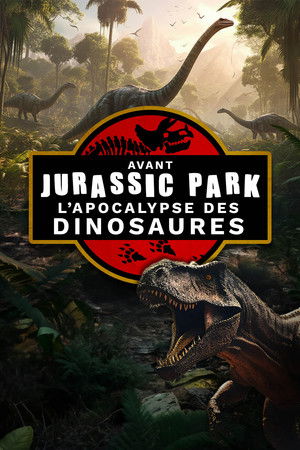
A detailed exploration of honoring the dinosaurs of past Jurassic Park films while using cutting-edge technology to make them more realistic.
Documentary tells the story of Germany's origins from the Carboniferous period to the present day. It leads from the highest Alpine peaks to the rugged North Sea coasts - from the craters of the Eifel to the river labyrinth of the Spreewald. Back then - around 300 million years ago - giant dragonflies, for example, buzzed through dozens of meter-high fern forests. In the course of the Earth's history, however, we also encounter dying dinosaurs, meet rhinos and elephants on the Rhine and come across what is probably the first human in Heidelberg. Later, the Neanderthals appear and suddenly disappear again - for reasons that are still unknown. And finally, modern humans gradually spread and began to shape their environment.
New scientific techniques are leading to startling discoveries about dinosaurs.