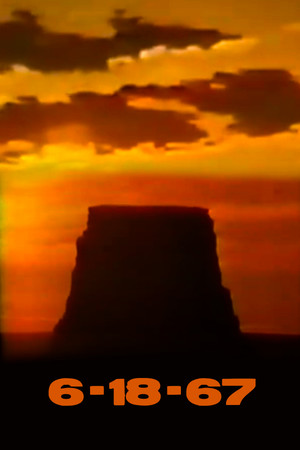
Filmed during the production of the Columbia Pictures western "Mackenna’s Gold," this short work presents a non-narrative visual study of the Arizona desert. Rather than documenting the film set itself, "6-18-67" assembles landscape images, time-lapse photography, and ambient sound into an abstract record of place and duration.
In the small town of Kansk, the Krasnoyarsk Territory many years in a row there is an international festival of short experimental films, which has a strong reputation throughout the world. "Russia as a dream" is an international project, shot by a team of authors and united directors, artists, poets. Each of the guests of the 14th International Kan Video Festival held in 2015 was invited to participate in the creation of a general film, the theme of which was the relationship of man and landscape, civilization and nature, reality and sleep.
The passing time is displayed as a series of still frames, or a rapid sequence of moments, ever flowing like the waves that break on the shore, like a repeated chant with no beginning, middle or end.
The title comes from Sergei Yesenin's last poem before comiting suicide. Using Virginia Woolf's last letters as a base, this film is meditation on the power of the word and its undertsanding and the the last moments before saying "goodbye".
Thanks to his myriad film roles, Lon Chaney is known as “the man of a thousand faces,” and you could say that the early horror era never beheld a figure more intriguing. Yet because of his numerous transformations, his face never became as iconic as that of, say, Boris Karloff. Accompanied by a soundtrack from Bernhard Lang, this “re-imagination of shots” taken from Chaney´s forty-six surviving films offers a beguiling excursion into the history of film. The director reveals surprising associations, while highlighting the enduring magic of works which are now more or less forgotten.
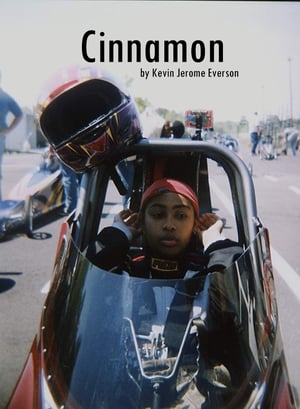
An experimental film that lifts the veil on the world of African American drag racing.
A portrait of a street corner in flux.
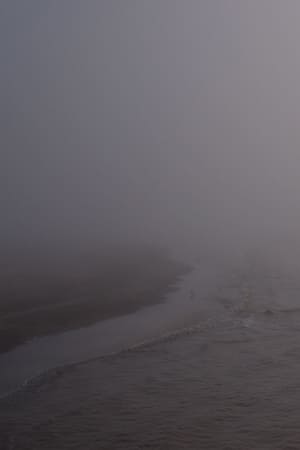
Fog has a curious effect on cinema. On the one hand, it precludes the production of those images that seem artificial, on account of their sharpness. On the other, the mist gives each frame a mysteriously narrative quality. The joy of watching the sea and the beach under a blanket of mist allows eluding the world of the quotidian, to suspect the beauty of the uncertain and unstable
Pyramid is a single screen work on Abraham Maslow's theory on the hierarchy of human needs filmed through the rhythms and choreography of middle class South England. Filmed in color and b&w on 16mm film, it continues Salmon's interest in the performance of the artist/cinematographer within both spontaneous and constructed situations and incorporates methods developed by various movements within documentary and avant-garde history. Using an array of sounds, music and conversation as well as silence, Salmon constructs an abstract documentary which both develops and challenges the themes presented in Maslow's theory as well as her own interest in human iconography, stereotype and domestic rhythm. The image of Maslow's pyramid and his pragmatic dissection of human needs and possible motivations provide a system of organization for the family and a philosophical framework for the video.
What kind of power is accessible through the discovery of a voice? Morgan Quaintance interlinks two anti-racist and anti-authoritarian liberation movements in South London and Chicago’s South Side with his own biography to explore what happens when speech is ignored, and the voice fades.
The film takes us through the working day of protagonists, factory workers. Their basic working tool is their body, ready to execute strenuous manual tasks. Day after day the same story, the same faces, the same spaces, the same tasks. Feeling confined, they seek a sheet anchor, a way out, an escape. They venture into the unknown, dance, drift and float in the air.
An experimental and poetic portrait of a woman.
An ambient representation of depression with a slowly fading score building towards an uncertain climax.
Anything that complies with standards is a wasted effort to Vlado Kristl: 'I believe in only doing those things that decompose and tear conventional systems apart.' Kristl's métier are borderlines. His paintings and animated films are interspersed with clear dividing lines, only for him to blur and mess them up. His graphics are scribbled over and over again until the whole surface becomes black. His oil paintings, unless someone buys them in time, are painted over and over again. He destroys any form that begins to grow. -Thomas Brandlmeier
Footage yarn sliding over trees, fields, buildings, bulldozers, power lines... while a monotonous hum exacerbates the images.
A homage to Andrei Tarkovski made for the Spanish edition of the Chris Marker movie 'Une journée dans la vie d’Andrei Arsenevich'.
A group of friends share a cinematographical experience in a particular region of Spain, Galicia. The goal is simple: to film what they like, without preconceived ideas about what should be filmed. They want their images to reflect the feelings that unite them with the people they find along the way.
An auto-documentary about a disenfranchised Everyman and his struggle to re-integrate himself into society. He fails and turns to crime.
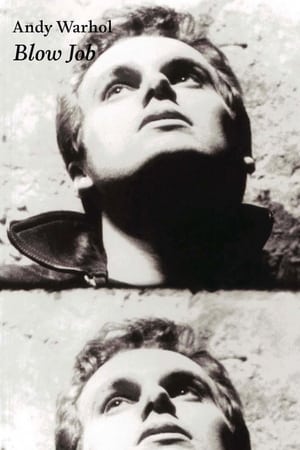
Andy Warhol directs a single 35-minute shot of a man's face to capture his facial expressions as he receives the sexual act depicted in the title.
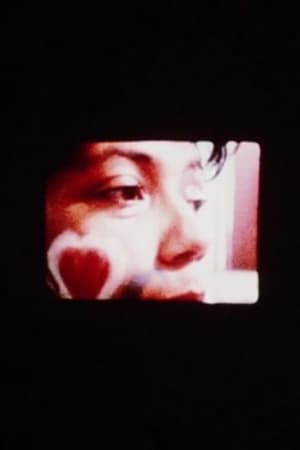
Two women in a living room: smoking, playing cards, listening to the radio. As often in Dwoskin’s films, the use of masks, make-up and costumes allows the characters to playfully transform themselves. Shot in colour film, C-film exuberates swinging London energy. In the second part of the film, the women appear to be watching the rushes of the film on an editing table. ”We are making a movie” we hear them say. As Dwoskin points out, “C-film asks how much is acting acted”, an ongoing question in Dwoskin’s cinema. Produced by Alan Power, with Esther Anderson & Sally Geeson.