Il trovatore - Liceu
La bohème - Liceu
Romeo et Juliette - Liceu
Glyndebourne's celebrated production of Nikolaus Lehnhoff's Tristan und Isolde is a supremely intelligent achievement; gravely beautiful, haunting and meditative, it is deeply reflective rather than visceral, fortified by Roland Aeschlimann's stunningly effective set, a womb-like space through which the protagonists move like gods. Conductor Jiří Bělohlávek mirrors Lehnhoff's approach in his sophisticated plumbing of the score's depths, with every shift in texture carefully laid bare by an inspired London Philharmonic Orchestra. Nina Stemme's Isolde and Robert Gambill's Tristan, both gloriously lyrical, are matched by superb performances from René Pape as the betrayed and vulnerable King Marke and Bo Skovhus as Kurwenal, deeply touching in his helpless devotion to Tristan. This High Definition recording of a production of uncommon intimacy reveals the opera's music and drama in a new light.
Věc Makropulos
Disciplined Italian composer Antonio Salieri becomes consumed by jealousy and resentment towards the hedonistic and remarkably talented young Salzburger composer Wolfgang Amadeus Mozart.
Franco Zeffirelli's magnificient staging of Puccini's final opera - a fairy tale set in a mythical China - is one of the most popular in the Met repertory. In this Live in HD production, Maria Guleghina takes on the title role and Marcello Giordani is Calaf, the unknown prince. Marina Poplavskaya and Samuel Ramey co-star, and Andris Nelsons conducts in his Met debut.
Grétry: Richard Coeur de Lion
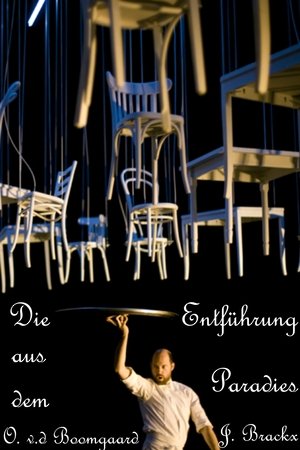
Without question, this is an incredibly bizarre production. The revised storyline makes little sense, and there is a surprising amount of violence and sexual innuendo. However, the singers are superb, both vocally and in regard to their stage presence and acting, the orchestra plays beautifully, the chorus is wonderful, and the set is as clever as it is strange. It's definitely not for purists, or for someone new to this particular opera. But for someone who's seen Die Entfuhrung before, and is familiar enough with the original story to not miss it, watching Belmonte, Constanze, Blonde, Pedrillo, and Osmin embark on an entirely new adventure -- and push the boundaries of good taste -- is rather enjoyable.
Dimash Kudaibergen - ARNAU Tour in New York
a film opera; music by: Gaetano Donizetti (Philharmonic Orchestra of Rome) Directed by Giuseppe Zedda.
This was Domingo's last set of performances as Otello in La Scala. In spite of his relatively advanced age, he is still in excellent form, both vocally and in terms of stage presence. Nucci is also his usual self, delivering a performance of very high standard. Barbara Frittoli is an excellent Desdemona, in good voice and gives a very moving performance. Muti conducts with great emotion and tight accuracy, conveying the full orchestral drama of the score.
Ernst Krenek's theatrical piece Karl V. consisting completely of twelve-tone series should have premiered at the Vienna State Opera. The political situation in the Vienna of 1933 and the fact that Krenek was despised by the Nazis because of this Jazz opera Jonny spielt auf, prevented the première. It only took place five years later in Prague, however Krenek had already emigrated to the USA. Karl V was the last emperor to hold to the idea of a Christian empire in which the sun never set, although its downfall was always inevitable, for numerous reasons. For the second production of Karl V. in the Nationaltheater, Carlus Padrissa in particular seeks out political power systems that are highly topical, and so very precisely analyses the treatment in the theatrical piece. At the core of the intellectually and linguistically highly qualified libretto, written by the composer himself, Karl V. reflects on his life and makes his confession to a young monk below Titian's La Gloria.
German silent film operetta (Filmoperette)
Franz Woyzeck, a lowly soldier stationed in a mid-nineteenth century provincial German town, is the father of an illegitimate child by his mistress Marie.
This live version of Puccini s superbly dramatic opera was recorded in Rome in the exact locations and at the precise times of day as Puccini had written into his score. The action opens in Rome's beautiful 16th-century church of Sant Andrea della Valle, where Cavaradossi (Plácido Domingo) is innocently painting, moves to the Farnese Palace where Tosca (Catherine Malfitano) dramatically stabs the lustful Scarpia (Ruggero Raimondi), and finally to the battlements of the Castle Sant Angelo at dawn the following day where Cavaradossi is cruelly killed, and Tosca takes her own life.
Two noble women, bored of their lives, disguise themselves as country wenches and go to the market at Richmond Fair, where two young farmers fall in love with them.
Piero Cappuccilli and Shirley Verrett lead Verdi’s sombre masterpiece, drawn from one of Shakespeare’s most celebrated tragedies. Filmed for television at Teatro alla Scala in 1979, Claudio Abbado conductes a night to remember.
Lékař a lékárník
Richard Wagner's Parsifal, staged at the Teatro Massimo in Palermo in 2020, opened the opera season on January 26. The production, directed by Graham Vick and conducted by Omer Meir Wellber, featured staging with references to the imagery of war.