Heidi, star of the "Meet The Feebles Variety Hour" discovers her lover Bletch the Walrus is cheating on her. And with all the world waiting for the show, the assorted co-stars must contend with drug addiction, extortion, robbery, disease, drug dealing, and murder.
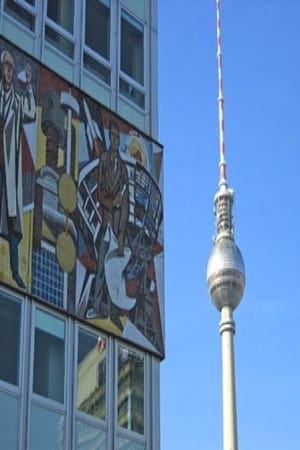
A film essay investigating the question of what “the West” means beyond the cardinal direction: a model of society inscribed itself in the Federal Republic of Germany’s postwar history and architecture. The narrator shifts among reflections on modern architecture and property relations, detailed scenes from childhood, and a passed-down memory of a “hemmed-in West Germany,” recalling the years of her parents’ membership in a 1970s communist splinter group.
Time Is Illmatic is a feature length documentary film that delves deep into the making of Nas' 1994 debut album, Illmatic, and the social conditions that influenced its creation.
“The Fight for the Soul of Seattle” examines the role of Seattle’s City Council in allowing the situation to reach what many experts consider epidemic levels under the guise of a compassionate approach to people who suffer from substance addiction and who commit crimes to feed their habit. It documents the heartbreaking condition of people on the streets, and the crushing decisions Seattle entrepreneurs are forced to contemplate as their life savings and dreams are destroyed by theft, vandalism and a dwindling customer base. This documentary also explores potential bold solutions to treat those living on the streets and pair them with agencies and assistance that can provide a clear path away from the endless circle of addiction and crime.
Rocky IV is dually symbolic - it embodies both the victory of the American boxer over the Soviet one and the victory of neo-liberalism over a dwindling socialism. Today, Rocky is held up as a model by some and is a subject of derision for others. An emblem of the 1980s, its culture and its heroes, the film will be the subject of an entertaining analysis of popular culture.
In 1983, in Berlin, an American member of the secret service puts himself at the service of the GDR. This fascinating documentary tells the story of his life as a "passer-murailles". In 1983, American soldier Jeffrey M. Carney betrayed his country and defected to the East. At the time, he was working in Berlin for the NSA (National Security Agency), which intercepts Soviet airspace communications. But his patriotism and fervor for Reagan had waned: he felt underestimated by his colleagues and had discovered his homosexuality, for which he could be expelled from the army. One night of drinking, the young man crosses the demarcation line at Checkpoint Charlie with the aim of never returning...
Once again, David Graham Scott examines how some addicts use the plant medicine iboga to detox rapidly—and how, sometimes, the conditions in which they detox put them at risk.
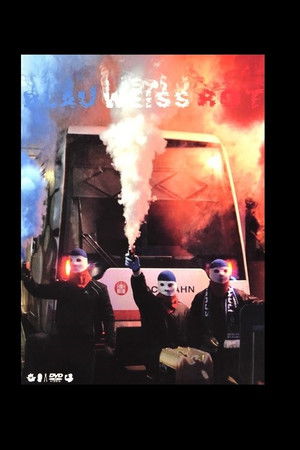
A documentary of the German national soccer team’s 2006 World Cup experience that changed the face of modern Germany.
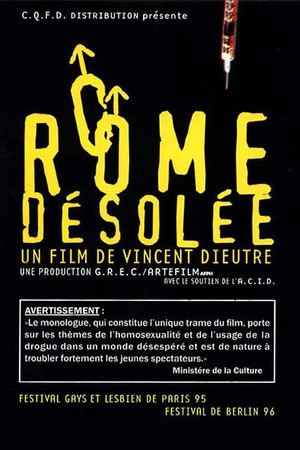
Zuzia, a very sensitive teenager with an artistic talent, is struggling with a drug addiction. Her brother, the film director, decides to take a closer look at the family to understand what might have caused this difficult situation.
Through archival interviews and footage, George Michael and Andrew Ridgeley relive the arc of their Wham! career, from 70s best buds to 80s pop icons.
"The 1984 Los Angeles Comedy Competition with Host Jay Leno," the first stand up comedy special featuring Jay Leno with 25 minutes of never-before-seen footage of Leno's classic comedy club. act that made him a star. The show took an "American Idol" approach to stand-up comedy with Jay Leno hosting a competition that features competing stand up comics Ray Combs, Howie Gold, Jeff Gerbino and Steve Oedekerk performing in front of a live crowd and a panel of celebrity judges that includes funnyman Fred Willard.
A chronicle of country music legend Johnny Cash's life, from his early days on an Arkansas cotton farm to his rise to fame with Sun Records in Memphis, where he recorded alongside Elvis Presley, Jerry Lee Lewis and Carl Perkins.
For Jimmy Smith, Jr., life is a daily fight just to keep hope alive. Feeding his dreams in Detroit's vibrant music scene, Jimmy wages an extraordinary personal struggle to find his own voice - and earn a place in a world where rhymes rule, legends are born and every moment… is another chance.
County Durham, England, 1984. The miners' strike has started and the police have started coming up from Bethnal Green, starting a class war with the lower classes suffering. Caught in the middle of the conflict is 11-year old Billy Elliot, who, after leaving his boxing club for the day, stumbles upon a ballet class and finds out that he's naturally talented. He practices with his teacher Mrs. Wilkinson for an upcoming audition in Newcastle-upon Tyne for the royal Ballet school in London.
Megacities is a documentary about the slums of five different metropolitan cities.
Christian, Finn and Moritz became addicted to drugs as teenagers. In 1999, the film "Bismuna - Ein Abenteuerfilm" was made about the three teenagers and their counselor as they traveled to an indigenous tribe for the drug cure. Now, some 10 years later, it shows what the men have done with their lives.
In 1965, passionate musician Glenn Holland takes a day job as a high school music teacher, convinced it's just a small obstacle on the road to his true calling: writing a historic opus. As the decades roll by with the composition unwritten but generations of students inspired through his teaching, Holland must redefine his life's purpose.
How did Marilyn Monroe become one of the greatest sex symbols of all time? What drove a prudish little Californian girl, who was not especially pretty nor exceptionally talented, to become this incredibly striking platinum blonde superstar? How did she become the icon capable of balancing innocence with raw sensuality, whilst continuing to captivate the masses to this day? How did she achieve this? And what price did she pay?
A film about the collective psychological traumas of Ukrainians.
In the summer of 1989 tens of thousands of tourists from communist East Germany came to Hungary. They were deeply disillusioned because they felt they had no future in East Germany. There was no freedom, no choice in the shops, salaries were low and they could not travel except to Eastern Europe. They wanted to go to a prosperous and free West Germany but they could not get passports, so they hoped that by travelling through Hungary, the least suppressed country of the Soviet Block, they could cross the Iron Curtain into Austria and then travel on into West Germany. For them the Hungary of twenty years ago was the new east-west passage. Written by Czes