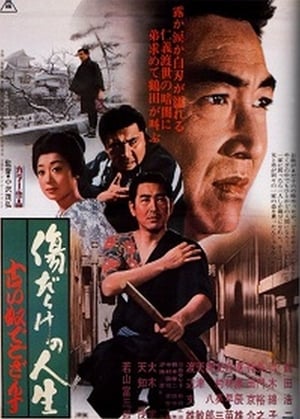
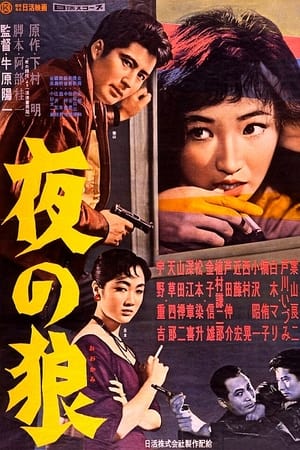
Film director and screenwriter Seijun Suzuki (1923-2017), who in the sixties was the great innovator of Japanese cinema; and his collaborator, art director and screenwriter Takeo Kimura (1918-2010), recall how they made their great masterpieces about the Yakuza underworld for the Nikkatsu film company.
GOZEN is a jidageki (period piece) dramas. The word “gozen” refers to a feudal game held in the presence of a Daimyo, described as a match “one must not lose”.
Hubert is a French policeman with very sharp methods. After being forced to take 2 months off by his boss, who doesn't share his view on working methods, he goes back to Japan, where he used to work 19 years ago, to settle the probate of his girlfriend who left him shortly after marriage without a trace.
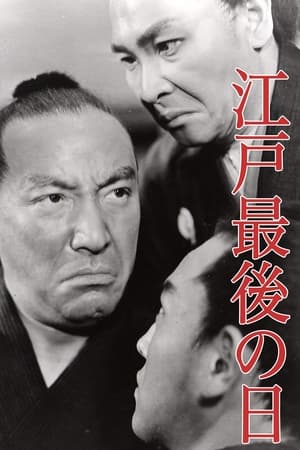
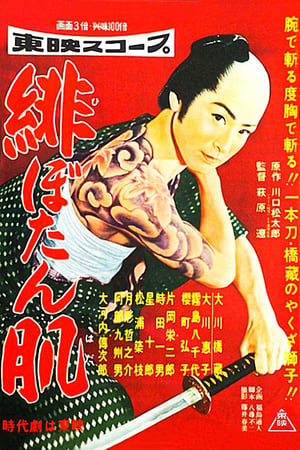
During the ultra-violent era of the downfall of the Tokugawa Shogunate one man rose above the rest with his ideas of how to overthrow the corrupt government and end the bloodshed between the Choshu and Satsuma clans which would ultimately lead to the alliance of these 2 clans and restoration of the emperor to full power. Based on the play that made Sawada Shojiro famous, this is the story of Tsukigata Hanpeita, a forward looking samurai from Choshu, who along with Katsura Kogoro and Sakamoto Ryoma of Tosa worked to bring their dream of a new era in Japan.
A cabdriver and a cop race to Paris to rescue a love interest and the Japanese minister of defense from kidnappers.
The second film in the "Inu" series.
A samurai answers a village's request for protection after he falls on hard times. The town needs protection from bandits, so the samurai gathers six others to help him teach the people how to defend themselves, and the villagers provide the soldiers with food.
A Japanese Yakuza gangster's deadly existence in his homeland gets him exiled to Los Angeles, where he is taken in by his little brother and his brother's gang. Original Title: ブラザー
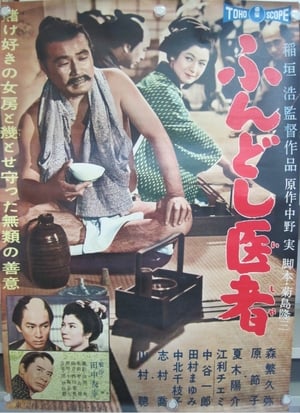
Heizo's cousin Senemon Misawa and his son Katsuzo visited Heizo's home. Heizo learns that Senemon has fallen in love with Katsutoshi, a woman who works at the Yamabukiya Tea House, and has asked her to marry him. Heizo decided to visit Yamabukiya, saying "I will try to find out if this woman is a bodhisattva or a demon." After meeting Katsutoshi Heizo, felt embarrassed and ordered Gorozo to inquire about her just in case. Gorozo, in turn, sends secret detective Rihachi to Yamabukiya with the task of keeping an eye on Katsutoshi...
Heizo "The Demon" investigates the shop of Toshimaya the swordsmith, where 280 ryo was stolen and twelve people murdered. This particular group of theives are most dangerous because of the willingness to kill for money, but what about this mysterious unibrow, who is he? What is he up to?
Edo town thief called "Acrobatics boy" has been rampant in town, just that time, spy, Goro of Otaki will see a woman who had been an inside contact of the Yataro by chance. Also, Heizo is worried about the child of Inoue Tatsuizumi, who decided to ask for help for Gen'an.
Heizo "The Demon" deals with an arson thief gang known as "Bungoro" the fire thief who leaves a calling card as evidence. As a street notice, showing the thief of Ohno shop, but it is not Bungoro, it's the quick work of a solo member. Heizo Hasegawa with his hands full may have caught a break, it may be a falling out among the thieves.
An old thief, Kuhei Sagiwara, used to visit his hometown at the foot of the Kurikara Pass in Kaga Province. Hiding from the rain, he overheard a secret conversation between three men, just like him, hiding from the rain. These three conspired to kill Heizo Hasegawa, the head of the arson and robbery police squad, and the head of these three is the outrageous villain, thief and murderer Jingoro Amikiri...
When Kanako, a model daughter and a brilliant student, disappears, her mother asks her ex-husband, a violent former policeman, to find her. As his investigation progresses, his idealized image of Kanako cracks: the girl hides a dark life that her father can not even imagine.
One night in Tokyo, Leo, a young boxer, meets his first love, Monica, an imprisoned sex worker. Caught up in a drug-smuggling scheme, they find themselves pursued by a corrupt cop, a yakuza, his nemesis, and a female assassin.
The history of the Yakuza Eiga at the TOEI studio is roughly outlined. Real Yakuza and also their connections to the movie business are discussed, and many important actors and directors of the genres are interviewed. Former real yakuza boss turned actor Noboru Ando, Takashi Miike, Sonny Chiba and many more get a chance to speak.
A lethal assassin for a secret Chinese organisation, who sheds tears of regret each time he kills, is seen swiftly and mercilessly executing three Yakuza gangsters by a beautiful artist. She is captivated by the grace of his kill and later falls in love with him. An intense power struggle for the leadership of the Yakuza Clans ensues as they seek vengeance for the death of their leader.
Four people recount different versions of the story of a man's murder and the rape of his wife.
A humble page fathers a child by the daughter of a clan official and is banished. Years later, the child, now a stable boy, is reunited with his father, but feudal codes threaten their happiness. Uchida’s poignant masterpiece condemns the inflexible class system and launches an indictment of values that favor symbolic objects over human life. The film’s focus is on character rather than swordplay, and charged performances - especially child actor Motoharu Ueki - add to the emotional power.
Two New York cops get involved in a gang war between members of the Yakuza, the Japanese Mafia. They arrest one of their killers and are ordered to escort him back to Japan. However, in Japan he manages to escape, and as they try to track him down, they get deeper and deeper into the Japanese Mafia scene and they have to learn that they can only win by playing the game—the Japanese way.