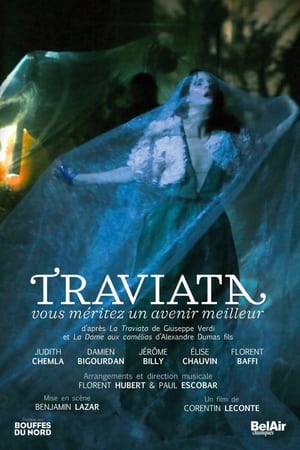
The audience is invited into Violetta’s privacy to have a close look at the fire to which she abandons herself among the guests of this musical and phantasmagorical celebration that blends theatre and opera, voices that speak and sing, and where the distinction between the instrumentalists and the singers becomes blurred, where Charles Baudelaire is seated next to Christophe Tarkos, and where the phantoms of this Paris in full industrial boom whose future we are living at present, sing and die.
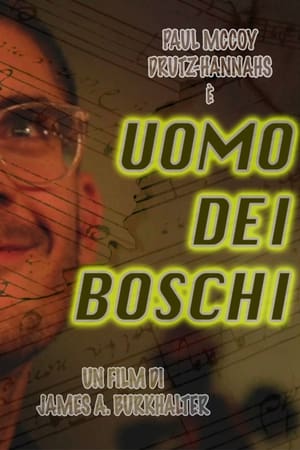
At night, in the dark recesses of the woods, a male cellist lures in viewers with a performance of Bach's "Cello Suite No. 1 in G Major." It stars Paul McCoy Drutz-Hannahs, a professional cellist with the Johns Hopkins University Orchestra.
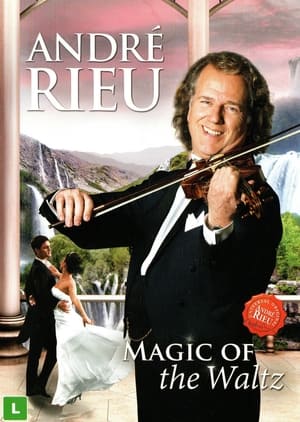
André Rieu - Magic Of The Waltz
An unbroken sequence of fragments, last thoughts, elegies and absences by Schubert, Mozart, Wagner, Janáček, Stravinsky, Jacquet de la Guerre and Schumann, inter-leaved with movements from John Woolrich's Pianobooks. The programme is performed alongside images from the Quay Brothers.
A random librarian is pulled into a multiversal conundrum in this prequel to Tethered (2020).
An impromptu singing contest at a dive bar turns a lonely night into a soul-baring moment of shared harmony.
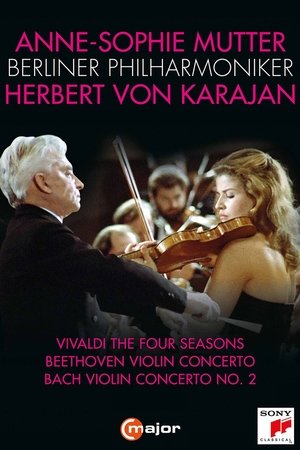
Live performance of Johann Sebastian Bach's Magnificat, BWV 243 from Herbert von Karajan's New Year's Eve concert in 1984.
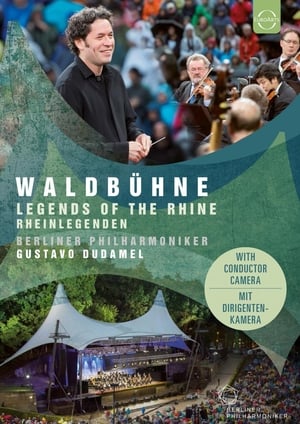
For their annual season end concert, the Berliner Philharmoniker take the audience on a dreamy, magically journey through the river Rhine with Schumann’s beloved 3rd Symphony Rhenish. Pieces from Wagner’s Der Ring des Nibelungen under the baton of dynamic conductor Gustavo Dudamel complete this evening.
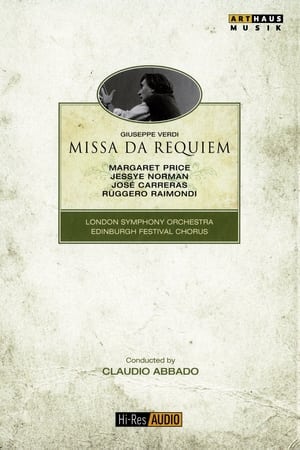
Live performance of Verdi's Missa da Requiem at the Edinburgh Festival in 1982. An all-star quartet of soloists under the baton of Claudio Abbado, recorded in high definition audio.
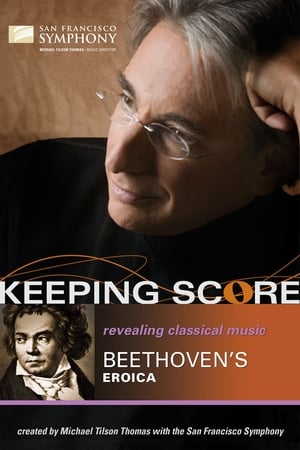
Beethoven spent three years composing the Eroica, an intimate journal of his emotional crises and his dramatic emergence as an original master. Michael Tilson Thomas and the musicians of the San Francisco Symphony help you make sense of this voyage into life as it really is.
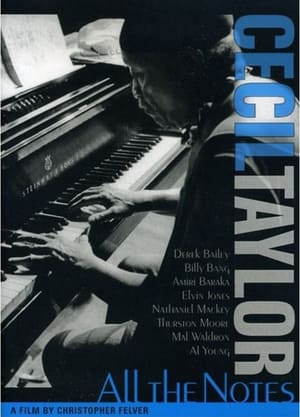
Cecil Taylor was the grand master of free jazz piano. "All the Notes" captures in breezy fashion the unconventional stance of this media-shy modern musical genius, regarded as one of the true giants of post-war music. Seated at his beloved and battered piano in his Brooklyn brownstone the maestro holds court with frequent stentorian pronouncements on life, art and music.
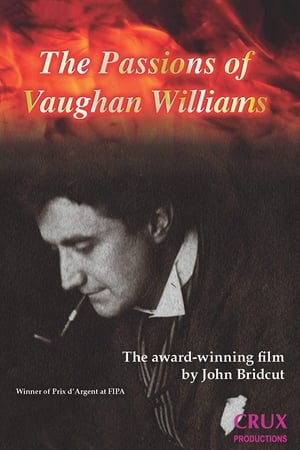
Fifty years after his death, this musical and psychological portrait of Ralph Vaughan Williams explores the passions that drove a giant of 20th-century English music.
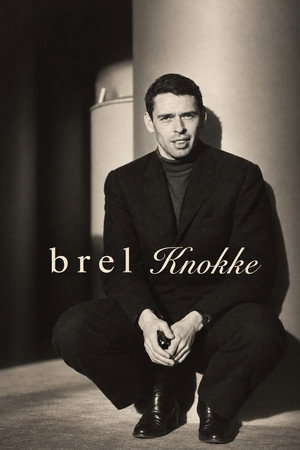
Jacques Brel à Knokke-le-Zoute stands as an invaluable institutional and cultural artifact. Produced via the technical facilities of Radio Télévision Belge (RTB) and famously marking the public stage debut of his masterpiece "Mathilde", this digitally restored performance captures the Belgian icon at the absolute zenith of his artistic powers, preserving the unmatched theatricality and visceral intensity that defined his legacy just years before his retirement from the stage.
The Very Best of Diana Krall is the first greatest hits album by Canadian singer Diana Krall.
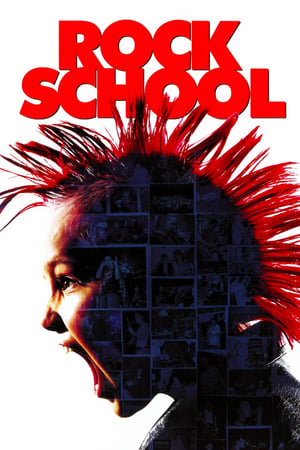
It is about a music school in Philadelphia, The Paul Green School of Rock Music, run by Paul Green that teaches kids ages 9 to 17 how to play rock music and be rock stars. Paul Green teaches his students how to play music such as Black Sabbath and Frank Zappa better than anyone expects them to by using a unique style of teaching that includes getting very angry and acting childish.
Interlude is a heartfelt, dialogue-free short film about Walter, an elderly widower who rediscovers his passion for music. Haunted by memories of his late wife, Walter struggles to play the piano again after years away. With only his loyal dog for company, he battles self-doubt, aging hands, and unfinished melodies as he prepares for a local talent show. Through quiet determination and bittersweet flashbacks, Walter finds the courage to finish his composition and honor his wife’s memory, ultimately reconnecting with his family and himself.
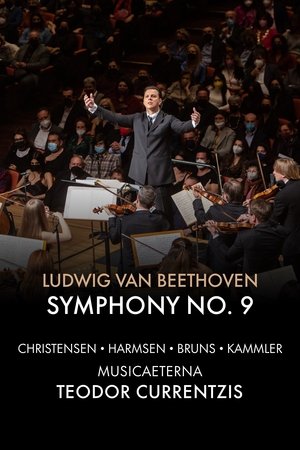
Ludwig van Beethoven headed for Symphony No. 9 literally his entire life. As early as the 1790s, he had an eye on Ode to Joy, perhaps the most well-known poem by Friedrich Schiller, written on the threshold of the French Revolution (1786). In his mature and, in particular, later years, the deaf composer with an acute ‘hearing vision’ increasingly distanced himself from conventional forms and genres and wrote parts beyond the possibilities of instruments of his day. He nurtured the idea of a symphony with a choir for at least several years. The history of the Ninth’s interpretations includes 200 years of staggering revelations and lingering stagnation. Performed by the musicAeterna orchestra, choir, and guest soloists under the baton of Teodor Currentzis, Beethoven’s opus magnum acquires the original poignancy and energy of a recent discovery.
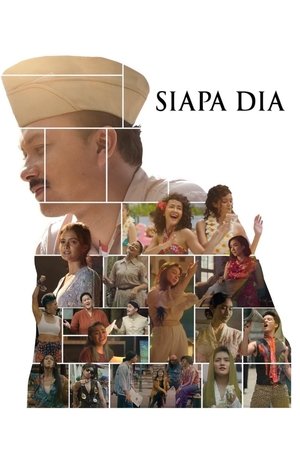
Layar, a popular film star who feels bored with his career wants to make a musical theater set in a family history that is always linked to Indonesian film history.
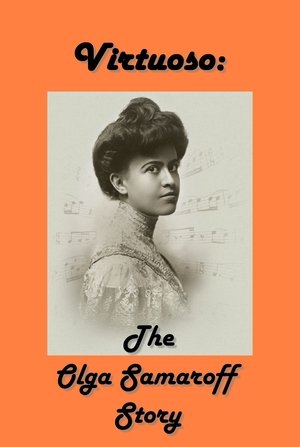
As America's first international woman concert pianist, renowned lecturer, author, music critic, famous conductor's wife and champion for equal rights for women in music, Olga Samaroff was at the center of a musical life that to this day embodies the imprint of her artistry and achievements. Her life story also portrays an era in our American cultural heritage that has largely been underserved in the documentary film genre. Texas-born Olga Samaroff a.k.a. Lucy Hickenlooper lived at a time when music was dominated by men and Old World prejudices----and she emerged as a leader among many. Against tremendous odds she rose from complete obscurity to be the most successful American woman concert pianist of the early 20th Century.
Kamenný orchestr