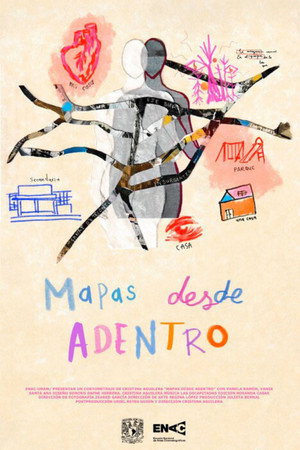
In this documentary, 6 protagonists tell their personal experiences of abortion and sterilization, from unplanned pregnancy to a happy mother and vice versa from the wanted child to regretting motherhood.
Delphine Seyrig reads passages from a Valerie Solanas’s SCUM manifesto.
“I ask my mother about her past feminist commitment, and why she made a child on her own. She doesn’t answer me. I want to pierce the mystery of my mother. I discover the women’s movement of the 1970s, an activist feminist cinema, and the woman filmmaker that I am changes. I meet and testify to the transmission of a memory of feminist struggles through collective cinematographic practices.” Anna Salzberg
Loosely based on Charles Dicken’s book “A Tale of Two Cities”, Working Class tells the tale of underground street artists Mike Giant and Mike Maxwell and their decade long friendship that started with a tattoo. The story is told through the cities they call home by, cutting back and forth between the neighborhoods of San Francisco and San Diego, as the artists talk about their life philosophies and the work they create.
"I especially hope to inspire young women, because I often feel like so much emphasis is put on how beautiful you are, and how thin you are, and not a lot of emphasis is put on what you can do and how smart you are. I'd like to change the emphasis of what's important when looking at a woman." Filmed in San Francisco in 2000, Margaret Kilgallen (1967-2001) discusses the female figures she incorporated into many of her paintings and graffiti tags. Loosely based on women she discovered while listening to folk records, watching buck dance videos, or reading about the history of swimming, Kilgallen painted her heroines to inspire others and to change how society looks at women. Three of Kilgallen's heroines—Matokie Slaughter, Algia Mae Hinton, and Fanny Durack—are shown and heard through archival recordings. Kilgallen is shown tagging train cars with her husband, artist Barry McGee, in a Bay Area rail yard and painting in her studio at UC Berkeley (source: Art21).
Told by her daughter Wendy, MINK! chronicles the remarkable Patsy Takemoto Mink, a Japanese American from Hawai'i who became the first woman of color elected to the U.S. Congress, on her harrowing mission to co-author and defend Title IX, the law that transformed athletics for generations in America for girls and women.
Director Eugenia Gutu offers a feminist critique of gender (in)equality under socialism in this documentary portrait of an industrializing town and its model citizen, Florica S.
Shut Up and Sing is a documentary about the country band from Texas called the Dixie Chicks and how one tiny comment against President Bush dropped their number one hit off the charts and caused fans to hate them, destroy their CD’s, and protest at their concerts. A film about freedom of speech gone out of control and the three girls lives that were forever changed by a small anti-Bush comment
All the legendary women of rock 'n' roll are brought together in this stunning collage of artists and their music. Through a music-driven mix of rare historical footage, music videos, riveting live performances and personal interviews, the lives and times of the greatest women in rock history are revealed.
As a result of the Holocaust and later, AIDS, the male homosexual community has sustained bitter losses and, according to Praunheim, lesbian women have now placed themselves at the head of the so-called queer movement. The female protagonists in the film represent two different generations; they also incorporate the past and present status of homosexuals in society.
This documentary features sexologist and writer Betty Dodson as she assembles a group of women to discuss the appearance and purpose of female genitalia. The discussion is followed by some group self-stimulation exercises and full-body massages.
November 2017, North of Paris : H. Reiner-Onet cleaning company workers are fighting an exemplary battle. This 45 days strike, one of the longest in the history of the French railway, led by these men and women, ended in a decisive victory against two giants, Onet and the SNCF. One of the most impoverished sectors among railway workers, they had no previous experience with striking or organized struggle. How did they pull such a victory ? Their dermination to fight was undoubtedly the key to winning, but so are the links they forged with revolutionary activists who brought with them a tradition of fighting for workers against employers.
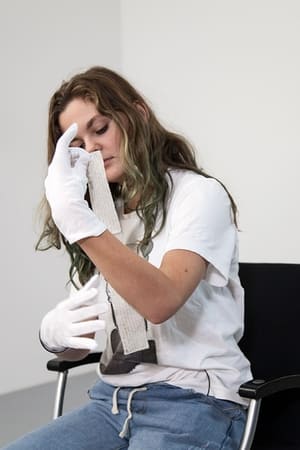
The Post(?) Feminist Dissonance Project uses a quote by Kathleen Hanna as a prompt, a voicemail box as an interviewing device, found footage as a tool, and text as a character. it is a study in the cacophony of the inner life tuned against the perception of reality. i made this piece to see if i was alone, and i discovered that for better or for worse, i am not. this is above all about the process, not the resolution.
The compelling story of an extraordinary woman's journey from her birth in a paper thin shack in the cotton fields of Georgia to her recognition as a key writer of the twentieth Century.Walker made history as the first black woman to win a Pulitzer Prize for her groundbreaking novel, The Color Purple.
The Gender Chip Project is the product of the unique vision of director Helen DeMichiel and an extraordinary collaboration with Media Working Group and organizations throughout the country. De Michiel brought together several young women majoring in the sciences, engineering and math at Ohio State University in Columbus, and spent three years documenting their experiences and struggles as women stepping into traditionally male domains. DeMichiel completed the documentary at Citizen Film, which provided post-production management and editorial services.
A film portrayal of a pioneering aviator and best-selling author whose extraordinary public life had a deep impact on her inner world.
BERTHA LUTZ: WOMEN AND THE U.N. CHARTER reveals the important and unknown role of a Brazilian biologist and feminist in ensuring that gender issues were addressed at the basis of the United Nations.
An intimate study of one of the most influential and provocative thinkers of the 20th century tracking feminist icon Susan Sontag’s seminal, life-changing moments through archival materials, accounts from friends, family, colleagues, and lovers, as well as her own words, as read by Patricia Clarkson.
Mujer de Tierra
Despite the 1960s free-love and alternative culture, many women found that their lives and expectations had barely altered. But by the 1970s, the Women's Liberation Movement was causing seismic shifts in the march of the world's events, and women's creativity and political consciousness was soon to transform everything - including the face of publishing and literature. In 1973 a group of women got together and formed Virago Press; an imprint, they said, for 52 per cent of the population. These women were determined to make change - and they would start by giving women a voice, by giving them back their history and reclaiming women's literature.