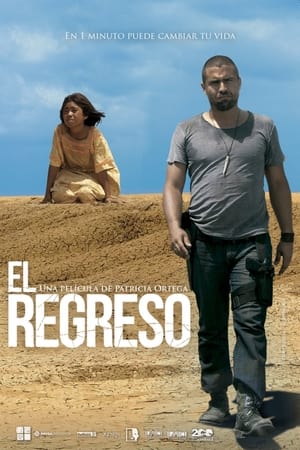
El Regreso is a venezuelan movie written and directed by Patricia Ortega, which tells the story of a Wayuu girl that survived the slaughter of his people, in Bahía Portete from the Colombian Guajira, and therefore, she is forced to grow in a unknown world to her.
Ryuzo, Japanese young man who has committed a crime of passion in Tokyo, is sent by his father to Paraguaipoa to escape justice. In this place, inhabited by the Wayuu ethnic group, meets Princess Campanula. Among them was a love affair, not welcomed by the smuggler Challenger occurs.
A detective, goes from Spain to the Venezuelan Guajira, hired by the king of Wuayuus, to protect her, Niña de Maracaibo (wife of King, who belongs to an aristocratic family in the city) the detective tries to discover a conspiracy greater than initially imagined. Where he is only one piece in a plot which mixes smuggling, power struggles and tribal magic. The clash of two opposite visions, the 'Western' Spanish researcher, and the 'native' the Wuayuu original owners of Caribbean, converts this format film apparently 'police' in a thesis film revealing the mystery of the still existing singular South American identity.
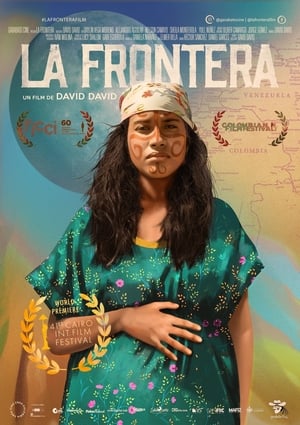
Amid a political crisis, on the border between Colombia and Venezuela, an Andean woman, her husband, and brother live on looting travelers. However fate pushes her to the brink of illusion and getting lost in mysterious dreams.
The sound of metal creaking as if something is about to break. An old pickup truck adapted to carry passengers crosses the La Guajira desert in Colombia. With the wind come voices that merge among the passengers who travel there. A Wayuu woman returns to her territory, accompanied by her family, after years of exile due to a paramilitary massacre. A cyclical journey where the time layers of the territory touch and the border between the living and the dead is diluted.
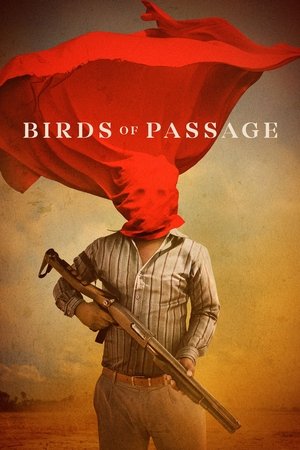
During the marijuana bonanza, a violent decade that saw the origins of drug trafficking in Colombia, Rapayet and his indigenous family get involved in a war to control the business that ends up destroying their lives and their culture.
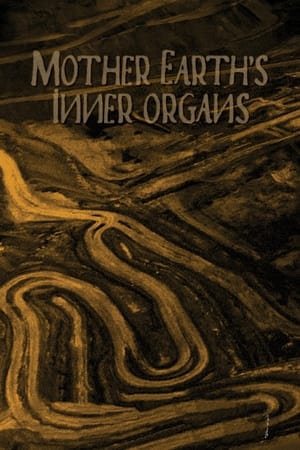
The first mountains that the Amsterdam-based Colombian artist and filmmaker Ana Bravo Pérez saw in the Netherlands were black. In this experimental work, she follows the stench of the coal in the port of Amsterdam back to its origin: an open wound in northern Colombia. The mine is located in the territory of the Wayuu and has a huge impact on the indigenous people.
When a girl in the Wayuu tribe has her first menstruation, begins her transformation from girl to woman, locked up and isoleted by the rest of her family for at least a year, learning the most ancestral traditions of her Wayuu ethnic group.
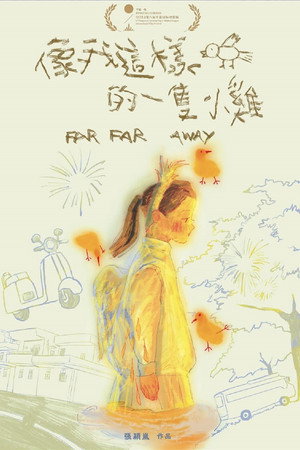
After her mother went to Hong Kong to work, the little girl Jin Ling lived with her mother-in-law and brother in a rural area of Guangdong. Her mother rarely appeared in the screen, but she seemed to “fill” Jin Ling’s life.
The Bandit Tamer is a 1925 American silent film directed by J.P. McGowan.
After the mysterious murder of John Cowles' father, the son starts west to borrow money of his father's business partner, Col. Meriwether. He meets the Colonel's daughter, Ellen, and falls in love with her, not telling her of his fiancée, Grace Sheraton. Gordon Orme, an old acquaintance, turns up, tells Col. Meriwether about Grace, and the Colonel is so enraged he refuses to lend the money. John's mother and Grace have followed John and his mother urges him to try the gold fields. He discovers gold and wins Ellen, after both Gordon and Grace, who is really in love with Gordon, are killed.
In an age of overlapping ecological, political, and social crises, the question of care and responsibility takes on enormous significance. Who cares for whom, and under what conditions? How can we think of care beyond normative role models, structural isolation, and exploitation? In light of the climate crisis, wars, growing social inequality, and the profound experiences during the pandemic, one thing is clear: without radically rethinking care work, a more just future cannot be achieved. The group screening brings together three video works that deal with practices of care. Starting from the private sphere, the works develop perspectives on care beyond the neoliberal burden of personal responsibility and examine how solidarity can be conceived and lived.
The movie is about a 15 years old depressed boy who meets an old man when he goes to a park. Meeting him he gets to learn some life lessons and he thinks those lessons change his life and one of the advice from those life lessons could bring him inner peace of mind for lifetime.
It would seem that the life of Lena - girls from the provinces - was a success. She did everything to become a famous TV presenter in her incomplete 30 years. She has a beautiful wealthy husband, she is valued and respected. But behind this prosperous facade lies a deeply unhappy person. Because you can not be happy by abandoning true love and your own child for the sake of career and fame. And now, in order to find herself the same, she needs to go back, win her beloved again and become a real mother. And she will have to find out the truth that has been hidden from her for so many years ...
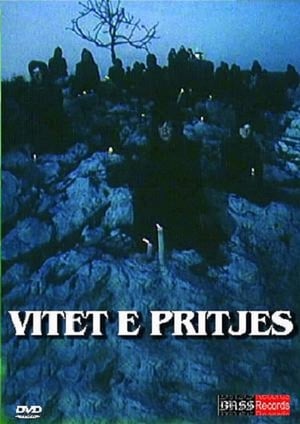
Portrays the lives of families and other loved ones left behind when husbands, fathers, brothers and children, because of desperate economic conditions in Albania, travel as far as America, looking for work and economic security.
A young woman is accused of "Immorality" (aka prostitution) and she is sent for re-education to work on a construction site.
Indian Army soldier Shankar gets injured in cross-firing at the border. Senior Officer suggests he take 8 days to rest after consultation with doctors. Shankar requests for leave instead of rest, officers agree and tell him to report to duty on the morning of the 8th day. While traveling, he helps citizens and ends up missing his train. Online news reporter covers his story without acknowledging him. The story later revolves around how he reaches his home and then back to duty in a short span of time.
A story of reuniting twin sisters, who were seperated when young. Maiko, who lives in Hachijo Island, organizes a local festival. Just before the festival starts, she leaves the island to look for her sister Seiko in Tokyo.
In the winter of 1933, an illegalist (a communist, member of a political party a party outlawed at the time) assumes the mission of a wounded colleague to transmit a secret message.
An island in Japan is the site for the dumped and the refuse. Nanakusa and Yu who were childhood and school friends meet on this island that is called Kaiden, a scary name that only refers to things not normal or earthly. The reunited friends strike a bargain and are soon involved in cases most would not dare be involved in or become entangled in.