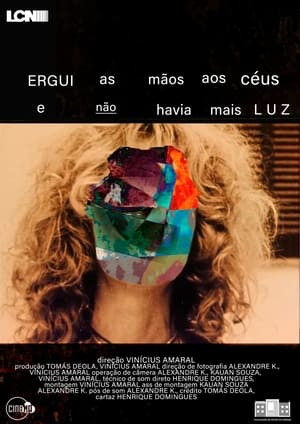
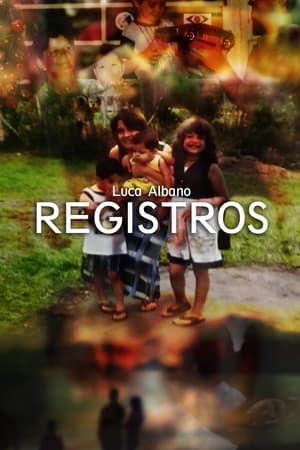
«My grandma had a great strength and love for life which made me believe that some of us were able to become immortals and escape death. When she passed at the age of 92, her death was a surprise to me, which I was not prepared for. The cinema has the immense power of creating the illusion of life and its protection. This film is my attempt to rescue my grandma from death. It is not a documentary about my grandma but a film with my grandma. I wanted to film a ghost and then return it to the realm of the living, like Orfeu tried with Eurídice. It is a route to resurrection. It is my way of giving her immortality which I deem to be her right.»
Based on powerful archival material documenting the most daring moments in the struggle for liberation in the Third World, this documentary is accompanied by classic text from The Wretched of the Earth by Frantz Fanon.
A 60th anniversary retrospective documentary on the influence and context of the 1962 film, To Kill a Mockingbird.
A historic three-day race riot erupted in two African American neighborhoods in the northern, mid-sized city of Rochester, New York. On the night of July 24, 1964, frustration and resentment brought on by institutional racism, overcrowding, lack of job opportunity and police dog attacks exploded in racial violence that brought Rochester to its knees. Combines historic archival footage, news reports, and interviews with witnesses and participants to dig deeply into the causes and effects of the historic disturbance.
In this unprecedented primetime program, 50 volunteers take part in experiments without knowing that the aim of the program is to understand the unconscious mechanisms that can lead us to discriminatory behavior. Because if they knew, it would bias the results of the experiments.
Why Do They Hate Us?
On August 3rd, 1979, a Vietnamese refugee shoots and kills a white crab fisherman at the town docks in Seadrift, TX. What began as a fishing dispute erupts in violence and ignites a resurgence of the KKK and open hostilities against the Vietnamese along the Gulf Coast. Set during the early days of Vietnamese refugee arrival, “Seadrift” examines the circumstances that led up to the shooting, its tumultuous aftermath, and the unexpected consequences that continue to reverberate today.
The village of Yahidne in northern Ukraine is coming back to life. Dogs are running around. Gardens and crops are green again. People support one another and families have reunited. In a movement of solidarity, local youth help rebuild what was devastated a year ago when Russian troops occupied the village imprisoning the villagers in the school's basement for a month. The villagers' attitudes alternate between their desire to move forward an remembering the horrors of the past. A heartwarming tribute to resilience and unity.
Six people, one room, one night, one game, a lot of sensuality and much to discover. A Film that shows how bodies and minds might meet when allowed to. Get involved within a stimulating experiment, somewhere between aesthetic statement and real venture, between pornographic art and the attempt to reposition sexuality within dialogue and actions.
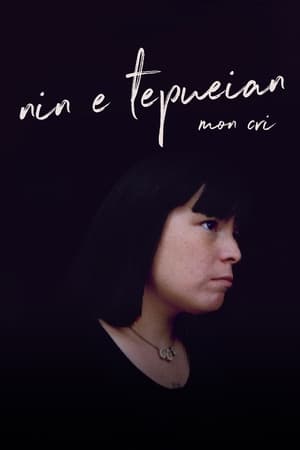
On August 9, 2016, a young Cree man named Colten Boushie died from a gunshot to the back of his head after entering Gerald Stanley's rural property with his friends. The jury's subsequent acquittal of Stanley captured international attention, raising questions about racism embedded within Canada's legal system and propelling Colten's family to national and international stages in their pursuit of justice. Sensitively directed by Tasha Hubbard, "nîpawistamâsowin: We Will Stand Up" weaves a profound narrative encompassing the filmmaker's own adoption, the stark history of colonialism on the Prairies, and a vision of a future where Indigenous children can live safely on their homelands.
La mia bandiera - La resistenza al femminile
It is the evocation of a life as brief as it is dense. An encounter with a dazzling thought, that of Frantz Fanon, a psychiatrist of West Indian origin, who will reflect on the alienation of black people. It is the evocation of a man of reflection who refuses to close his eyes, of the man of action who devoted himself body and soul to the liberation struggle of the Algerian people and who will become, through his political commitment, his fight, and his writings, one of the figures of the anti-colonialist struggle. Before being killed at the age of 36 by leukemia, on December 6, 1961. His body was buried by Chadli Bendjedid, who later became Algerian president, in Algeria, at the Chouhadas cemetery (cemetery of war martyrs ). With him, three of his works are buried: “Black Skin, White Masks”, “L’An V De La Révolution Algérien” and “The Wretched of the Earth”.
October 2003, Alma and Lila Levy are excluded from the Lycée Henri Wallon in Aubervilliers solely because they were wearing a headscarf. What follows is a deafening political and media debate, justifying in most cases the exclusion of girls wearing head-scarves to school. February 2004, a law was eventually passed by the National Assembly. "A thinly veiled racism" is about this controversy since the affair of Creil in 1989 (where two schoolgirls were excluded for the same reasons) and attempts to "reveal" that maybe what hides behind is the desire to exclude these girls. This film gives them a voice as well as others - teachers, community activists, feminists, researchers - gathered around the group "A School for You-All" fighting for the repeal of this law they consider sexist and racist ... This movie was censured in Septembre 2004 in France.
The natural sciences museum of La Plata, Argentina, had indigenous people held captive as study objects in the past, and their skeletons were on exhibit for many decades. The story of Krygi, served as a trigger to look back at the ideologies that defined us as individuals and as a people.
A short animated documentary featuring archival recordings of the filmmaker's Volga-German Great-Great-Grandmother, Mary Frank Lind, in which she recalls key memories of childhood—her father's windmill, warm rains, wolf sightings, bone trading, and her passion for carpentry, which broke gender norms but was supported by her father.
In California's Bay Area, a painful memory lingers of the Port Chicago disaster of WWII, when hundreds of the Navy's first Black Sailors perished, and the White officers in charge were protected by the chain of command.
How the Fiddle Flows follows Canada's great rivers west along the fur-trading route of the early Europeans. The newcomers introduced the fiddle to the Aboriginal people they intermarried with along the way. A generation later, their mixed-blood offspring would blend European folk tunes with First Nations rhythms to create a rich and distinct musical tradition. From the Gaspé Peninsula, north to Hudson Bay and to the Prairies, How the Fiddle Flows reveals how a distinctive Metis identity and culture were shaped over time. Featuring soaring performances by some of Canada's best known fiddlers and step dancers and narrated by award-winning actress Tantoo Cardinal.
August 1992, Rostock-Lichtenhagen. The police look on as fascists bomb the Central Reception Center for Refugees (ZAST) and a hostel for Vietnamese contract workers with Molotov cocktails. A montage of video footage shot from the attacked houses, interviews with anti-fascists, the Vietnamese contract workers, the police, bureaucrats, neo-Nazis and local residents. A documentary about the collusion of politics and widespread fear.
A journey into the hearts, minds and eyes of Georgia O’Keeffe, Emily Carr and Frida Kahlo - three of the 20th century’s most remarkable artists.
Negotiating Amnesia is an essay film based on research conducted at the Alinari Archive and the National Library in Florence. It focuses on the Ethiopian War of 1935-36 and the legacy of the fascist, imperial drive in Italy. Through interviews, archival images and the analysis of high-school textbooks employed in Italy since 1946, the film shifts through different historical and personal anecdotes, modes and technologies of representation.