Alien and UFO encounters are not just a modern phenomenon. In fact, they go back thousands of years and amazingly resemble contemporary accounts worldwide. There are eyewitnesses from ancient times that actually recorded them and historical evidence exists in archaeology, landscapes and symbols. Why do we believe ancient accounts about battles and politics and yet ignore records about UFO sightings? From Egypt to Rome, from Africa to Europe, from South America to Australia - sightings have been recorded across vast periods of time, it's clear that we have never been alone.
Author Brian Foerster explores the possibility that a technologically advanced civilization existed in the areas of Machu Picchu, Ollantaytambo and PumaPunku in Peru, long before the Inca Empire.
Those TV documentaries you see, and the science experts they feature? Did you know that producers often edit them out of context, and twist their words, to make it seem like they promoted some pop sensationalism instead of the real facts? Science Friction exposes these faux documentaries by name, and gives the scientists a chance to clear the record.
Documentary based on the book by Erich von Däniken concerning the ancient mysteries of the world, such as the pyramids of Egypt and Mexico, ancient cave drawings, the monuments of Easter Island, etc., and the fact that these things and modern civilisation could have been influenced by extraterrestrial visitations hundreds (or perhaps thousands) of years ago.
Ancient Aliens Debunked is a 3 hour refutation of the theories proposed on the History Channel series Ancient Aliens. It is essentially a point by point critique of the "ancient astronaut theory" which has been proposed by people like Erich von Däniken and Zecharia Sitchin as well as many others. The film covers topics like: Ancient building sites: Puma Punku, The Pyramids, Baalbek, Incan sites, And Easter Island. Ancient artifacts: Pacal's rocket, the Nazca lines, the Tolima "fighter jets", the Egyptian "light bulb", Ufo's in ancient art, and the crystal skulls. Ancient text issues: Ezekiel's wheel, Ancient nuclear warfare, Vimana's, the Anunnaki, and the Nephilim.
A documentary purporting to expose the space alien conspiracy that not only influenced human history... but created it as well.
Are the forbidden secrets of the prehistoric past linked to the forthcoming events of the prophetic future? Is there a hidden hand confiscating and concealing artifacts relating to the world before the Flood of Noah and the hybrid entities that inhabited it? Are living giants still walking the earth today? Is the Vatican preparing for the arrival of “alien saviors”? In this fast-paced episode, Steve Quayle, Timothy Alberino and Tom Horn unveil the surprising answers to these compelling questions. From Cusco, Peru; to Rome, Italy; to the island of Malta; join Timothy Alberino and the GenSix Production crew as they follow the path of a conspiracy that gives credence to the old adage… all roads lead to Rome!
Timothy Alberino and the GenSix Productions film crew head to the High Plain (“Altiplano”) of Peru and Bolivia on the shores of legendary Lake Titicaca to investigate some of the most compelling evidence on the planet of fallen angels and their giant hybrid offspring in the antediluvian past. This full length feature film includes cutting edge research that uncovers and publishes, for the first time, historical documentation which proves beyond a shadow of doubt that colossal giants once roamed the lands of Ecuador, Peru and Bolivia; as well as reveals never before seen mind-blowing geoglyphs engraved on the surface of the earth and stretching for hundreds of miles over the Altiplano. Join the crew as they examine the megalithic mysteries of Tiwanaku and confirm that both the Inca and the Spanish chroniclers were well aware of who built Puma Punku, and when.
An examination of mysteries of the ancient world and their connection to the possibility that aliens visited Earth.
When the collection of short stories by I.E.Babel "Konarmiya" was published, S.M. Budyonny became one of its first readers. The "horse army" infuriated him. Budyonny called the essays slanderous speculation and threatened to personally hack Babel with a saber. Defending the writer, Gorky wrote: "He showed the fighters of the First Cavalry better, more truthfully than Gogol — Zaporozhtsev." The writer was saved that time. But on May 16, 1939, no one could help Babel anymore. The writer was arrested. He ended up in the most terrible NKVD prison, Sukhanovskaya. Few people managed to get out alive.…
Fernanda Ocaña, a 60-year-old drag artist from Seville, left her hometown at 14 to build a life in Barcelona. Taken in by the iconic Spanish artist José Pérez Ocaña, she immersed herself in the world of show business. Today, she continues to shine as the host of the Bar Ocaña in Plaza Real, welcoming guests with her unmistakable charm.
Short documentary on a central african tribe called 'The Chillouks'.
The story of a woman who, following an accident, finds herself disfigured. Eager to regain her face, she attempts numerous surgeries, but without success, she will have to live with the illusion of her reflection.
A journey to escape dopamine addiction turns into a disastrous camping trip.
In the mountains of Colombia's Coffee Triangle, a family faces the shadow of armed conflict. Years later, a son reconstructs the inherited fear, amidst echoes of the past and invisible scars. A sensory journey into memory, where the unspoken still resonates.
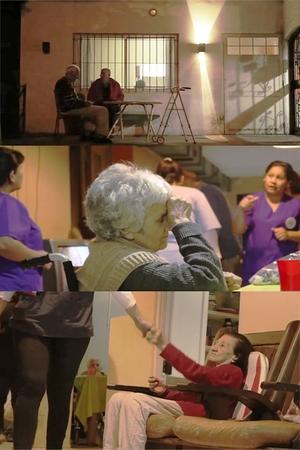
Asilo (Prototipo)
Dilution is an experimental short film that explores the transit between resistance and (di)ssolution, between holding and releasing and a path towards obsessive repetition. They are layers, exposed pores, matter that oscillates between remaining or disappearing. The sound is not a background, but a puncture: friction, tearing, water that drags what still persists. A sensorial testimony of what refuses to vanish completely.
RotGut
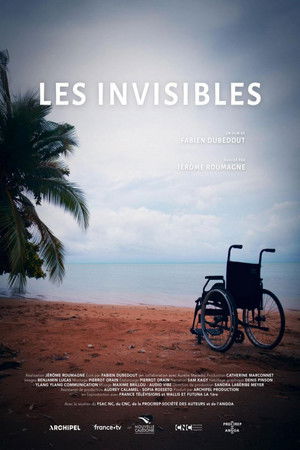
"In Wallis and Futuna, disability has long lived in the shadows. Invisible to the world, those affected were marginalized, deprived of genuine recognition and a place in society. Behind closed doors, shame and fear of judgment mingled with the pain of families convinced that a child with a disability was a curse. Today, these superstitions are gradually fading. But the wounds of the past remain, and the path to acceptance and inclusion is still long. On this archipelago, it is urgent to make up for lost time in terms of recognition, support, and dignity for every person with a disability."
The Dutch director A.H., born in Noord-Brabant, has been experiencing pressure from his family for years to focus more on his Moroccan identity. Aiman does not feel the need, because he considers himself a Dutchman, too. In this personal documentary, he examines the cultural differences between himself and his family, before he will have to cut some knots. Either he conforms to the wishes of his family or he follows his own path, possibly jeopardising the relationship with his parents.