The ruthless dictator Teodoro Obiang has ruled Equatorial Guinea with an iron hand since 1979. Juan Tomás Ávila Laurel is the most translated Equatoguinean writer, but he had to flee the country in 2011, after starting a hunger strike denouncing the crimes of the dictatorship. Since then, he has lived in Spain, feeling that, despite the risks, he must return and fight the monster with words.
From PBS - The fascinating story of beavers in North America - their history, their near extinction, and their current comeback, as a growing number of scientists, conservationists and grass-roots environmentalists have come to regard beavers as overlooked tools when it comes to reversing the disastrous effects of global warming and world-wide water shortages. Once valued for their fur or hunted as pests, these industrious rodents are seen in a new light through the eyes of this novel assembly of beaver enthusiasts and "employers" who reveal the ways in which the presence of beavers can transform and revive landscapes. Using their skills as natural builders and brilliant hydro-engineers, beavers are being recruited to accomplish everything from re-establishing water sources in bone-dry deserts to supporting whole communities of wildlife drawn to the revitalizing aquatic ecosystems their ponds provide.
Andy is a loyalist of the Ka'bah Youth Movement (GPK) which is one of the 'civil militias' under the United Development Party (PPP) based in Yogyakarta. In 2019, Andy decided to support Prabowo Subianto to become the President of Indonesia. During the unstable political tension in Indonesia, Andy was required to maintain the condition in Yogyakarta.
River of Tears and Rage is a film culled from Kodao Productions' Facebook Live coverage of Baby River's wake and burial. Amid a raging coronavirus pandemic, a dead three month-old infant became a symbol of political repression by a regime denounced worldwide for its crimes against the people.
A documentary on the struggle of millworkers, farmworkers, and people of Hacienda Luisita, Philippines.
The 20 km zone surrounding the Fukushima Nuclear Power Plant was designated an evacuation zone due to the radiation caused by the accident in March 2011. However, the thousands of people of Itate, situated just outside the zone, and those who had fled the area and taken shelter there were left to their own devices for over a month. Later on Itate became a restricted area and the residents were allowed only visits having to leave the area for good. The place became a ghost town, as it was too close to the Zone and many pets and farm animals are stranded there. There are said to be 150~200 dogs, 400~800 cats, 50 chickens and a pig although the exact numbers are unknown. The public interest in the accident has all but gone but there is one man who still cares what happens to those animals.
Filmed at Masonboro Island, an undeveloped barrier island in southeastern North Carolina, “Tides” contemplates the liminal space between the modern technological world and that more ecological dimension we label as “nature” or “the environment.”
A month after the Wall Street occupation, a number of protesters follow their example and set up their tents in front of the Ljubljana stock market. The protesters are united in the critique of representative democracy and global financial capitalism under the slogan ‘nobody represents us’. Their organisation is based on the principles of direct democracy. In absence of other social alternatives, a community starts to emerge in the camp in front of the stock market where everyone has an equal say, and everyone is united in their diversity. After the initial euphoria the great idea of direct democracy clashes against the contemporary individual; antagonisms surface, similar to those of the system which the protesters fight against. The story about the Slovenian version of the ‘occupy’ movement is portrayed with the stories of a few protagonists, who despite several defeats do not lose hope in a different world.
Alex Jones exposes the problem-reaction-solution paradigm being used to terrorize the American people into accepting a highly controlled and oppressive society. From children in public schools being trained to turn in their peers and parents, to the Army and National Guard patrolling our nation's highways, Police State: The Takeover reveals the most threatening developments of Police State control
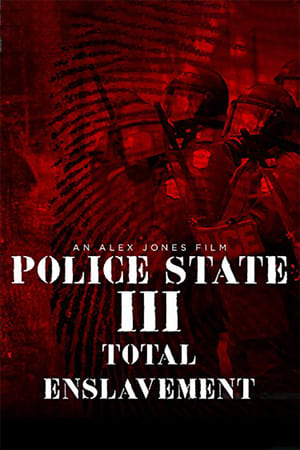
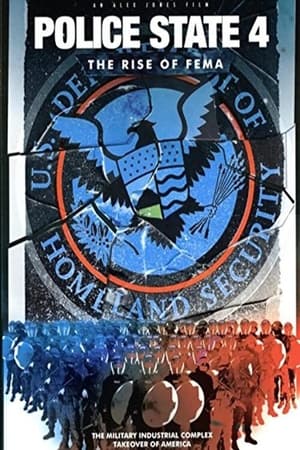
Total Enslavement is the third installment in the critically-acclaimed Police State series and is a must-see for all who leve freedom. This film documents the nightmare rise of the Homeland Security dictatorship, Patriot Acts 1 and 2, the Total Information Awareness Network, government-run white slavery rings, the new prison surveillance economy and much more.
The Masters of Terror details the execution of the September 11th attacks and the ensuing whitewash, the cashless society control-grid, implanted microchips, mind-control, militarization of police, concentration camps, foreign troops massing on US soil, the USA Patriot Act, and Homeland Security taking over the states.
“Umbrellas Move” is a long feature documentary capturing scenes from Hong Kong’s city-wide protest, the occupy movement in 2014. This documentary witnessed a critical page of Hong Kong after transfer of sovereignty over Hong Kong from Britain to China. Around 1200 thousand people have involved in this longest occupation in the history of Hong Kong in 2014. 79 days of occupation, Hong Kong people are fighting for their rights to vote under a fair election in order to be against the political controls from China.
A documentary about the clashes between squatters and the police in Berlin in early 1981. Despite the absence of commentary, this is an openly partisan film that aims less for political analysis than for an up-close description of the situation and mood.
The story of the 2019 Hong Kong protests, told through a series of demonstrations by local protestors that escalate into conflict when highly armed police appear on the scene.
A documentary by Giulia Vallicelli about the lady fest that took place in Rome in 2009. This documentary showcases the reality of queer and intersectional feminism in Italy through punk and feminist music.
This is a documentary about an honest search for the truth about the Federal Reserve Bank and the legality of the Internal Revenue System. Through extensive interviews with recognised experts and authority, the director shows an astonishing revelation of how the Federal Government and the Bankers have fooled the American public by taking thier wages and putting it in the pockets of the super-rich.
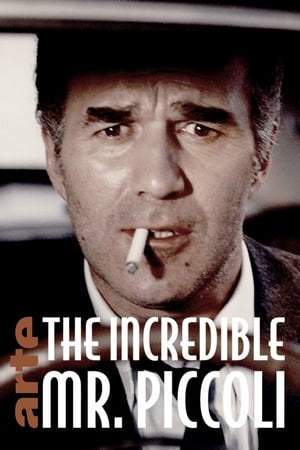
A captivating portrait of French actor Michel Piccoli, who has worked with the greatest filmmakers of his time and has built a dazzling career of remarkable merit and success, focusing on his work during the 1970s and his professional relationship with Claude Sautet, Romy Schneider, Marco Ferreri and Luis Buñuel.
The Umbrella Movement of 2014, also known as the Occupy Movement, paved the way for Hong Kong’s current upheavals, but unfolded in significantly different ways. This creative documentary focuses on the intellectual, political, and discursive underpinnings of the social and political actions of 2014, before fast-forwarding to 2019. A range of thoughtful and engaged intellectuals, students, scholars, activists, and artists including Benny Tai, Chan Kin-man, Ray Wong, and Agnes Chow (many of whom are facing imprisonment for their democratic activism) articulate a range of philosophies, viewpoints and emotions, set against Hong Kong’s spectacular urban background of skyscrapers, night lights, and street-occupying mass movements.
Hundreds of thousands − perhaps even millions − of protestors have taken to the streets of Hong Kong since early June. Sparked initially by the government's plans for a controversial extradition bill, the movement has now transformed into a broader push for greater freedoms and democracy, with anger over police brutality fuelling a cycle of violence. The protests are Hong Kong's biggest challenge to Beijing since its return to China in 1997. If We Burn looks at the movement through the eyes of Hong Kongers whose fates, like their city's future, now hang in the balance.
Frantz Fanon alone embodies all the issues of French colonial history. Martinican resistance fighter, he enlisted, like millions of colonial soldiers, in the Free Army out of loyalty to France and the idea of freedom that it embodies for him. A writer, he participated in the bubbling life of Saint-Germain with Césaire, Senghor and Sartre, debating tirelessly on the destiny of colonized peoples. As a doctor, he revolutionized the practice of psychiatry, seeking in the relations of domination of colonial societies the foundations of the pathologies of his patients in Blida. Activist, he brings together through his action and his history of him, the anger of peoples crushed by centuries of colonial oppression. But beyond this exceptional journey which makes sensitive the permanence of French colonialism in the Lesser Antilles at the gates of the Algerian desert, he leaves an incomparable body of work which has made him today one of the most studied French authors across the Atlantic.