In the heart of Paris, an entire palace has disappeared. It was the very first residence of the kings of France. Long before Versailles, long before the Louvre, the Palais de la Cité stood on the most prestigious island in Paris, the historic cradle of France, facing Notre-Dame. So majestic in the Middle Ages, this palace has become a ghost of history. Over the centuries, this architectural masterpiece has almost completely disappeared. A trio of experts will resurrect it in 3D. Using science and unprecedented excavations, they will track down the pieces of the puzzle to reconstruct it at its peak in the 14th century, and bring back to life those who inhabited it. From the Romans to the Vikings, from Saint Louis to the cursed kings, all have left clues of this 'Versailles of the Middle Ages'.
TGV, 30 ans de vitesse
When asked to make a documentary about her friend’s mother—a Parisian astrologer named Juliane—the filmmaker sets off for Montmartre with a Bolex to craft a portrait of an infectiously exuberant personality and the pre-war apartment she’s called home for 50 years.
The French female pioneer of immersion journalism, Maryse Choisy, who infiltrated in 1928 the prostitution underworld of Paris. Posing as a chambermaid, a lesbian bar dancer and more, she wrote a very successful and scandalous book about that avant-garde experience, and changed her mind about this world and these women's difficult condition.
In this special documentary that inspired a two-season television series, scientists and other experts speculate about what the Earth, animal life, and plant life might be like if, suddenly, humanity no longer existed, as well as the effect humanity's disappearance might have on the artificial aspects of civilization.
In 1942, more than 8,000 Jews were arrested on 16 and 17 July and sent to the Vélodrome d'Hiver sports center in the 15th district, a stone's throw from the Eiffel Tower, before being deported. The expression "Vel d'Hiv round-up" has become part of our collective memory, to the point of becoming the main memorial reference point for France during the dark years. Based on research carried out in unpublished or rarely explored archives, this film retraces the history of this roundup as experienced by hunted Jews and police trackers, from its planning in the Vichy offices to its hour-by-hour unfolding in the streets of Paris.
The National Library of France is the guardian of priceless treasures that tell our history, our illustrious thinkers, writers, scholars and artists. Telling the story of the exceptional treasures of the National Library of France is like opening a great history book rich in many twists and turns. Without the love of the kings of France for books and precious objects, this institution would never have seen the light of day. The story begins in the 14th century under the reign of a passionate writer, Charles V, who set up a library in his apartments in the Louvre. But it was not until the 17th century, and the reign of Louis XIV, a lover of the arts and letters, that the royal library took over its historic quarters in the rue Vivienne in Paris, which it still occupies.
The Bokelberg photographic collection brings to life the Paris of the Belle Époque (1871-1914), an exhibition of workshops and stores with extremely beautiful shop windows before which the owners and their employees proudly pose, hiding behind their eyes the secret history of a great era.
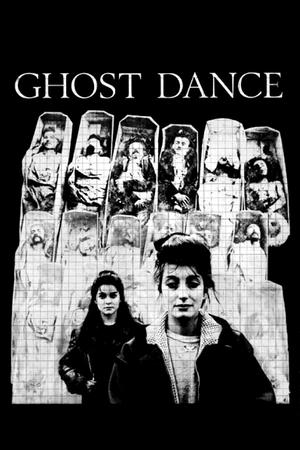
Through the experiences of two women in Paris and London, Ghost Dance offers an analysis of the complexity of our conceptions of ghosts, memory and the past. The film focuses on the French philosopher Jacques Derrida, who observes, 'I think cinema, when it's not boring, is the art of letting ghosts come back.' He also says that 'memory is the past that has never had the form of the present.'
Like an indelible memory, this Olympic closing ceremony will be marked by audacity, fraternity and emotion. In the heart of the Stade de France, athletes from all over the world will represent their countries one last time in an incredible moment of celebration and sharing. With their eyes riveted to the flame, the emotion will be immense as we close the great Olympic book of Paris 2024.
Les Trésors du Paris de la Belle Époque
From May 10, 1940, France is living one of the worst tragedies of it history. In a few weeks, the country folds, and then collapsed in facing the attack of the Nazi Germany. On June 1940, each day is a tragedy. For the first time, thanks to historic revelations, and to numerous never seen before images and documents and reenacted situations of the time, this film recounts the incredible stories of those men and women trapped in the torment of this great chaos.
En avant guinguette!
The amazing and epic story of how the Paris Opera House, the Palais Garnier, was built from 1852 to 1870, thanks to the decisive impulse of the French Emperor Napoleon III; a story that is also that of the birth of a golden age for orchestral music, opera and ballet; of the rise of the urban bourgeoisie turned social elite; and of a certain mysterious inhabitant of the darkest corners of a legendary place.
The story of Zineb El Rhazoui, a young Moroccan woman who, in the wake of the Charlie Hebdo attack, finds her life radically transformed : from a censored journalist in Morocco she becomes the most protected woman of France.
An urban train link, the RER B, crosses Paris and its outskirts from north to south. A journey within indistinct spaces known as inner cities and suburbs. Several portraits, all individual pieces that form a whole. We.
On Sunday 8 September at Stade de France, the Closing Ceremony of the Paris 2024 Paralympic Games officially drew 11 days of competition to a close. Called Paris est une fête, the ceremony, directed by Thomas Jolly and designed by Romain Pissenem, paid tribute to the 4,400 athletes who took part. But the ceremony also highlighted the history of electronic music and of Paris as a city of celebration and culture.
A documentary that exposes the shocking truths behind industrial food production and food wastage, focusing on fishing, livestock and crop farming. A must-see for anyone interested in the true cost of the food on their plate.
Paris l'occupation vécue par les Allemands
Inspired by an exclusive interview and performance footage of Chavela Vargas shot in 1991 and guided by her unique voice, the film weaves an arresting portrait of a woman who dared to dress, speak, sing, and dream her unique life into being.