Synopsis: Shayan gives his friend Nastern, who is angry with his own family, a place in his brother's coffee shop, which is empty, so that he doesn't stay on the street. Anahita, who is Shayan's fiance, gets wind of this and starts an argument with Shayan. until Shayan's brother learns about Nestern's presence in the coffee shop using the camera he placed inside the coffee shop and enters the coffee shop with the intention of raping Nestern; But this story will end in a bad way...
Via Delle Rose 36
A 16mm archive from 1964 intervened as an emotional diary during the first three months of the COVID-19 pandemic is the basis of this film, reinterpreted in the montage of the sound design, in which the images are reinterpreted, emphasizing the soundscape of the protests from 2020 to 2023 in the streets of Cajamarca, Cusco and Lima, three regions of Peru, questioning the constant political and social crisis.
Hannah, Laure, Adrien, and Halima are students at the Regional Institute of Social Work in Paris. Four students among the fifty in the first year of training to become educational support workers. They chose this profession out of commitment and vocation. Between the classroom and their field placements, they will confront their dreams and ideals with the realities on the ground, discover new sides of themselves, and begin to shape the contours of the profession they will practice—each in their own way.
A young policeman, Eliseo, has an important task: to get rid of a body. However, a twist will make him to doubt carrying his task to completion, which could cost him his life.
A devout Muslim who writes, composes, and even records hymns praising the Prophet, Muhammad Rahat Khawaja is a respected elderly man who works in real estate and takes care of his bedridden wife. One day, he attends the wedding of a friend's son, where he inadvertently shows off a dance in front of his friends and family. His dance gets recorded and then uploaded to all social media platforms, which then also gets broadcasted on television. And chaos begins to ensue in his quiet life. Other than his wife, no one else in the world understands Rahat's circumstances. His daughters and neighbors criticize him, his friends turn their backs on him
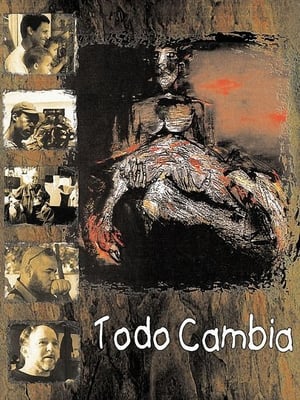
A documentary that takes an in depth look at a government sanctioned art school in Cuba and its students. Interviews of various artists attending the school allow viewers a glimpse into their personal and professional lives.
Synopsis: It is a complex and intersecting narrative of one day and night of the life of Fariborz and Mehboob, which leads them to another couple named Ashkan and Neda due to an incident. In the midst of this commotion and conflicts, everyone is thinking of saving his life, but...
Two homeless children collect cardboard to survive. Despite the tenderness that sustains them, the cold nights weigh heavily upon them.
In this 21st century, under the cloak of capitalism, governments, and other systems by which society is governed, this short film shows the true social reality of many people “on the street”.
In a quaint small town, there was a thunderstorm at night and a scorching sun the next day. This strange weather that had not been seen in a century made people doubt whether an earthquake would occur.
One of the early films of Chhabi Biswas featuring him as a leading man, before he came to be associated with the dominating patriarch roles that have become iconic in Bengali cinema, the film is a tale of the love, relationships and ideals of two generations. Nutubihari is an idealist who has given up his love for Kalyani for the sake of his beliefs. He marries Bimala and becomes a lawyer, fighting for the rights of the poor against the feudal lords. Meanwhile, Kalyani comes to ask refuge after she becomes a widow and is inexplicably accepted by Bimala with a lot of warmth. As the years pass Kalyani's daughter Mamata and Nutu's oldest son Arun fall in love and wish to get married. However, the new-found fame and fortune turns his head and Nutu begins to resemble all the ideals and vices that he had always despised. On the other hand in an ironical turn of events, Arun comes to occupy the position once held by his father, highlighting the generational conflict of ideals.
A spice company announces a nationwide contest where 2,000 pressure cookers will be handed out in exchange for 20 labels of one of their products. All hell breaks loose when the participants discover that their efforts will come to nothing.
A concerned citizen encounters a political writing on a public bus stop and decides to call city services. When they fail to respond he decides to take the law into his own hands.
200 millimes
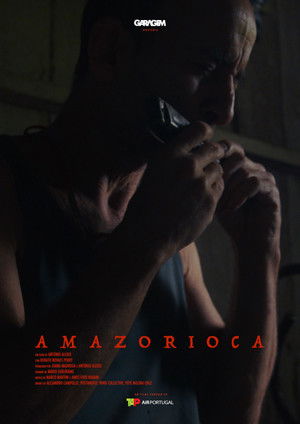
A journey through the Brazilian Amazon, guided by the eyes of Renato, a Carioca turned Amazorioca. A reflection on identity, the legacy of an ancestral territory, and the cost of progress. An ode to the forest and the fragility of what remains.
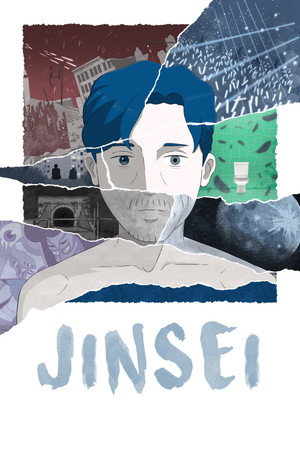
Our hero (voiced by rapper ACE COOL), called by a different name in each chapter of his life, becomes a J-pop idol, an outcast, a leader, and an oracle in this hundred-year chronicle spanning the past, present, and future. Through a chance encounter with a transfer student, he trains to become an idol, starting his search for self-identity and a journey toward greatness beyond superstardom. Written, directed, edited and entirely hand-drawn by newcomer Ryuya Suzuki over eighteen months, JINSEI (meaning “life” in Japanese) is an anime tour-de-force that announces Suzuki to the world as a bold new talent in independent animation.
Fabrizio, Dante and Roberto have 14 years old and they live in Palermo in the ZEN. How is their life, their universe?
In the 1970s, the first manifestations of gay, lesbian and transvestite rights in Spain took place. In 2005, Spain became the third country in the world to approve same-sex marriage, and today our legislation is one of the more progressive. However, homophobia and invisibility remain a problem for many older people of this group.
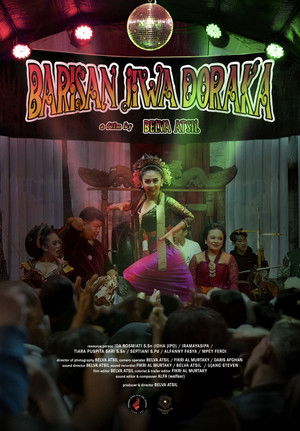
Barisan Jiwa Doraka reveals the reality of bajidoran dancers within contemporary art by reinterpreting and reworking the male gaze as a critique of cultural norms and the roots of harassment that haunt artistic spaces. This documentary is an effort to preserve identity and resist objectification on stage by exposing the phenomena experienced by bajidoran dancers.