Six blind people around the world are given a camera and asked to take photos of whatever they like.
Alan do Rap was one of the precursors of Hip Hop in Salvador, who to promote his songs would invade the stage of famous hip hop acts and take the mic. Alan's journey shows the difficulties and injustices faced by young blacks from the periphery who try their hand at art and end up clashing with a racist, oppressive, and violent system.
Guillermo Gómez Álvarez explores the identity politics of Puerto Rico via archival footage from various sources that clash with nine original songs from local independent musicians and a thematic analysis from a psychoanalyst and a historian. From the juxtaposition the absurd becomes coherent and the coherent becomes absurd as Puerto Rican identity is defined and rejected almost simultaneously.
A handful of prisoners in WWII camps risked their lives to take clandestine photographs and document the hell the Nazis were hiding from the world. In the vestiges of the camps, director Christophe Cognet retraces the footsteps of these courageous men and women in a quest to unearth the circumstances and the stories behind their photographs, composing as such an archeology of images as acts of defiance.
In the late 1990s, DJ Set Free, had the idea to set some streetball highlights to a soundtrack of emerging rap music. The results culminated in the And1 Mixtape, a series of VHS tapes that forever transformed the game of basketball.
Eminem’s debut studio album “Infinite” was released in November of 1996. “Partners In Rhyme” is the true story of the album and features never-before-seen footage of Marshall Mathers.
Jeff Wall is one of the most important and influential photographers working today. His work played a key role in establishing photography as a contemporary art form.
A viral music video featuring an NYPD detective ignites a media storm—what the world didn’t know was that the rapper behind it was law enforcement too. The Making of a Moment is a raw, reflective documentary tracing Phabian ‘S-Quire’ Winfield’s journey from the shadows of trauma to the spotlight of controversy. Set in New York City, the film unpacks identity, race, resilience, and the collision between purpose and perception. This powerful sit-down with WBLS legend Lenny Green uncovers the man behind the moment.”
At 80 years old, German director and photographer Wim Wenders talks about his unwavering joy in creating and telling stories. From "Paris, Texas" to "Perfect Days" and "Wings of Desire," this is a tender and luminous portrait of the most European of filmmakers.
G-Funk is the untold story of three childhood friends from East Long Beach who helped commercialize hip hop by developing a sophisticated and melodic new approach – merging Gangsta Rap with elements of Motown, Funk, and R&B.
The film is a controversy on democracy. Is our society really democratic? Can everyone be part of it? Or is the act of being part in democracy dependent to the access on technology, progression or any resources of information, as philosophers like Paul Virilio or Jean Baudrillard already claimed?
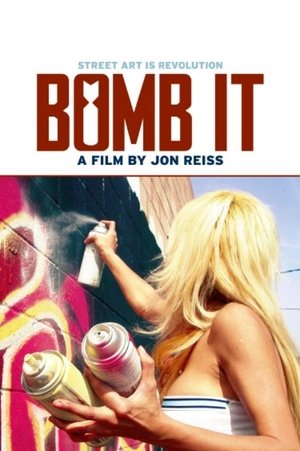
Tony Silver and Henry Chalfant's PBS documentary tracks the rise and fall of subway graffiti in New York in the late 1970s and early 1980s.
Two World War II Veterans reunite for the first time in 70 years after their inaugural voyage on Navy ship LST-218
"The MC: Why We Do It" takes a look inside the world of Hip Hop and MCs to explore the issues and concerns that define todays most popular music form. The MC started out as a mere introducer of musical acts, but when DJs began spinning tracks at block parties in the Bronx in the late 1970s, the MC began to rap along to the beats, emerging as the focal point of a new music form. The film not only explores the origins of MC'ing, but the environmental, spiritual and moral aspects to this art form. As Hip Hop turns 25 years old, MC's consider the past, present and future of their music, giving a unique insight into what drives these artists to continue spitting rhymes. Written by Iain Kennedy
Antonia Quirke looks at the history of the colour film industry to find out who produced the first moving colour images.
Suffering debilitating grief from the passing of his best friend who introduced him to the world of dance, Derrick must confront a monster that seeks to separate him from everything he loves.
A thoughtful portrait of a renowned artist, this documentary shines the spotlight on New York City painter Jean-Michel Basquiat. Featuring extensive interviews conducted by Basquiat's friend, filmmaker Tamra Davis, the production reveals how he dealt with being a black artist in a predominantly white field. The film also explores Basquiat's rise in the art world, which led to a close relationship with Andy Warhol, and looks at how the young painter coped with acclaim, scrutiny and fame.
The award-winning feature-length documentary about the revolutionary and brilliant Chicago architect Louis Sullivan (1856-1924). Known by historians as the 'father of the skyscraper' and creator of the iconic phrase 'form follows function,' Sullivan was on top of his profession in 1890. Then a series of setbacks plunged him into destitute obscurity from which he never recovered. Yet his persistent belief in the power of his ideas created some of America's most beautiful buildings ever created, and inspired Sullivan's protégé, Frank Lloyd Wright, to fulfill his own dream of a truly American style of architecture.
A powerful and intimate portrait, Joan Mitchell: Portrait of an Abstract Painter captures Mitchell's independent spirit and testifies eloquently to Mitchell's art. Joan Mitchell was born in Chicago in 1926 and died in Paris in 1992. After graduating from the School of the Art Institute of Chicago, Joan settled in New York City in 1950. She was an active participant of New York's dynamic Abstract Expressionist scene and hung out with fellow painters Franz Kline, Willem de Kooning and Philip Guston and, soon, poets Frank O'Hara, James Schuyler and John Ashbery. In the mid-fifties, she moved to Paris, France. There she was part of a circle of friends that included Pierre Matisse, Samuel Beckett and Alberto Giacometti. Mitchell is one of the great abstract painters of the 20th century. This elegantly edited documentary weaves interviews with the acerbic Mitchell and other leading painters and critics while letting her stunning pictures dominate the film.
In Unión Hidalgo, Oaxaca, México, there is a group of people who pay homage to living characters in the community through urban murals, generating an identity that is reflected on the walls of traditional houses.