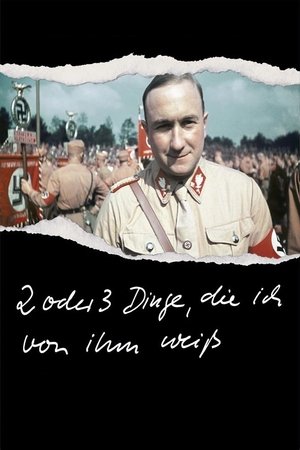
What would your family reminiscences about dad sound like if he had been an early supporter of Hitler’s, a leader of the notorious SA and the Third Reich’s minister in charge of Slovakia, including its Final Solution? Executed as a war criminal in 1947, Hanns Ludin left behind a grieving widow and six young children, the youngest of whom became a filmmaker. It's a fascinating, maddening, sometimes even humorous look at what the director calls "a typical German story." (Film Forum)
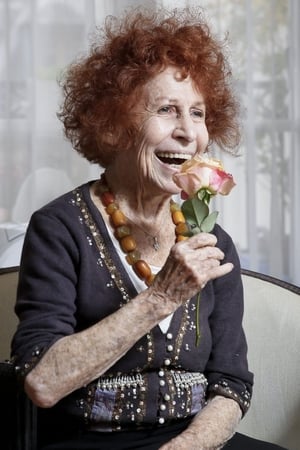
Portrait of Marceline Loridan-Ivens, a writer and filmmaker who survived the Holocaust.
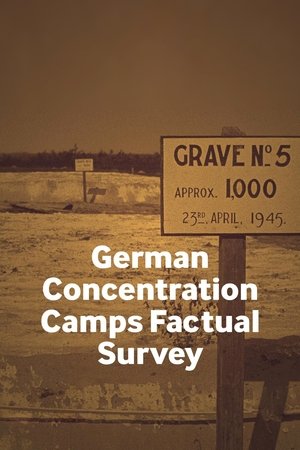
On the 29th September 1945, the incomplete rough cut of a brilliant documentary about concentration camps was viewed at the MOI in London. For five months, Sidney Bernstein had led a small team – which included Stewart McAllister, Richard Crossman and Alfred Hitchcock – to complete the film from hours of shocking footage. Unfortunately, this ambitious Allied project to create a feature-length visual report that would damn the Nazi regime and shame the German people into acceptance of Allied occupation had missed its moment. Even in its incomplete form (available since 1984) the film was immensely powerful, generating an awed hush among audiences. But now, complete to six reels, this faithfully restored and definitive version produced by IWM, is being compared with Alain Resnais’ Night and Fog (1955).
In March 1943, twenty-year-old Ovadia Baruch was deported together with his family from Greece to Auschwitz-Birkenau. Upon arrival, his extended family was sent to the gas chambers. Ovadia struggled to survive until his liberation from the Mauthausen concentration camp in May 1945. While in Auschwitz, Ovadia met Aliza Tzarfati, a young Jewish woman from his hometown, and the two developed a loving relationship despite inhuman conditions. This film depicts their remarkable, touching story of love and survival in Auschwitz, a miraculous meeting after the Holocaust and the home they built together in Israel. This film is part of the "Witnesses and Education" project, a joint production of the International School for Holocaust Studies and the Multimedia Center of the Hebrew University of Jerusalem. In this series, survivors recount their life stores - before, during and after the Holocaust. Each title is filmed on location, where the events originally transpired.
When the lights dim and the stage is revealed, Meschke channels life through the strings of his puppets, triggering the spiritual connection between the creator and his alter-egos: the charismatic Don Quixote, the loving Penelope, the inquisitive Baptiste, or the mysterious Antigone. THE MAN WHO MADE ANGELS FLY is a poetic story about a master of his craft that has inspired audiences to reflect upon common issues of suffering and the mortal coil. Visionary and un-biographic, imaginary tribute to the puppeteer.
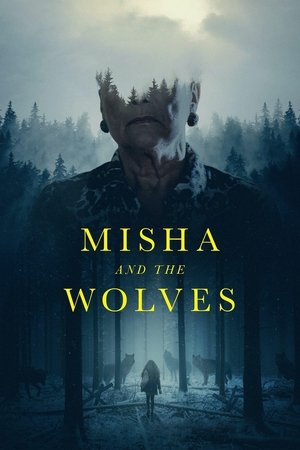
A woman’s Holocaust memoir takes the world by storm, but a fallout with her publisher-turned-detective reveals her story as an audacious deception created to hide a darker truth.
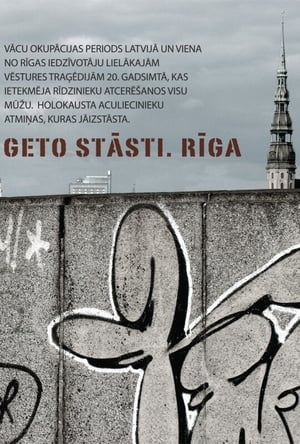
The story of the German occupation of Latvia and one of Rīga’s major 20th century historical tragedies, which will be remembered by the people of Rīga forever. French teacher Riva Šefere, lawyer Aleksandrs Bergmanis, music teacher Gabriela Paraša, film historian Valentīna Freimane and historian and founder of the museum “Jews in Latvia” Marģers Vetermanis are just a few of the 30 000 Latvian Jews who were imprisoned in the Riga ghetto. These are eyewitness memories of the holocaust that need to be told.
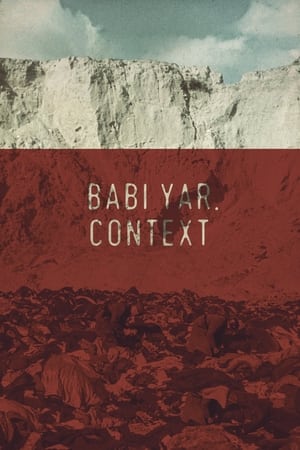
Nazi troops massacre 30,000 Jews over a three-day period in September 1941. Babyn Yar ravine in Kyiv, Ukraine.
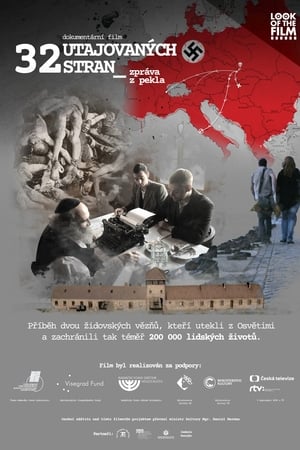
32 utajovaných stran – zpráva z pekla
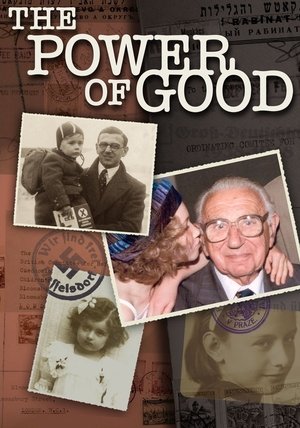
A gripping documentary about the courage and determination of a young English stockbroker who saved the lives of 669 children. Between March 13 and August 2, 1939, Nicholas Winton organized 8 transports to take children from Prague to new homes in Great Britain, and kept quiet about it until his wife discovered a scrapbook documenting his unique mission in 1988. Winton was a successful 29-year-old stockbroker in London who "had an intuition" about the fate of the Jews when he visited Prague in 1939. He quietly but decisively got down to the business of saving lives. We learn how only two countries, Sweden and Britain, answered his call to harbor the young refugees; how documents had to be forged and how once foster parents signed for the children on delivery, that was the last he saw of them.
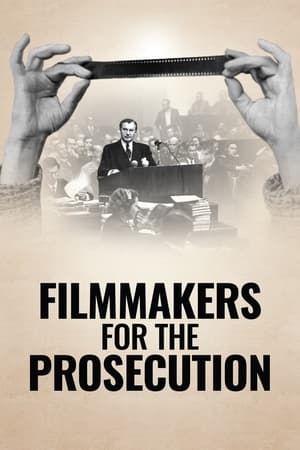
In 1945, two young American soldiers, brothers Budd and Stuart Schulberg, are commissioned to collect filmed and recorded evidence of the horrors committed by the infamous Third Reich in order to prove Nazi war crimes during the Nuremberg trials (1945-46). The story of the making of Nuremberg: Its Lesson for Today, a paramount historic documentary, released in 1948.
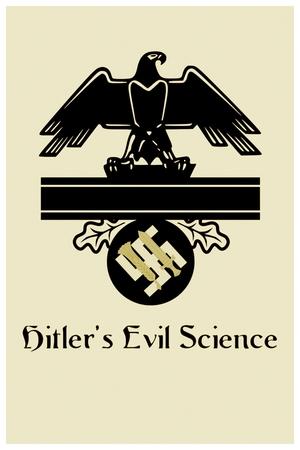
In 1935, German scientists dug for bones; in 1943, they murdered to get them. How the German scientific community supported Nazism, distorted history to legitimize a hideous system and was an accomplice to its unspeakable crimes. The story of the Ahnenerbe, a sinister organization created to rewrite the obscure origins of a nation.
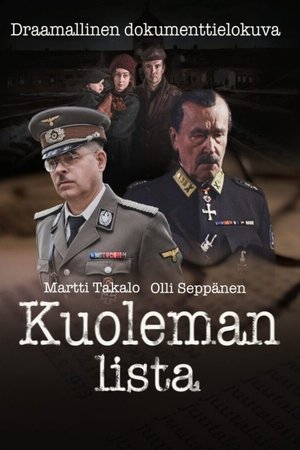
A dramatic documentary film that deals with the Nazi rise to power in Germany in the 1930s and the development of the persecution of Jews up to the Holocaust. The film tells about the attitude of the Finnish government to the request for the handover of the Finnish Jews presented by Heinrich Himmler in the summer of 1942. The main focus of the film is the life of Jewish refugees in Finland in the years 1938-1942 and the attitude of the Finnish government to their handover in the fall of 1942.
Pulitzer Prize-winning cartoonist and author Art Spiegelman discusses his graphic novel "Maus," which chronicles how his father survived the Holocaust. Also included a journey to Auschwitz, with his wife and art director Francoise Mouly-Spiegelman.
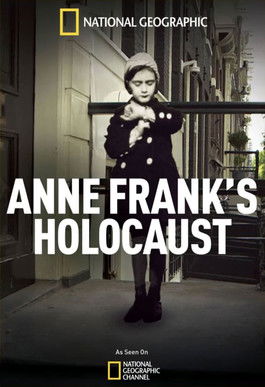
Anne Frank's world famous diary came to an abrupt end shortly before she and her family were discovered hiding from the Nazis in a secret annex at the top of Otto Frank's office building, on August 4, 1944. While her diary tells the story of Anne's life, the story of her death reveals the atrocities encountered by millions of Jews during the Holocaust. In a solemn remembrance of the horrors that Anne Frank and these millions of others suffered during the dark days of World War II, National Geographic Channel (NGC) takes viewers inside the concentration camps in a two-hour special. In keeping with NGC's tradition of unparalleled storytelling, Anne Frank's Holocaust incorporates new findings and rarely seen photographs to reintroduce the story of the massacre of Jews in one of the most comprehensive documentaries on the subject to date.
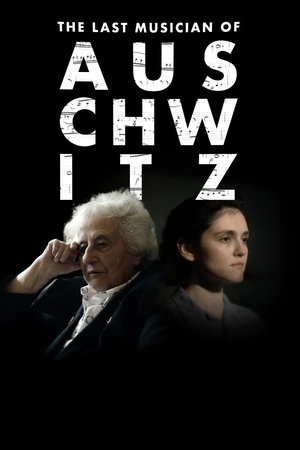
Tells the extraordinary story of Anita Lasker-Wallfisch who, along with other victims of Auschwitz, played and created music amidst the terrors of the Holocaust.
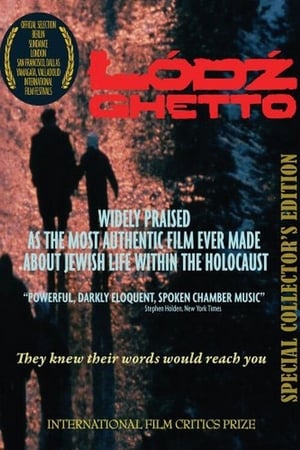
The Polish city of Łódź was under Nazi occupation for nearly the entirety of WWII. The segregation of the Jewish population into the ghetto, and the subsequent horrors are vividly chronicled via newsreels and photographs. The narration is taken almost entirely from journals and diaries of those who lived–and died–through the course of the occupation, with the number of different narrators diminishing as the film progresses, symbolic of the death of each narrator.
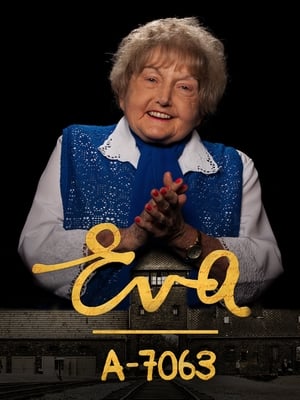
As a 10-year-old “Mengele Twin,” Eva Kor suffered some of the worst of the Holocaust. At 50, she launched the biggest manhunt in history. Now in her 80s, she circles the globe to promote the lesson her journey has taught: Healing through forgiveness.
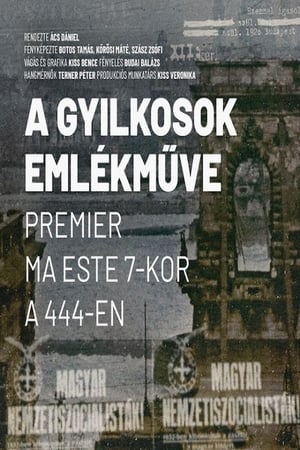
A film about a district in Buda, which to this day cannot face the inconceivably cruel crimes committed by its former inhabitants.
In the small town of Rechnitz a terrible crime against humanity was performed during the holocaust. Until now, no-one dares to talk about it.